The European Union (EU) is advancing plans to develop secure digital infrastructure along the Middle Corridor, with initiatives expected to mobilize up to €623 million in investments and technical support for telecommunications networks, satellite connectivity, artificial intelligence (AI) and data centers.
The development follows the first High-Level Connectivity Platform Meeting on Digital, held in Chisinau, Moldova, on November 9, 2026. Jointly hosted by the European Commission and Moldova’s Ministry of Economic Development and Digitalization, the meeting brought together governments, financial institutions and private-sector participants. They sought to advance digital infrastructure development between Europe and Central Asia.
At the center of the initiative is the Integrated EU Secure Connectivity Offer. It seeks to establish more resilient digital connections across the South Caucasus, Central Asia, Turkey, Moldova and the wider Black Sea region.
The initiative also forms part of the EU’s broader Connectivity Agenda Platform and Global Gateway strategy. The strategy aims to strengthen the transport, energy, trade and digital infrastructure connecting Europe with Central Asia.
Unlike a conventional railway or highway construction program, this particular development focuses on the digital infrastructure needed to support the wider Middle Corridor, including terrestrial telecommunications, satellite networks and data infrastructure.
What is the EU Middle Corridor Digital Infrastructure Project?
The Middle Corridor, also known as the Trans-Caspian International Transport Route, is a multimodal trade and transport network connecting Europe with Central Asia through the South Caucasus.
The route runs from China and Central Asia through Kazakhstan. It crosses the Caspian Sea to Azerbaijan, and onwards through Georgia and Turkey towards European markets. Alternative connections through the Black Sea also form part of the wider regional transport network.
Furthermore, the corridor relies on several interconnected infrastructure systems, including:
- Railways connecting Central Asian countries with the Caspian Sea and the South Caucasus.
- Seaports and maritime shipping facilities on the Caspian Sea.
- Roads and highways supporting regional freight transportation.
- Border crossings and customs infrastructure facilitating international trade.
- Telecommunications networks supporting digital communication and logistics.
- Energy infrastructure strengthening regional electricity and energy connectivity.
The EU’s latest development specifically targets the digital component of this wider corridor.
The objective is to provide secure, reliable and diversified digital connections that can support cross-border trade, logistics, public services, businesses and critical infrastructure.
This is particularly important because modern railway operations, electricity networks and customs systems increasingly depend on real-time data exchange and reliable communications infrastructure.

What Infrastructure will the €623 Million EU Middle Corridor Initiative Develop?
The European Commission’s initiative identifies several areas for investment and technical cooperation
1. 5G Telecommunications Infrastructure
One of the key components involves developing secure 5G telecommunications networks across participating countries.
The infrastructure is intended to improve high-speed connectivity. It will also support digital services and strengthen communications along the EU Middle Corridor.
It could also support the digital systems required for modern transport operations. This includes railway signaling, logistics management, border processing and other connected infrastructure.
2. Satellite Connectivity Infrastructure
Satellite connectivity is another major component of the initiative.
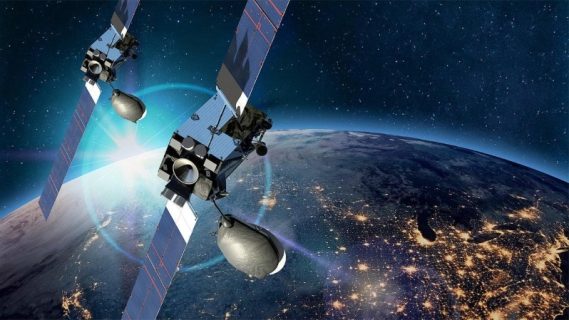
The EU is developing SkyRoad. SkyRoad is a secure satellite connectivity initiative intended to serve essential public services, businesses and critical infrastructure across Central Asia, Turkey, the South Caucasus and the Black Sea region.
The system is intended to complement terrestrial telecommunications networks. This particularly important in remote and underserved areas where conventional connectivity infrastructure may be limited.
The Commission also identified cooperation with SES, a global satellite solutions provider, as one of the initiatives intended to strengthen high-capacity satellite connectivity.
3. Data Centre Infrastructure and Artificial Intelligence
The initiative also includes investment and technical support for data center infrastructure and artificial intelligence.
Data centers will provide the computing and storage infrastructure required to support digital services, business operations and regional data processing.
AI development is another identified investment area. It has the potential to support innovation, improve industrial productivity and strengthen digital capabilities across participating countries.
The European Commission has also identified cooperation with technology companies and regional partners as important to delivering these investments.
4. Cross-Border Fiber and Digital Connectivity
The wider Middle Corridor connectivity program also identifies the need for stronger terrestrial digital connections.
An EU-funded infrastructure study published in February 2026 highlighted opportunities to develop alternative fiber-optic routes. The study also found opportunities for installation of fiber infrastructure alongside transport and energy projects, and establish additional internet exchange points.
These improvements are intended to create more resilient international data routes and reduce dependence on individual telecommunications connections.
The study also identified satellite links as an important alternative in locations where terrestrial networks remain underdeveloped.
How Will the EU Middle Corridor Digital Infrastructure Project Be Delivered?
The European Commission is using the Connectivity Agenda Platform to coordinate participating governments, international financial institutions and private-sector companies.
The latest development builds on the platform’s launch in June 2026. This is when the EU concluded agreements with international financial institutions expected to mobilize up to €2 billion for strategic connectivity investments in the Black Sea region and South Caucasus.
The earlier agreements also focused on transport infrastructure, border-crossing facilities and trade facilitation. The November digital initiative thus adds another layer to the wider infrastructure program. This is as other individual European countries continue to accelerate separate connectivity initiatives, such as the new UK-Norway subsea data cable project.
€623 Million Investment Mobilization
The Commission has exchanged ten Statements of Intent with partner countries, private-sector companies, EU Member State organizations and international financial institutions.
These agreements are expected to mobilize up to €623 million for investment and technical support covering. The cost will cover:
- 5G telecommunications networks.
- Space-based and satellite connectivity.
- Artificial intelligence.
- Data center infrastructure.
- Research and innovation.
Importantly, the €623 million also represents an investment mobilization target rather than confirmation that the entire amount has already been contracted, disbursed or spent on construction.
EU-Turkey-South Caucasus Digital Gateway
Another significant component is the EU-Turkey-South Caucasus Digital Gateway.
With support from the European Bank for Reconstruction and Development (EBRD), the initiative is expected to mobilize more than €500 million. This will be used to develop secure cross-border digital connections, including 5G infrastructure in Turkey.
The program is intended to improve connectivity between Turkey and the South Caucasus. This is while strengthening the wider digital links connecting Europe with Central Asia.
Which Companies and Institutions Are Involved?
The project brings together European technology providers, governments and development finance institutions.
Some of the participants include:
- European Commission: Coordinating the Integrated EU Secure Connectivity Offer and the wider Connectivity Agenda Platform.
- SES: A satellite solutions provider identified as a potential partner for high-capacity satellite connectivity.
- Skynopy: A European space-technology company expanding connectivity services across Armenia, Azerbaijan, Turkey and Ukraine.
- Expertise France: Supporting regional digital innovation ecosystems.
- European Bank for Reconstruction and Development (EBRD): Supporting the EU-Turkey-South Caucasus Digital Gateway.
- Partner governments: Facilitating the development of cross-border digital infrastructure and related investment projects.
EU Middle Corridor Digital Infrastructure Project: What Happens Next?
The November 9 meeting represents an important step towards translating the EU’s regional connectivity ambitions into specific digital infrastructure investments.
The immediate priority is to advance the ten Statements of Intent into bankable investment projects, technical cooperation arrangements and infrastructure deployment programs.
The EU has also scheduled a follow-up Connectivity Platform meeting focusing on energy infrastructure for 2027. In addition, the second Connectivity and Security Ministerial is scheduled for November 16, 2026, in Brussels.
Ultimately, the success of the program will depend on how quickly the participating countries and private-sector partners can move from investment commitments and cooperation agreements to actual network deployment.
The infrastructure could also provide the digital backbone needed to support the wider Middle Corridor project. It will also improve the resilience of telecommunications, transport, energy and trade systems linking Europe with Central Asia.
EU Middle Corridor Digital Infrastructure Initiative: Key Facts
Program: EU Connectivity Agenda Platform
Framework: Global Gateway
Location: Central Asia, South Caucasus, Turkey, Moldova and Black Sea region
Investment target: Up to €623 million
Investment mechanism: Public and private investment, technical support and Statements of Intent.
Main infrastructure: 5G networks, satellite connectivity, and AI data centers.
Satellite initiative: SkyRoad
Additional program: EU-Turkey-South Caucasus Digital Gateway
Additional financing target: More than €500 million, with EBRD support.
Key participants: European Commission, partner governments, EBRD, SES, Skynopy and Expertise France.
Energy connectivity meeting: Planned for 2027
Current status: Investment mobilization, partnership development and preparation of strategic projects.
Project Stakeholders
European Commission – Overall program coordination and investment facilitation.
European Bank for Reconstruction and Development – Finance partner.
SES – Satellite connectivity technology partner.
Skynopy – Space-based connectivity partner.
Expertise France – Digital innovation support.




Leave a Reply