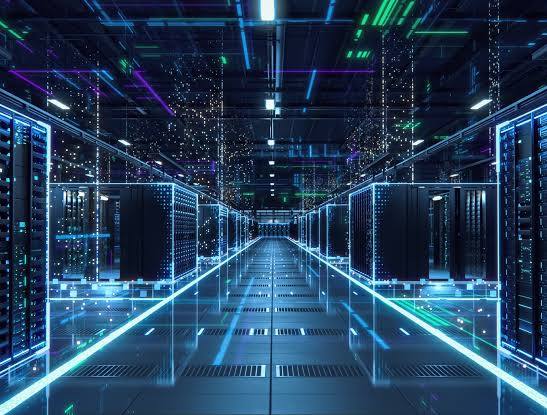
Washington wants America’s AI infrastructure to stay home. But Americans aren’t sure they want it next door, and companies are discovering that building at home is becoming increasingly difficult. The future of U.S. data center investment now depends on whether America can make home the easiest place to build, not just the most expensive place to leave.
A Friday Warning With No Details
On Friday, November 20, President Donald Trump issued a warning to American companies expanding data center infrastructure overseas. The message was blunt: build in the United States, or face a “tremendous tax.”
“We’re not going to allow our companies to build data centers outside of our country,” Trump said at the White House. “If they do that, they can. But we’re going to put a tremendous tax on them.”
He framed the threat around China, arguing that overseas infrastructure could ultimately benefit America’s biggest strategic competitor. “China will take all of them,” he said, explaining why he would not allow data centers to go into other countries.
The announcement sounded decisive. The policy behind it, however, remains unclear. Trump provided no tax rate, implementation timeline or legal mechanism, and acknowledged that he had not yet discussed the proposal with his own officials. Congress’s role in imposing a new federal tax also remains a significant question, because a president cannot create a federal tax by announcement alone.
But the threat raises a question bigger than what Washington intends to do to companies building abroad: If America wants companies to build at home, is it making the United States more attractive, or simply threatening the alternatives?
That is the central question for U.S. data center investment.
Why Companies Look Beyond America
Data centers are the factories of the AI economy. They house the computing capacity needed to train AI models, operate cloud services and process billions of requests. Their location matters because electricity, cooling, connectivity, land, permitting and proximity to customers determine how quickly and economically they can operate.
That is why international expansion is not automatically a retreat from America. Companies build abroad to serve customers in regional markets, meet data residency requirements, reduce latency and secure favorable operating conditions. International infrastructure can strengthen an American company’s global business rather than surrender it.
Finland illustrates the point.
In September 2026, Google announced a €13 billion investment in Finnish digital infrastructure, its largest investment in Europe. The expansion builds on Finland’s existing data center presence and reflects the country’s energy and infrastructure advantages, including access to carbon-free electricity and a cold climate that can help reduce cooling requirements.
Finland is not China. It is a U.S. ally competing for investment. Google’s decision should prompt Washington to examine what makes overseas markets attractive, not assume every foreign project weakens America.
If U.S. data center investment is to stay in America, Washington must compete on the same terms: power, price, speed and permission.
What Americans Actually Want
Here is the contradiction Washington cannot ignore: the government wants more data centers built at home, but many Americans do not want them in their communities.
A Reuters/Ipsos poll published on June 11, 2026, surveying 4,531 people over six days, found that just 33 percent agreed it was mainly a good thing to build data centers at a rapid pace, while 64 percent disagreed. Some 57 percent said they would oppose a data center being built in their own community, including two-thirds of Democrats and half of Republicans.
That finding has hardened, not softened. In a Gallup survey conducted March 2-18, 2026, among 1,000 U.S. adults, 71 percent opposed constructing an AI data center in their local area, including 48 percent who were strongly opposed. In the same survey, only 53 percent opposed a nuclear energy plant nearby, meaning data centers are now less popular than nuclear plants.
By August 2026, the University of Pennsylvania’s Annenberg Public Policy Center reported that 61 percent of Americans opposed new data centers in their area, up from 49 percent earlier in the year. Opposition crossed party lines, with majorities of Democrats, Republicans and independents expressing resistance.
An Ipsos Consumer Tracker released September 15, 2026, found 69 percent were concerned about the growth of AI data center construction in the United States, including 37 percent who were very concerned. Among those concerned, the top worries were strain on local water supplies at 50 percent, strain on the electrical grid at 41 percent, and higher residential utility bills at 35 percent.
These are not simply objections to technology. Residents worry about who pays for grid upgrades, whether electricity bills will rise, how much water facilities consume, and whether communities have any meaningful say over projects that could reshape their surroundings.
Washington wants America to host the AI boom. But the people expected to host the infrastructure are increasingly asking what they get in return. That question will decide the future of U.S. data center investment far more than any threat.
The America That Says No
The resistance is already affecting development.
Data Center Watch reported that at least 75 U.S. projects valued at approximately $130 billion were blocked or delayed during the first quarter of 2026. In the second quarter, it recorded at least 45 additional project disruptions valued at nearly $68 billion. These are quarterly figures, not necessarily unique projects across the six-month period, but they show the scale of disruption.
In September 2025, Google withdrew its proposed $1 billion data center development in Franklin Township, Indiana, ahead of a council vote that threatened its rezoning approval. Hundreds of residents had opposed the project.
In August 2025, the Tucson City Council voted unanimously to end the city’s involvement with Project Blue, a data center campus that would have become the largest customer of both Tucson Water and Tucson Electric Power. Local opposition focused on water use, secrecy and trust. The project was later linked to Amazon.
The message from these communities is not necessarily that America should abandon AI infrastructure. It is that development cannot assume local consent.
Washington says build here. Residents say not here. Developers face power constraints, litigation, zoning battles and rising construction costs. Where, then, is “here”?
A Tax Cannot Build a Power Grid
A tax can punish companies for investing abroad. It cannot create electricity, accelerate transmission construction, shorten grid connection queues, secure water supplies or restore public trust.
If America wants to retain AI infrastructure investment, it must address the conditions that make projects difficult to deliver. That means expanding reliable power, modernizing transmission, establishing clearer permitting timelines, and ensuring communities receive meaningful benefits without shifting infrastructure costs onto households.
Trump himself encouraged communities to negotiate with developers and demand benefits. That is a more constructive starting point, but promises alone will not resolve conflicts over land, water, electricity or transparency.
And the China argument deserves precision. Overseas construction does not automatically transfer ownership, computing capacity or strategic control to Beijing. The security risks depend on who owns the facilities, what chips they contain, who can access the computing resources and how export controls are enforced. Preventing China’s access to advanced AI infrastructure is a legitimate objective, but it is not the same as preventing American companies from serving international markets.
America should compete to make its infrastructure the most attractive place to build, not simply the most expensive place to leave.
“Build your data centers at home, or pay a tremendous tax” sounds powerful. But until home is buildable, affordable and trusted, companies will continue looking beyond America’s borders.
A threat is not a power plant, a permit or a water plan. And no tax will be tremendous enough to replace them.
The question that started this series was simple: why is the United States building so many data centers, and at an unprecedented speed? The answer was AI, and the scale of U.S. data center investment behind it — $307.18 billion in hyperscale investment in 2025 alone, and global data center electricity use projected to more than double to 945 terawatt-hours by 2030.
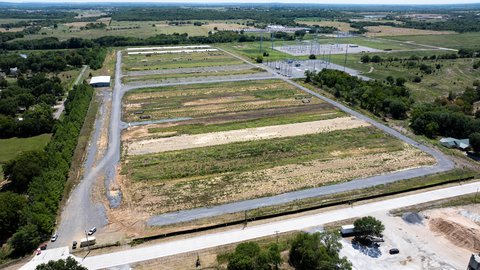
While covering that question, a reader left a comment that has stayed with me. While everybody is talking about water, energy, and noise, why is nobody talking about the loss of good farmland?

Leave a Reply