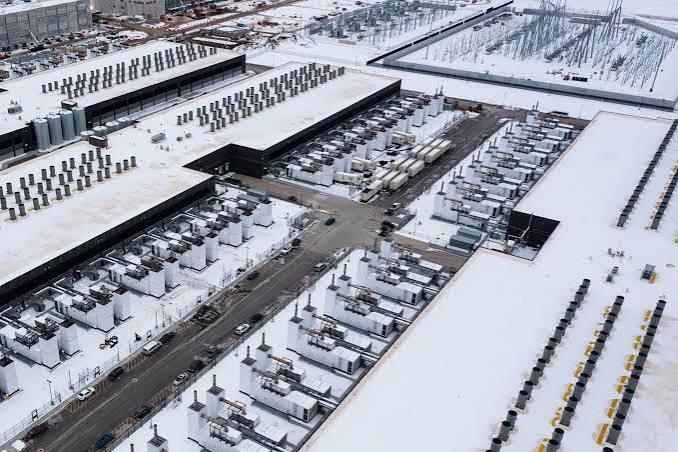
America knows why it is building data centers at an unprecedented speed. But it still lacks a clear accounting of how much productive farmland that expansion is consuming.
In my last article, I asked a simple question: why is the United States building so many data centers, and at an unprecedented speed?
The answer was not complicated. It was AI.
The International Energy Agency, in its Energy and AI report published in April 2025, projected that global data center electricity consumption would more than double by 2030, rising from 415 terawatt-hours in 2024 to approximately 945 TWh. In the United States, consumption could increase by 240 TWh, a 130% rise from 2024. Data centers could account for nearly half of U.S. electricity demand growth through 2030.
The money followed the demand. AI companies, cloud providers and technology giants are committing billions of dollars to new computing infrastructure, racing to secure land, electricity, equipment and capacity before their competitors.
That is why construction is accelerating. That is why project timelines are compressed. And also, that is why counties that never thought about servers are now voting on enormous industrial developments.
While I was covering that story, a reader left a comment that has stayed with me. It was brief and it was not angry. It was simply a question.
While everybody is talking about data centers—asking about water, energy and noise—why is nobody talking about the loss of good farmland?
I decided to investigate. What I found made the question even more urgent.
The Number That Does Not Exist
Ask a simple question in Washington: How many acres of productive American farmland have been converted specifically into data centers?
There is no comprehensive federal tally answering that question.
The USDA tracks agricultural land, land-use changes and farmland protection, but the country does not maintain a consolidated national accounting of farmland converted specifically for data center development. Projects move through local zoning, planning, rezoning and development processes, making it difficult to assemble a complete picture of agricultural land lost to the industry.
We count the megawatts. We count the investments. And we announce the jobs and tax revenue. But we do not have a comprehensive national count of the agricultural land being converted for this particular infrastructure boom.
That is a serious blind spot.
A country building an entirely new industrial foundation for artificial intelligence should know what land it is consuming to build it.
What We Do Know—and What We Don’t
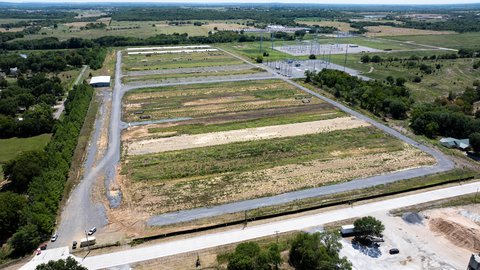
The absence of a national tally does not mean the loss is imaginary. Research using land-use analysis, satellite imagery and individual project records is beginning to reveal where data centers are being built and what previously occupied those sites.
A 2026 Washington Post analysis of 93 large data centers found that approximately 40% occupied previously developed land. About 33% were built on farmland, 12% on forest, 11% on shrubland and 4% on other land.
That finding deserves attention. Farmland alone accounted for roughly one-third of the sites examined.
It does not mean one-third of every data center in America is built on farmland, nor does it establish the total acres of agricultural land lost nationwide. But it provides documented evidence that farmland is a substantial part of the land being converted in the data center expansion.
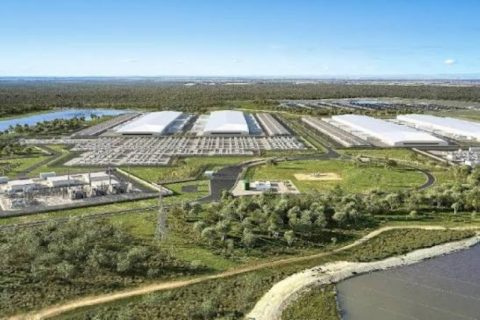
The parcels are also getting larger. Cushman & Wakefield reported that the average parcel acquired for data center development reached 224 acres in 2024, an increase of 144% from 2022. AI hyperscale campuses can seek even larger tracts to accommodate multiple buildings, substations, cooling infrastructure and future expansion.
We must be precise. Data centers are not the biggest cause of farmland loss in America. Housing, commercial development and other forms of urban expansion have long consumed agricultural land. But data center development is an increasingly visible source of large-scale land demand, and its agricultural footprint deserves to be measured rather than assumed away.
National percentages can also conceal local consequences. A development may represent a small fraction of America’s farmland but fundamentally change the future of a farming community that loses hundreds or thousands of acres.
Nationally Small, Locally Devastating
In Franklin Township, Indiana, a proposed data center development associated with Google sought rezoning approximately 467.66 acres of farmland through Deep Meadow Ventures. Residents opposed the proposal, and it was withdrawn in 2025 before construction.
In New Carlisle, Indiana, Amazon Web Services is advancing a major data center campus on land within the Indiana Enterprise Center, a large development area that includes former agricultural land. The campus plans call for multiple data center buildings, illustrating how rural agricultural landscapes can become large-scale computing infrastructure.
In Prince William County, Virginia, the Prince William Digital Gateway project proposed a massive data center development involving approximately 2,100 acres near Manassas National Battlefield Park. However, its rezoning approvals were overturned in 2026, and the county restored the property’s original zoning. The project now faces a different path, rather than proceeding under its former approvals.
In Pittsboro, Indiana, Vantage Data Centers proposed a campus involving approximately 285 acres of the Charles D. Smith Family Farm, a larger family agricultural operation.
These cases are not all completed farmland conversions. Some remain proposals, some have faced legal or political setbacks, and others are advancing through development. That distinction matters. But collectively, they illustrate the scale of land developers are seeking and the pressure the industry is placing on agricultural communities.
And the footprint can extend beyond the data center’s property boundaries. Supporting transmission infrastructure, substations, access roads and generation facilities can require additional land. A campus’s advertised acreage may not capture the full physical footprint of the infrastructure needed to serve it.
We plan the development. We debate the power. But too often, the question of what the land used to be comes later.
The Impossible Choice
Why does farmland attract data center developers?
Because it offers many of the characteristics these projects need: large, relatively flat parcels, room for expansion, proximity to transmission infrastructure, access to roads, and the possibility of assembling contiguous acreage outside densely populated areas.
For landowners, the financial offers can be extraordinary.
In Silver Spring Township, Pennsylvania, 86-year-old farmer Mervin Raudabaugh reportedly received an offer exceeding $15 million for his approximately 261-acre farm. He rejected it and pursued farmland preservation, helping protect the property through conservation easements.
In Kentucky, Ida Huddleston and her family rejected an offer reportedly worth $26 million for their farmland near Maysville, where a major data center development was advancing in the surrounding area.
These are not merely human-interest stories. They reveal the economic pressure surrounding agricultural land.
For a farmer, a developer’s offer may exceed what decades of agricultural production could generate. For a family that has owned land for generations, the offer may represent financial security they could never otherwise achieve. A farmers who lease that land, however, a sale can abruptly end their access to the fields they depend on.
We cannot blame farmers for considering life-changing offers. But we should question a system in which productive farmland becomes more financially attractive to sell for computing infrastructure than to continue producing food.
Brownfields First, Not Farmland First
There is an alternative, and it is not anti-technology.
America has former industrial sites, vacant factories, abandoned commercial properties, old warehouses and brownfields. Some have existing roads, industrial zoning or infrastructure that could make them candidates for redevelopment.
The EPA has been examining how previously developed and contaminated sites could accommodate data centers, while developers have already reused former industrial properties for computing infrastructure, including Meta’s redevelopment of former textile and manufacturing sites in Forest City, North Carolina.
Not every brownfield is suitable. Contamination remediation can be expensive, sites may lack sufficient power or water, and some properties may be too small for hyperscale campuses. But those difficulties should not end the discussion.
Before productive farmland becomes a permanent industrial campus, developers and local governments should demonstrate that they seriously evaluated previously developed alternatives.
Farmland should not automatically become the easiest option simply because assembling and preparing it is more convenient.
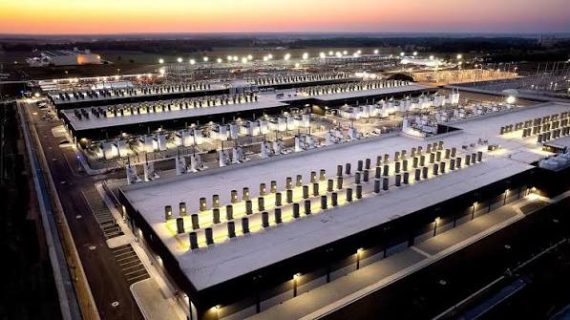
Count It Before We Lose It
America needs data centers. Artificial intelligence, cloud computing, communications and digital services increasingly depend on them. But the speed of this expansion should not excuse the absence of accountability for land use.
We need a national record of agricultural land converted for data center development. Counties should disclose whether proposed sites contain prime farmland, whether they support active agricultural operations, how many acres will be converted, and what supporting infrastructure will require additional land.
Developers should disclose the agricultural characteristics of their sites and demonstrate that they considered previously developed alternatives. Local governments should evaluate cumulative land impacts when multiple campuses are proposed within the same region, rather than treating each project as an isolated decision.
This is not opposition to AI. It is responsible planning.
While America races to build the physical foundation of its AI economy, the costs cannot be measured only in megawatts, billions of dollars or gallons of water.
They must also be measured in acres, in farms, and in what America chooses to do with its land.
While we argue about water and power, who is counting the lost farms?
Right now, we still lack a comprehensive national answer. And until we start counting, we risk losing something the AI industry cannot manufacture: productive land.
We already know why the boom is happening: AI, and a wave of U.S. data center investment — $307.18 billion in hyperscale investment in 2025 alone — that has pushed global data center electricity use toward 945 terawatt-hours by 2030.
What we have not asked is what that boom is paving over. A reader asked it for me: while everybody talks about water, energy, and noise, why is nobody talking about the loss of good farmland?


Leave a Reply