The Fos-sur-Mer solar gigafactory project, which aimed to establish Europe’s largest integrated photovoltaic manufacturing complex, has been abandoned following a funding crisis. French developer CARBON announced the project’s termination on May 19, 2026, after failing to secure the institutional investment required for construction. The proposed €1.5 billion development targeted an annual manufacturing capacity of 5GW. However, changing European industrial policies and investor uncertainty undermined its financial viability.
The decision marks a major setback for France’s ambitions to establish domestic solar manufacturing capacity. Furthermore, the cancellation leaves a major industrial development site at Fos-sur-Mer without its intended photovoltaic manufacturing facilities. The project had previously secured planning and environmental approvals, making its abandonment particularly significant for France’s industrial redevelopment strategy.
Fos-sur-Mer Solar Gigafactory Project Abandoned After Financing Failure
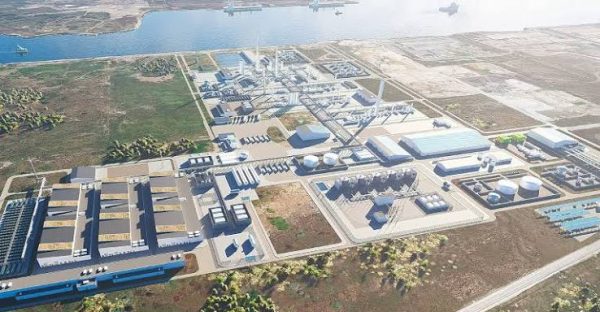
CARBON had planned to establish the manufacturing complex within the Grand Port Maritime de Marseille-Fos industrial zone. The proposed development covered approximately 45 hectares in Fos-sur-Mer, Bouches-du-Rhône, southern France.
The facility would have integrated several stages of photovoltaic manufacturing. These included silicon processing, solar cell production and finished module assembly. Additionally, the company targeted production exceeding 10 million solar panels annually.
The proposed 5GW production capacity would have strengthened France’s domestic photovoltaic supply chain. It also aimed to reduce European dependence on imported solar manufacturing equipment.
However, the project required substantial institutional financing to reach construction and operational stages. CARBON ultimately failed to secure the necessary investment commitments.
According to reporting by pv magazine, the developers also considered reducing the project’s initial scope. They explored manufacturing photovoltaic modules using imported Chinese solar cells. Additionally, CARBON investigated potential industrial partnerships, including discussions involving Chinese manufacturer LONGi. However, these alternatives failed to restore the project’s financial viability.
Fos-sur-Mer Solar Gigafactory Project Had Secured Construction Approvals
The cancellation followed several regulatory milestones that had advanced the proposed industrial development.
In July 2024, the French government designated the project a Major National Interest Project. This designation recognised its strategic importance to France’s industrial and energy transition objectives.
CARBON subsequently obtained its building permit and environmental authorisations in 2025. The company announced these approvals on April 1, 2025. Consequently, the development had progressed beyond its initial planning and consultation stages.
Nevertheless, regulatory approvals could not resolve the project’s financing challenges. CARBON had estimated an investment requirement of approximately €1.5 billion.
The company reportedly spent approximately €21 million developing the project. This expenditure covered preliminary development activities and associated project preparations. However, the investment remained considerably below the funding required for full implementation.
The collapse also affected investors who supported the development through public fundraising. Enerfip reported that 2,379 individual investors contributed approximately €2.96 million through a bond financing arrangement.
Furthermore, TELI SAS, the company carrying the project’s bond liabilities and shareholder contributions, entered judicial liquidation. The liquidation followed the failure to secure additional institutional financing.
European Manufacturing Policy Challenges Affect Solar Factory Development
CARBON attributed the project’s failure partly to insufficient regulatory certainty surrounding European photovoltaic manufacturing.
The developers argued that European industrial policies lacked sufficient protection for locally manufactured solar products. Consequently, investors questioned whether the proposed factory could compete against established Asian manufacturers.
The European Union’s Industrial Accelerator Act, published in March 2026, also featured in the developers’ concerns. According to CARBON, its provisions failed to establish the market preferences required for the project’s financial model.
The cancellation therefore raises wider questions about Europe’s efforts to strengthen domestic renewable energy manufacturing. Although France had granted strategic recognition and construction approvals, these measures could not secure the necessary investment.
Meanwhile, France continues pursuing industrial development across other strategic manufacturing sectors. The country’s aerospace industry provides another example through investments in specialised manufacturing infrastructure.
Airbus’ proposed Saint-Éloi du Futur engine pylon production facility in Cornebarrieu represents another major industrial expansion. Unlike the abandoned photovoltaic development, the Airbus proposal is progressing through public consultation. Both projects illustrate France’s ambitions to strengthen domestic manufacturing and industrial supply chains.
The Fos-sur-Mer cancellation nevertheless leaves questions surrounding the future use of the proposed industrial site. It also highlights the importance of financing certainty alongside planning approvals when delivering large-scale manufacturing infrastructure.
Opportunities at Europe’s largest photovoltaic factory
The new gigafactory brings along with it the promise of 3,000 new job opportunities, a big relief for the region that is often affected by unemployment. The employment will concern ancillary sectors including logistics, maintenance, and administration. This is all on top of the direct production of solar panels. This marks a turning point for the region, which could become a central hub for green industry in Europe. However, the gigafactory project has not come without challenge. It has had the keen attention of the local authorities who have ensured that development is sustainable and respectful of the local environment. Moreover, if CARBON needs to navigate a competitive market and continually innovate in photovoltaic technologies.

Europe’s largest photovoltaic factory by CARBON has been backed by Bruno Le Maire, the Minister of Economy, who announced “battle plan”. The major solar plan has a clear objective which involves the installation of 100 gigawatts of solar panels across the country by 2050. Currently, the country produces 20 GW. A strong acceleration in photovoltaic capacities deployed each year will see the it increase from 3.2 GW to 6 GW each year.
Also Read: Construction Commences on Cowley Complex Biggest Solar Facility in the UK
The Project Team
Following the government’s incentive measures, French players like as Carbon will intervene. This project, led by four partners from Auvergne Rhône-Alpes, was first unveiled in 2022. The partners include Pascal Richard, former director and co-founder of SMA France and current president of the AURA digital solar union; Pierre-Emmanuel Martin, president of the Terre et Lac group and the startup My Energy Manager; Laurent Pélissier, CEO of the industrial oven manufacturer ECM; and Gaëtan Masson, co-President of the European Solar Manufacturing Council – ESMC.
Europe’s efforts in solar panel manufacturing
Earlier this week, the European Commission announced a new proposal, the European Solar Charter (ESC). This proposal aims to combat the challenges facing the continent’s solar manufacturing industry. The charter was signed in Brussels on Monday by representatives of the 23 EU member states and the European Commission. Additionally, several industry bodies, including the European Solar Manufacturing Council (ESMC) and SolarPower Europe (SPE).
Europe’s solar manufacturers have repeatedly urged the European Union to step in with emergency measures to protect them from insolvency. Earlier this year, the bloc finalized the Net Zero Industry Act. Under this Act, at least 40% of solar equipment deployed on the continent should be locally produced. However, until the ESC proposal, it has failed to introduce any emergency measures to help to safeguard European businesses.
The ESC includes a series of voluntary actions to be undertaken to support the EU photovoltaic sector, such as price criteria. Resilience, sustainability, responsible business conduct, “ability to deliver,” innovation and cybersecurity criteria are also being proposed. In addition, the document proposes to expedite permits for PV manufacturing facilities and innovative forms of solar energy deployment, such as agrivoltaics, floating solar, infrastructure-integrated PV, vehicle-integrated PV, and building-integrated PV.
“We must ensure the solar industry remains strong for Europe’s future, renewables-centred energy mix. The European Solar Charter brings together the commission, national authorities and the industry, fostering cooperation and bringing support to the production of solar panels made in Europe,” European Commissioner for Energy Kadri Simons said after the signing ceremony.
Also Read:
Oak Run Solar, the largest Agrivoltaic Farm in the United States