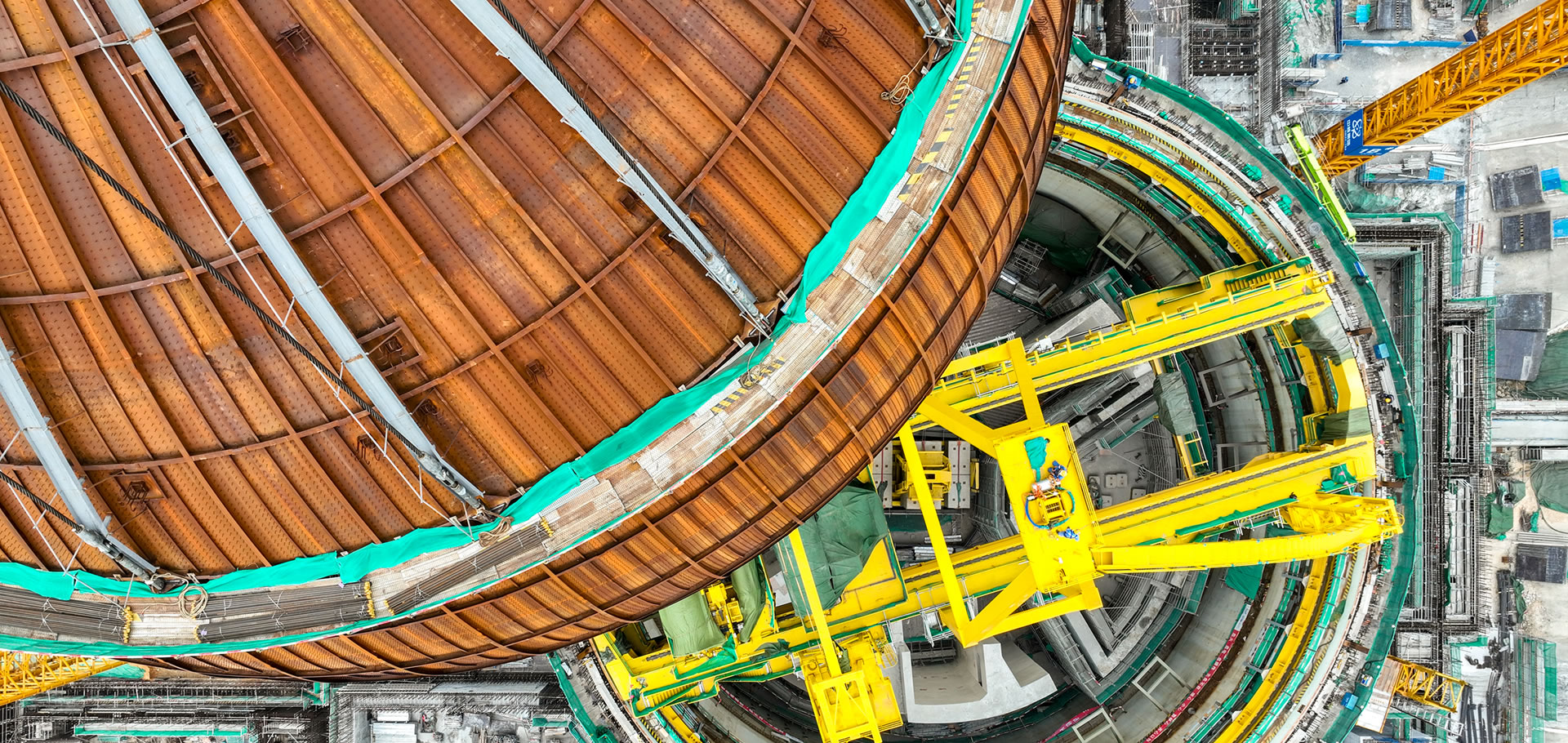
The four China nuclear power projects cleared at a State Council executive meeting on 31 July 2026 will add eight reactor units across four coastal provinces, at a combined capital cost that corporate statements place above RMB 170 billion, or roughly US$25.2 billion. Premier Li Qiang chaired the session, which insisted the units be built and operated to the highest global safety standards. Two of the four projects extend stations already under construction. Phase II of the Jinqimen plant in Ningbo, Zhejiang, covering units 3 and 4, sits with China National Nuclear Corporation, while Phase III of the Taipingling plant in Huizhou, Guangdong, covering units 5 and 6, sits with China General Nuclear. Both pairs have been designated demonstration projects for Hualong One 2.0, an upgraded evolution of the country’s domestically developed pressurised water reactor, rated at 1,217 MW per unit. The remaining two are greenfield sites. Zhuanghe in Liaoning takes two standard Hualong One units under CNNC Datang Zhuanghe Nuclear Power, and Laiyang in Shandong takes two Guohe One units of 1,543 MW each under State Power Investment Corporation. Delivery follows the established Chinese model, in which one state owned developer carries investment, construction and operation for its own site, although private capital has been admitted at Jinqimen. Preparatory work before construction is proceeding steadily at both CNNC sites, the company said in remarks reported by World Nuclear News, ahead of the regulatory permits that precede first concrete.
China Nuclear Power Project Cost Sits Inside a Trillion Yuan Building Wave
The approval is not a one off decision but the 2026 instalment of a rolling programme. Since 2022 China has sanctioned 49 reactor units, with cumulative investment approaching RMB 1 trillion, and at least ten units have been waved through in each of the past four years. The operating fleet stands at 59 commercial units totalling 62.5 GW, with a further 35 units and 41.9 GW under construction before this latest round, according to figures published alongside the approval. The nearest comparison for what is now being sanctioned is San’ao in the same province as Jinqimen. That station, built by CGN through Cangnan Nuclear Power, saw unit 1 reach first criticality on 14 February 2026, connect to the grid on 12 March and enter commercial operation at the end of April, five years and four months after first concrete. San’ao also set the ownership precedent now being repeated, as the first Chinese nuclear project to take private money, with Geely Technology Group holding 2 per cent, a share lifted to 10 per cent for the second phase, as reported when nuclear island installation began at unit 1. Shandong offers the other useful yardstick. CGN began pouring concrete at its Zhaoyuan station, a six unit Hualong One base costed at about RMB 120 billion, in November 2025. Laiyang now lands in the same province with a larger reactor and a rival technology line, which puts SPIC and CGN in direct competition for Shandong’s baseload market.
China Nuclear Power Projects Timeline and the Milestones Ahead
Nothing has been poured yet on the newly approved units. Regional authorities expect site preparation and early foundations to begin immediately after environmental clearance, and Chinese practice requires a construction permit from the National Nuclear Safety Administration before first nuclear concrete, the sequence followed at San’ao in December 2020. Taipingling shows how quickly the pace can build once permits land. Units 1 and 2 entered commercial operation this year, construction started on unit 3 in 2025 and first concrete for unit 4 was poured in May 2026, according to POWER magazine. The Laiyang award carries the longest tail. SPIC describes it as the first standardised and batch built project approved for Guohe One, and the full six unit base, costed at RMB 128.3 billion, is set to become China’s largest nuclear station by installed capacity. Execution risk now sits in the supply chain rather than the paperwork. Close to 6,000 domestic suppliers feed the reactor programme, covering structural steel fabrication, heavy containment vessel casting and cooling system assembly. State planners are counting on that industrial base to deliver 110 GW of operating nuclear capacity by 2030.
Project Fact Sheet
- Project Name: Jinqimen Phase II, Taipingling Phase III, Zhuanghe Phase I and Laiyang Phase I
- Location: Zhejiang, Guangdong, Liaoning and Shandong provinces, China
- Project Value: Estimated at more than RMB 170 billion, roughly US$25.2 billion, per corporate statements published on 31 July 2026
- Client and Owner: CNNC at Jinqimen and Zhuanghe, China General Nuclear at Taipingling, SPIC at Laiyang
- Approval Authority: State Council executive meeting, 31 July 2026
- Key Components: Eight reactor units, comprising six Hualong One units and two Guohe One units
- Unit Capacity: 1,217 MW for each Hualong One 2.0 unit and 1,543 MW for each Guohe One unit
- Procurement Model: One state owned developer carries investment, construction and operation per site, with private capital at Jinqimen
- Construction Start: Preparatory works under way at CNNC sites, first concrete pending regulatory clearance
- Expected Output: More than 55 billion kWh a year from the six unit Taipingling station, per CGN Power
- Supply Chain: Close to 6,000 domestic equipment suppliers and component contractors across the reactor programme
- Strategic Impact: Supports the national target of 110 GW of operating nuclear capacity by 2030
Project Team
- Approving Authority: State Council of the People’s Republic of China
- Owner, Jinqimen Phase II: CNNC (Xiangshan) Nuclear Power Co Ltd, a subsidiary of China National Nuclear Corporation
- Owner, Zhuanghe Phase I: CNNC Datang Zhuanghe Nuclear Power Co Ltd
- Owner, Taipingling Phase III: CGN Power Co, part of China General Nuclear Power Group
- Owner, Laiyang Phase I: State Power Investment Corporation, through SPIC Industry Finance Holdings Co
- Reactor Technology: Hualong One and Hualong One 2.0 from CNNC and CGN, Guohe One from SPIC
- Nuclear Regulator: National Nuclear Safety Administration
- Main Contractor: Not yet disclosed
Frequently Asked Questions
How much do China’s four new nuclear power projects cost? Total investment is estimated above RMB 170 billion, about US$25.2 billion, per corporate statements of 31 July 2026. The full six unit Laiyang base alone is costed at RMB 128.3 billion.
Who is building China’s new nuclear power projects? CNNC owns Jinqimen Phase II and Zhuanghe Phase I, China General Nuclear takes Taipingling Phase III and State Power Investment Corporation takes Laiyang Phase I. Construction contractors have not been disclosed.
Which reactors will the new China nuclear power projects use? Six of the eight units are Hualong One reactors, four of them Hualong One 2.0 demonstration units of 1,217 MW at Jinqimen and Taipingling. The two Laiyang units are 1,543 MW Guohe One reactors.
When will construction start on the new China nuclear power projects? Preparatory works are progressing at the CNNC sites, with foundations expected after environmental clearance and first nuclear concrete requiring a National Nuclear Safety Administration permit.
How many reactors does China operate alongside these new nuclear power projects? China runs 59 commercial units totalling 62.5 GW, with 35 units and 41.9 GW under construction before this round. The national target is 110 GW operating by 2030.

Leave a Reply