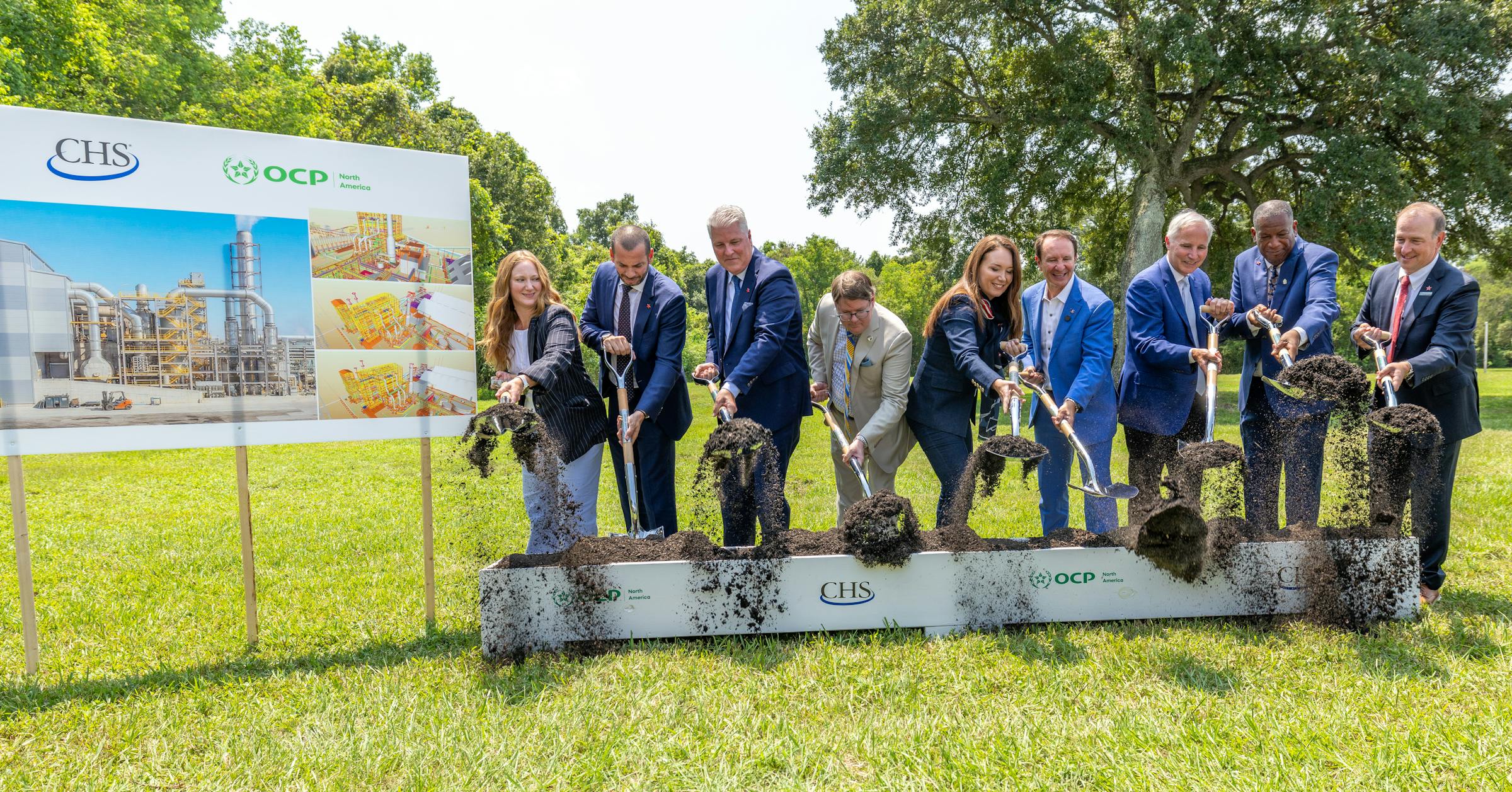
The joint venture between U.S. agricultural cooperative CHS Inc. and Morocco’s state-owned OCP Group to build the first U.S. phosphate fertilizer plant in over 40 decades, a $450 million project in Waggaman, Louisiana, is part of a broader, global push to secure crucial agricultural supply chains and bolster domestic fertilizer production. This initiative links strategically to major international supply developments like Saudi Arabia’s $3.5 billion SAN-7 Project. While the Louisiana venture focuses on domestic phosphate-based fertilizers using raw materials shipped from Morocco, SABIC Agri-Nutrients’ SAN-7 project in Jubail Industrial City addresses global nitrogen-based fertilizer needs by deploying mega-scale ammonia and urea facilities. Together, both initiatives represent massive regional investments, one in the U.S. and one in the Middle East, aimed at reshaping global crop-nutrient capacity, mitigating geopolitical supply disruptions, and securing essential inputs for global food production.
August 27, 2026
CHS is partnering with a Moroccan state-owned mining company to construct the first U.S. phosphate fertilizer production facility in decades. This facility will help to reduce American farmers’ reliance on imported fertilizer.
Strategically, this new supply chain avoids the Strait of Hormuz, through which some of the world’s fertilizer now passes. The war between Iran, the U.S. and Israel has slowed ship traffic there. Also, with the facility being located in Louisiana, the region also hosts a $4 billion ammonia facility whose products can be utilized in fertilizer production.
Moreover, the facility alongside the Mississippi River near New Orleans will allow the nation to decrease “reliance on imported product. This will create a more reliable supply for farmers that’s produced here in the United States and shipped right there on that river, not on some strait located halfway around the world,” said CHS CEO Jay Debertin at a news conference Wednesday.
Cost and Significance of the Facility
The Minnesota-based agriculture co-op’s new facility, expected to cost up to $450 million. Furthermore, it will reduce the need to import phosphate fertilizer to the U.S. by approximately 48%, an executive stated. The facility’s construction comes as companies and the federal government are under pressure from farmers to produce more fertilizer.
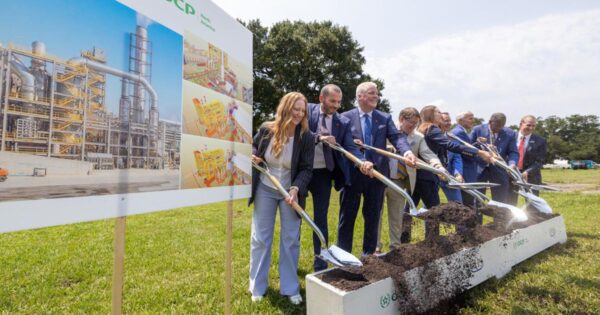
U.S. Secretary of Agriculture Brooke Rollins said earlier this month at Minnesota’s Farmfest that “input prices are killing” farmers’ bottom line. At the Wednesday news conference, she said previously almost all of the U.S. fertilizer supply was domestically produced, but the share of phosphate made in the U.S. has continued to dwindle.
“That has dwindled down to now about 40%, and if we can’t feed and fuel ourselves, then there will be no America for the future,” Rollins said. “We will no longer know freedom. We’ll no longer know the American Dream.”
Where the New Facility will Source its Raw Materials
The new facility’s raw materials will come from Morocco, which mining group OCP says holds 68% of global phosphate reserves. The group has said the U.S. comparatively has 2% of Morocco’s supply of the raw material.
This supply chain could create fewer “shipping disruptions that happen with geopolitical events,” said John Griffith, executive vice president of the company’s agriculture and hedging business.
That could help farmers avoid some unexpected spikes in their fixed expenses, he added.
High Fertilizer Prices A Challenge for US Farmers
Higher fertilizer prices have further contributed to the woes of U.S. farmers who have faced years of financial stress amid on-again-off-again trade wars and global inflation.
With lackluster crop prices, farmers say they can’t keep their profitability up.
Capacity and Production Timeline
CHS said the facility will produce more than 1 million metric tons of phosphate-based fertilizer per year and production could start as early as the end of 2028, Griffith said.
The project is a joint venture with OCP North America, a subsidiary of the OCP Group, a mining company owned by the Moroccan government.
The agriculture co-op, with headquarters in Inver Grove Heights, said it applied for potential funding through a new U.S. Department of Agriculture program designed to increase domestic supplies of fertilizer, but Griffith declined to disclose how much the company is seeking.
First of its Kind Since 1984
CHS said the Louisiana facility will be the first of its kind built in the United States since 1984.
Griffith said the raw materials used to make fertilizer will be shipped from Morocco to the facility near the Mississippi River. There, it will be granulated into phosphorus fertilizer that, he said, provides plants “essential energy” for growth, developing roots and boosting farmers’ yield.
From the facility, the fertilizer could ship up the Mississippi River and be taken from ports by trains and trucks to other facilities.
Partnering with the world’s largest phosphate fertilizer company creates security since the U.S. phosphate supply is limited, Griffith said.
Project Factsheet: U.S. Phosphate Fertilizer Production Facility
Project Name: CHS & OCP North America Phosphate Fertilizer Joint Venture
Partners: CHS Inc. (America’s largest farmer-owned co-op) & OCP North America (subsidiary of Moroccan state-owned OCP Group)
Estimated Capital Investment: Up to $450 million
Historical Significance: First phosphate fertilizer plant built in the United States since 1984
Location and Logistics
- Site Location: Cornerstone Energy Park in Waggaman, Jefferson Parish, Louisiana (alongside the Mississippi River near New Orleans)
- Key Supply Advantage: Avoids high-risk shipping bottlenecks (e.g., Strait of Hormuz)
- Distribution Network: Finished products moved via barge up the Mississippi River, then distributed via rail and truck to agricultural hubs across the Midwest and Northern Plains
Production and Operations
- Annual Output: 1.0 million to 1.3 million metric tons of granulated phosphate-based fertilizers (primarily MAP and DAP)
- Raw Material Feedstock: Phosphoric acid supplied directly from OCP Group’s reserves in Morocco (which hold ~68% of world reserves)
- Target Impact: Expected to reduce U.S. reliance on imported phosphate fertilizers by at least 48%
Timeline and Funding
- Construction Start: Targeted before the end of 2026
- Build Duration: Estimated 24 months from ground-breaking
- Target Operational Date: As early as late 2028
- Federal Support: Applied for funding through the USDA’s Fertilizer Investment and Expansion for Long-term Domestic Supply (FIELDS) program
Economic Impact
- Construction Employment: 500 temporary jobs
- Permanent Employment: 60 high-impact direct positions
- Total Regional Impact: Estimated 924 direct and support-service jobs created in Louisiana
Project Team
Primary Project Partners (Joint Venture)
- CHS Inc.: The nation’s largest farmer-owned agricultural cooperative (headquartered in Inver Grove Heights, Minnesota), acting as the primary U.S. distribution partner and co-investor.
- OCP North America: The U.S. subsidiary of OCP Group, acting as the joint venture entity alongside CHS to manage U.S. operations and marketing.
Parent and Holding Companies
- OCP Group (Office Chérifien des Phosphates): The state-owned Moroccan mining giant and world’s largest phosphate producer, serving as the parent company of OCP North America and supplying the raw phosphoric acid.
Subsidiary and Operational Units Involved
- OCP Nutricrops: The specialized crop-nutrition division under OCP Group involved in overseeing global phosphate solutions and technical development for the project.


Leave a Reply