Sponsored content
For industrial complexes, agricultural farms, housing developments, and commercial facilities, securing a continuous supply of pressurized water is a fundamental operational necessity. While ground-level storage tanks paired with booster pumps can deliver water across a site, they remain vulnerable to power outages, pump wear, and fluctuating line pressure.
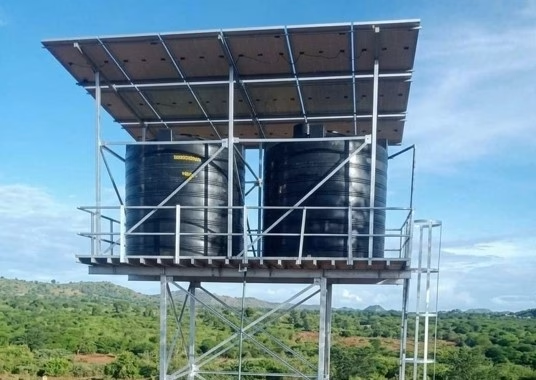
Elevated steel tank towers overcome these limitations by harnessing potential energy. Raising water above ground level establishes a reliable, continuous gravity-fed supply
The Operational Advantages of Gravity-Fed Storage
Elevated water towers serve a dual purpose: large-scale storage and natural pressure regulation.
- Uninterrupted Flow During Power Outages: When grid electrical supply fails or backup generators experience delays, elevated storage continues delivering full water pressure to distribution networks without disruption.
- Peak Demand Buffering: Water consumption often spikes during specific hours of the day. Pumping equipment can run at a steady, efficient rate during low-demand periods to fill the overhead tank, allowing stored gravity capacity to meet sudden volume surges without straining surface pumps.
- Reduced Energy Overhead: Facility managers can optimize operational costs by scheduling main supply pumping cycles during off-peak energy tariff hours.
Engineering and safety standards
Designing an elevated water tower demands meticulous structural analysis to handle static weight and dynamic environmental forces. A single cubic meter of water weighs one metric ton; holding tens or hundreds of metric tons overhead introduces significant structural load demands. Below are essential design factors:
- Dynamic Weight Management: The supporting steelwork must easily handle the combined weight of the steel tank, internal water volume, and supporting platform.
- Wind and Seismic Resistance: Elevated structures act as massive surfaces against horizontal forces. Diagonal tension bracing, gusset plates, and heavy-duty structural columns distribute wind forces safely down to the ground.
- Reinforced Anchor Systems: Tower legs must be anchored to heavy, reinforced concrete footings using high-tensile steel anchor bolts to prevent tipping or shifting under severe storm conditions.
Structural fabricators apply rigorous engineering standards to build elevated tank stands that handle heavy dynamic loads while remaining durable under harsh outdoor conditions
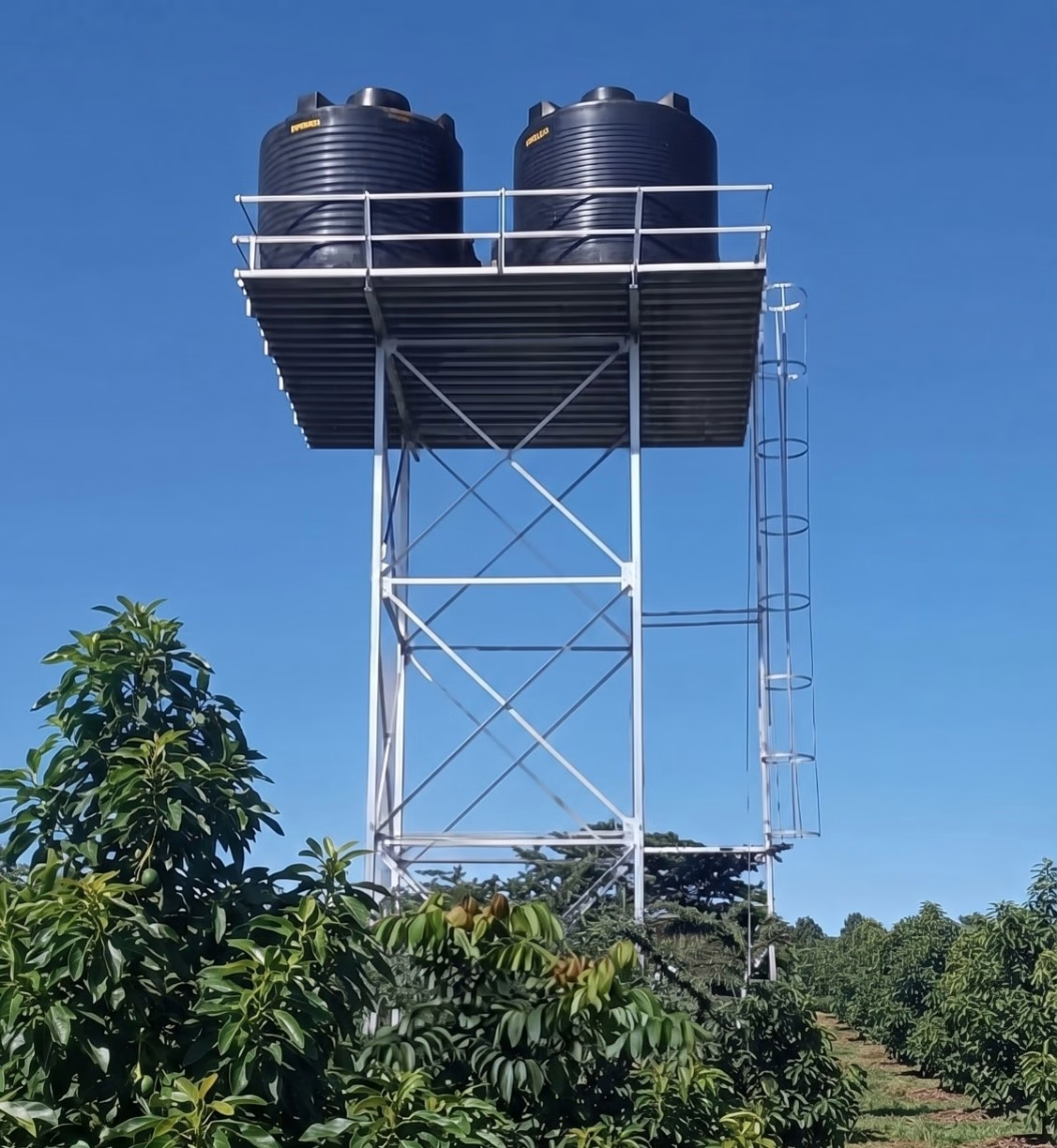
Protecting the steel for extended life.
Steel offers high strength-to-weight ratios and structural reliability, but raw steel requires protection against moisture and environmental oxidation.
- Hot-Dip Galvanizing: Submerging fabricated steel components into molten zinc forms a metallurgically bonded protective coating. Galvanizing provides decades of maintenance-free corrosion resistance, even in coastal or industrial settings.
- Specialized Industrial Coatings: A multi-layered paint system combining a zinc-rich primer, intermediate barrier coat, and UV-resistant topcoat ensures long-term weather resistance and allows custom color choices.
- Food-Grade Internal Linings: For potable water storage, internal panel surfaces receive non-toxic, food-grade epoxy coatings or specialized flexible liners to preserve water quality.
Building it right from the workshop floor
Elevated steel tank towers remain one of the most reliable engineering solutions for secure, efficient water distribution. By integrating robust structural design, precise fabrication, and high-performance corrosion protection, these structures give facilities complete control over their water pressure and storage security for decades.