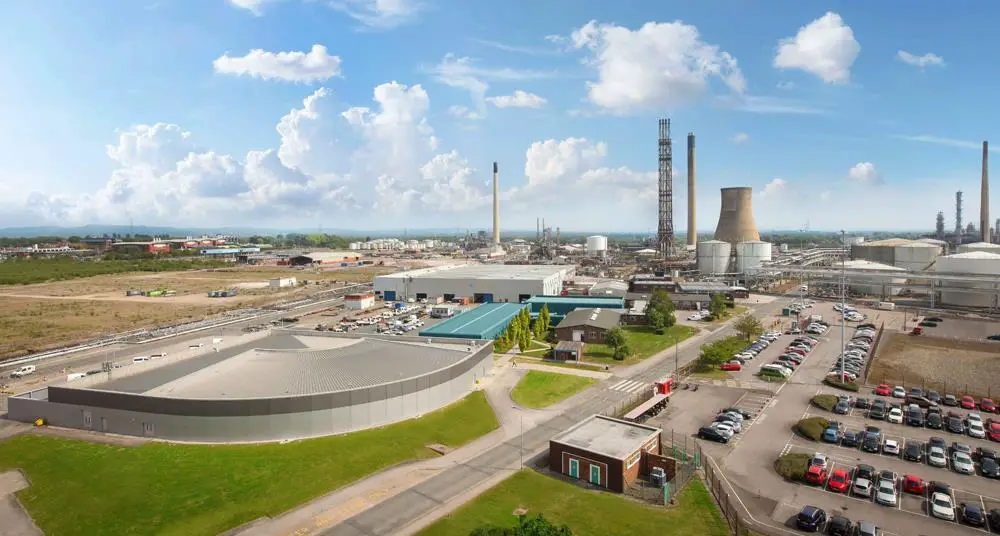
The IFMIF-DONES fusion materials testing facility is a neutron irradiation complex located at Escúzar in Granada, Spain, and it has now moved into main construction. Escúzar Town Council issued the building permit in June 2026, clearing works for the summer, and a joint venture of Ferrovial, FCC and Añil holds the design and construction framework agreement.
Supervision Award Puts the IFMIF-DONES Project Under TYPSA and Egis
Site supervision passed to TYPSA, working with Egis, at a kick off meeting on 24 July 2026 at the consortium headquarters in Granada. The award lands amid a wider Spanish surge in specialist technical builds, from the €1 billion Rubix AI campus in Catalonia to this accelerator. Beam commissioning is scheduled from 2029.
Project Overview
- Project Name: IFMIF-DONES, the International Fusion Materials Irradiation Facility, Demo Oriented Neutron Source
- Location: Escúzar, Granada province, Andalusia, Spain
- Project Value: €174 million, just over €200 million including VAT, approved by Spain’s Council of Ministers in May 2025 for the main building and associated infrastructure. Spain carries 50 per cent of overall construction costs and 10 per cent of operating costs, Croatia 5 per cent of each, and Japan is contributing 5 per cent of the accelerator construction investment
- Client and Owner: IFMIF-DONES España Consortium, led by Director Ángel Ibarra
- Main Contractor: Joint venture of Ferrovial, FCC and Añil, appointed under the design and construction framework agreement in March 2026
- Construction Supervision: TYPSA, in collaboration with Egis
- Key Components: Main Building housing a 5 MW continuous wave superconducting linear accelerator, a liquid lithium target loop and the test cell, alongside auxiliary and administration buildings
- Construction Start: Main building works from summer 2026, following the June 2026 permit, with the formal construction phase having opened in March 2023
- Expected Completion: Construction phase of roughly ten years, with tiered beam commissioning from 2029 and a scientific operating life of at least 30 years
- Strategic Impact: Will qualify EUROFER steel and similar alloys for Europe’s DEMO reactor. Spain’s then acting Prime Minister Pedro Sánchez projected revenue above €6 billion and about 54,000 jobs annually in Spain from hosting the facility
Project Team
- Client and Owner: IFMIF-DONES España Consortium
- Main Contractor: Joint venture of Ferrovial, FCC and Añil
- Construction Supervision and Project Management: TYPSA
- Supervision Partner: Egis
- Design Support Engineering: Ayesa and UG21
- European Programme Bodies: Fusion for Energy, with EUROfusion and EURATOM
- Accelerator Collaboration: Fusion for Energy and Italy’s INFN
- Planning Authority: Escúzar Town Council
- Government Funders: Government of Spain and Government of Croatia, with Japan contributing to accelerator construction
- Academic Partner: University of Granada, through its UGR DONES Programme
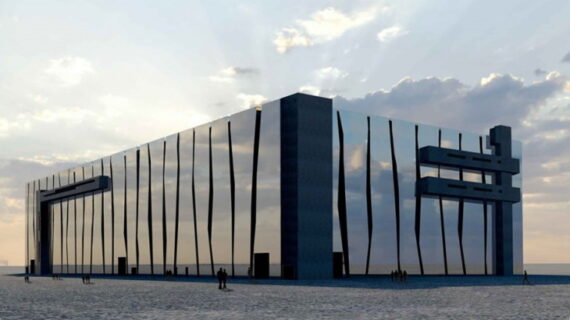
Reported 13th October 2023: The commencement of construction on the International Fusion Materials Irradiation Facility-Demo Oriented Neutron Source (IFMIF-DONES) project in Granada, Spain, marks a significant milestone. This essential facility will play a pivotal role in examining materials intended for future fusion power reactors.
In the context of fusion energy, the process of deuterium-tritium fusion reactions, as planned for the International Thermonuclear Experimental Reactor (ITER) and subsequent Demonstration Power Plants (DEMOs), results in the deterioration of materials due to transmutation. Ensuring the suitability of materials for DEMOs necessitates the replication of fusion conditions for materials testing. This is where neutron sources become instrumental.
Also read: €1,800 Billion Funding Initiates Construction on 2nd Bushehr Nuclear Reactor
The IFMIF-DONES project aims to replicate DEMO-like conditions for potential structural materials. Employing a particle accelerator, IFMIF-DONES will generate a continuous-wave deuteron (D+) beam directed at a target composed of a liquid lithium curtain. The interaction between deuterium and lithium will produce free neutrons, simulating the projected neutron flux and duration expected in Europe’s DEMO. The high-flux test module, situated behind the lithium target, will house capsules containing material samples for neutron irradiance testing.
One of the primary functions of the IFMIF-DONES facility will be the assessment of EUROFER, the reduced activation steel alloy designated for use as DEMO’s first-wall structural material, as emphasized by IFMIF-DONES Director Angel Ibarra. “Conducting these experiments in a fusion-like environment is vital to validate this material for Europe’s DEMO. We will assess numerous samples of EUROFER and EUROFER-like alloys under varying conditions of neutron and heat flux to comprehensively understand their mechanical properties.”
The IFMIF-DONES initiative represents the culmination of over a decade of preparatory work under the IFMIF-EVEDA (Engineering Design & Engineering Validation Activities) project, a collaborative effort between Europe and Japan aimed at complementing the ITER Project and advancing overall fusion development.
Spain, along with Croatia, is leading the IFMIF-DONES project. Spain is providing 50% of construction costs and 10% of operating costs, while Croatia is responsible for 5% of each.
The construction phase of the IFMIF-DONES facility is projected to span approximately 10 years, followed by a scientific and technological utilization period lasting at least 30 years. Once operational, it will establish a crucial database of fusion-like neutron irradiation effects on materials necessary for DEMOs, serving as a reference for material radiation response.
Spain’s acting Prime Minister, Pedro Sánchez, highlighted the substantial opportunities stemming from hosting the IFMIF-DONES particle accelerator. He underscored that the project’s development would generate significant revenue exceeding €6 billion and create approximately 54,000 jobs annually in Spain. The construction of IFMIF-DONES is a fundamental element of the European Roadmap for obtaining electricity from fusion energy, underscoring its pivotal role in the quest for sustainable and highly productive energy sources.



Leave a Reply