
The implementation of the direct railway link between Jomo Kenyatta International Airport (JKIA) and Nairobi’s Central Business District (CBD) is progressing under the broader Nairobi Railway City Central Station framework. Designed to serve as the centerpiece of the city’s multimodal transit network, the project integrates a Standard-Gauge Railway (SGR) spur line connecting JKIA directly to the upgraded Nairobi Central Station, alongside dedicated Bus Rapid Transit (BRT) corridors and non-motorized transport routes. Once operational, the modernized hub is projected to manage peak flow capacities of up to 30,000 passengers per hour, offering daily commuters and international travelers a fast, reliable bypass around heavy surface traffic on Mombasa Road. Also, this project will be joined by the Nairobi Underground Rail in enhancing connectivity in Kenya’s capital.
Financially and strategically, the initiative is backed by international partnerships and state infrastructure commitments, including support under the UK Export Finance (UKEF) framework for the Central Station redevelopment. Kenya Railways has continued pushing market engagement and urban mobility planning studies to prepare for execution, positioning the airport link as a critical component ahead of regional events like AFCON 2027. While full construction on the dedicated airport track proceeds through preliminary and procurement phases, Kenya Railways maintains a shuttle link from the Embakasi and Syokimau stations to ensure interim transit access for airport passengers.
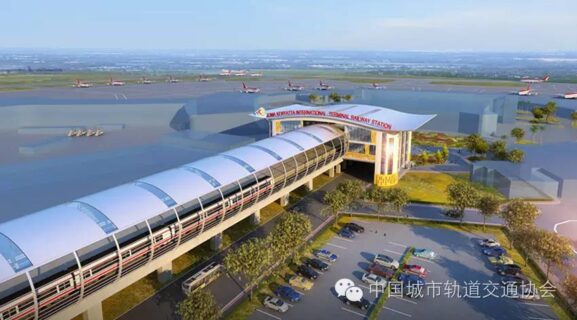
August 14, 2021
Construction of JKIA rail project linking Kenya’s Jomo Kenyatta International Airport to Nairobi CBD is set to face further delays.
Transport Cabinet Secretary James Macharia confirmed the report and said President Kenyatta’s French trip did not lead to the signing of the deal, which was to fund the construction of the five kilometre metre-gauge line linking the airport to standard-gauge rail (SGR) terminus in Syokimau.
“No agreements were signed, we just reviewed progress towards the launch of the project Nairobi had been expected to close the US $156M financing deal in Paris when the President made the two-day visit to the French capital,” said Mr Macharia.
Also Read:Kenya: Loan for construction of railway line linking JKIA to Nairobi CBD
JKIA rail project
The JKIA-Nairobi city centre railway line project was planned to decongest the capital city and reduce the time taken between the central business district and the region’s largest international airport which handled 11.7 million domestic and international fliers last year. The distance between JKIA and Nairobi City Centre is 20km, and normally it should take between 30 minutes and an hour at most to travel between the two points, however, it takes up to 120 minutes due to traffic on the usually busy Mombasa Road.
The JKIA rail project, which will also be complemented by a Rapid Bus Transit System, upon completion will freely ship at least 500,000 urban commuters daily for a period of 12 months upon its completion. The number is expected to rise up to 1 000 000 in the following five years’ time.
The project which is planned to be complete in 24 months after start of works, will be undertaken by French companies in conjunction with Kenyan state. Deals, alongside the CBD-JKIA railway link project, also include a 30-year concession for a consortium led by Vinci to operate a highway between Nairobi and Mau Summit in Western Kenya.
Project Factsheet
Project Name: JKIA – CBD Airport Express / Commuter Line (Line 4)
Implementing Agency: Kenya Railways Corporation (KRC)
Planning and Transit Authority: Nairobi Metropolitan Area Transport Authority (NaMATA)
Corridor Route: Nairobi Central Station-Makadara-Imara Daima-Embakasi / Syokimau Transit Hub-JKIA Terminal Link
Track Scope: 15–20 km route (involving track upgrades and a dedicated 5–7 km new spur line into JKIA)
Target Travel Time: 20 to 25 minutes (bypassing heavy surface traffic on Mombasa Road)
Primary Hub Station: Nairobi Central Railway Station (Nairobi Railway City Hub)
Design Passenger Capacity: Up to 30,000 passengers per peak hour across the central station network
Infrastructure Features
- Dedicated Airport Track Spur: Construction of a direct rail link running off the mainline network straight into the airport terminal precinct.
- Central Station Integration: Full connectivity with the Nairobi Railway City, featuring modern multi-level passenger terminals, ticketing halls, and retail spaces.
- Multimodal Interchange: Seamless transfers between airport trains, standard commuter rail lines, Bus Rapid Transit (BRT) routes, and Non-Motorized Transport (NMT) corridors.
- Dedicated Fleet Deployment: Modern Diesel Multiple Units (DMUs) and high-capacity suburban rolling stock tailored for airport travelers with luggage accommodations.
Projected Benefits & Strategic Impact
- Traffic Bypass: Eliminates travel delays along the heavily congested A104 (Mombasa Road) corridor.
- Airport Competitiveness: Elevates JKIA’s status as a top-tier aviation and business hub in East Africa by offering express urban rail connectivity.
- Economic Productivity: Saves millions of commuter hours annually while facilitating fast movement for business travelers, tourists, and airport staff.
- AFCON 2027 Preparedness: Serves as a vital mobility anchor for regional and international visitors attending major global events in Nairobi.
Related Strategic Projects
- Nairobi Railway City Masterplan: A $250M+ urban regeneration project backed by UK Export Finance (UKEF) to build a modern transit-oriented district in central Nairobi.
- Riruta–Lenana–Ngong Rail Line: Complementary rail expansion serving the city’s western and southern commuter corridors.
Project Team
Kenya Railways Corporation (KRC): Asset owner, primary project proponent, and rail operator. KRC oversees track construction, station development (including Nairobi Central Station), and rolling stock acquisition.
Nairobi Metropolitan Area Transport Authority (NaMATA): Regional statutory planning body responsible for integrating the JKIA airport rail line into the broader Bus Rapid Transit (BRT) and Nairobi Commuter Rail master plans.
Ministry of Roads and Transport (State Department for Transport): Executive ministry offering policy direction, inter-agency coordination, and bilateral infrastructure negotiations.
eleQtra: Lead infrastructure development partner working in collaboration with Kenya Railways to structure, design, and manage the concession and financial framework for the Nairobi Commuter Rail system (including the dedicated 5–7 km JKIA express link).
Dar Al-Handasah Consultants: engineering design, master planning, and technical supervision consultant assigned across major landside and transit-oriented connection studies serving the JKIA transit precinct.
China Road and Bridge Corporation (CRBC) / China Communications Construction Company (CCCC): Primary engineering, procurement, and construction (EPC) contractors involved in executing landside access corridors, civil works, and rail connection interfaces between Central Nairobi and the airport zone.
Trade and Development Bank (TDB) and Africa Finance Corporation (AFC): Mandated lead arrangers structuring debt and equity financing for broader transit and aviation infrastructure linking the airport core to central Nairobi.
UK Export Finance (UKEF): Providing financial guarantees and advisory backing for the overarching Nairobi Railway City development, which forms the CBD terminus anchor for the JKIA airport express train.



Leave a Reply