
The Denver FasTracks program is a regional rail and bus expansion located in metro Denver, Colorado, and the Regional Transportation District says funding for its four unfinished corridors remains unidentified, according to its 2026 status report. The agency filed its completion report on November 25, 2025, having spent $5.54 billion of a $6.20 billion budget through 2025.
Denver FasTracks Northwest Rail Plan Now Rides on a Front Range Vote
A November 3, 2026 vote on a 0.333 percent sales tax, estimated at $295 million a year for the Colorado Connector train, is tied to the joint Denver to Fort Collins service that combines elements of FasTracks Northwest Rail. Los Angeles offers a contrast, with an $893 million federal grant behind its $2.43 billion East San Fernando Valley Light Rail project.
Project Overview
- Project Name: Denver FasTracks
- Location: Denver metro area, Colorado
- Client or Owner: Regional Transportation District (RTD)
- Project Value: Original budget of $4.7 billion; program budget of $6.20 billion, with $5.54 billion spent through 2025 (RTD)
- Key Components: 25 miles of light rail, 53 miles of commuter rail, the Flatiron Flyer bus rapid transit line and the Denver Union Station hub
- Unfinished Corridors: Northwest Rail, North Metro, Southwest Extension and Central Extension, estimated at $1.6 billion to complete (RTD 2025 report)
- Joint Service: Three daily round trips between Denver Union Station and Fort Collins, with infrastructure estimated at $333 million by a state adviser and service targeted for January 1, 2029
- Expected Completion: State legislation asks RTD to show how it can finish the unfinished corridors by 2034
- Strategic Impact: The joint service is planned as the first phase of the wider Front Range Passenger Rail network
Project Team
- Client and Owner: Regional Transportation District
- Joint Service Partner: Colorado Department of Transportation
- Joint Service Partner: Front Range Passenger Rail District
- Rail Access Partner: BNSF Railway
- Operations Discussions: Amtrak
- Regional Planning Body: Denver Regional Council of Governments
- Legislative Body: Colorado General Assembly
- Comparison Project Client: Los Angeles County Metropolitan Transportation Authority
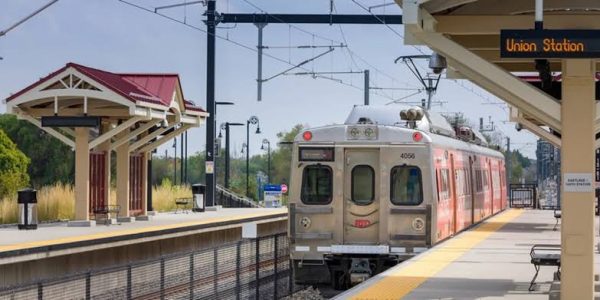
Reported 30th September 2025: The Regional Transportation District (RTD) released a draft report on its long-delayed FasTracks transit expansion, estimating at least $1.6 billion in capital and operating funds are needed to finish the four incomplete rail corridors of the voter-approved 2004 plan.
The 2025 Finishing FasTracks Report, published Sept. 29, details both the cost and the obstacles to completing the 20-year-old program, which has already consumed more than $5.5 billion, exceeding the original $4.7 billion budget. Roughly 75% of the project is complete, yet four corridors—Northwest, North Metro, Southwest, and Central—remain unfinished. RTD now has a December 1 deadline to submit its final plan to the governor and the Colorado General Assembly, as mandated by the state’s new Transit Reform law. As outlined in ongoing rail projects in the USA, Denver’s FasTracks challenges reflect broader national efforts to modernize rail systems amid rising costs, complex logistics, and the push for sustainable urban transit solutions.
A 20-Year Journey
Approved by the public in 2004, FasTracks was envisioned as a 122-mile regional rail and bus rapid transit expansion, with Denver Union Station’s redevelopment as an intermodal hub at its core. RTD has since built:
25 miles of light rail track
53 miles of commuter rail track
The Flatiron Flyer bus rapid transit line on US 36
Union Station’s rail platforms and below-grade bus concourse
These achievements are approximately three-quarters of the program, but the other corridors have been delayed for more than a decade due to declining sales tax revenues after the 2008 recession, increasing construction costs, and supply chain problems.
FasTracks unfinished corridors
The draft report confirms that the most difficult and expensive work lies ahead:
Northwest Rail – A reduced “peak service” option is under consideration to connect Boulder and Longmont.
North Metro Corridor – Partially built line requiring extensions to the north.
Southwest Extension – Planned extension of existing light rail.
Central Extension – Short downtown rail spur.
Finishing all four corridors would carry a price tag of $1.6 billion. Even if the plan were pared back to just the Northwest Rail and North Metro extensions, costs would still hover near $1 billion. More than double the $441 million RTD expects to have on hand by 2030.
Funding Outlook
RTD forecasts only $145 million in FasTracks-specific reserves by 2030 in its five-year financial plan. Even if state contributions from recently passed transportation legislation come through, outside help is only expected to add another $296 million through 2034. That means a deficit of more than $1 billion.
Operating costs present another challenge since rail service requires not only up-front capital but also long-term commitment to staffing, power, and equipment replacement. The draft report calls attention to the fact that without new, dedicated sources of funding—statewide, regional, or federal—RTD is unable to finish FasTracks by the 2034 legislative deadline.
RTD’s Position
RTD General Manager and CEO Debra A. Johnson described the report as a “first step” toward a solution for the future of the program. The agency, she said, is committed to working with the governor, the legislature, and local leaders in coordinating FasTracks with intercity passenger rail and statewide mobility discussions currently underway.
The FasTracks program is one of many rail modernization and expansion efforts underway across the United States. Similar setbacks—rising construction costs, funding gaps, and shifting timelines—have slowed projects such as California’s High-Speed Rail, New York’s Gateway Program under the Hudson River, and extensions of Los Angeles Metro’s Purple Line. Each highlights how large-scale rail investments often struggle to keep pace with economic conditions while trying to meet long-promised commitments to riders.

Factsheet for FasTracks (as of 2025)
Began: Approved by Denver metro voters in 2004
Original Budget: $4.7 billion
Spent to Date: More than $5.5 billion
Completed: 75%
Completed Assets:
25 miles of light rail
53 miles of commuter rail
Flatiron Flyer BRS on US 36
Denver Union Station intermodal hub
Remaining Corridors: Northwest, North Metro, Southwest, Central
Estimated Completion Costs: $1.6 billion for all; ~$1 billion for scaled-back version
Available Funding by 2030: $145 million in reserves + up to $296 million in potential state funds


Leave a Reply