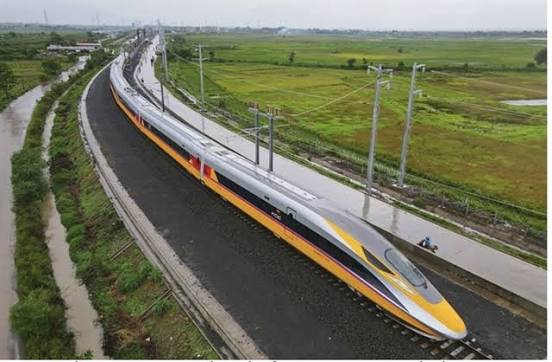
Vietnam’s North-South high-speed rail project has taken a significant step towards implementation after the government selected an international consortium for a $399 million consultancy contract. The eight-company consortium brings together French, South Korean and Vietnamese engineering firms. It will undertake technical surveys, prepare the feasibility study, develop front-end engineering design (FEED) and produce bidding documents.
The 30-month assignment will establish the technical and financial framework for subsequent construction packages. Moreover, the appointment marks an important milestone in Vietnam’s ambition to develop a 1,541-kilometre railway connecting Hanoi and Ho Chi Minh City. The wider infrastructure project carries an estimated investment of approximately $65 billion.
North-South High-Speed Rail Design Enters Preparation Phase
The Thang Long Project Management Board, operating under Vietnam’s Ministry of Construction, approved the contractor selection results for consultancy package TV-02. The winning consortium submitted a bid worth approximately VND10.24 trillion, equivalent to $399 million. The package has an estimated contract value of approximately $420 million.
French engineering consultancy SYSTRA leads the consortium. Its South Korean partners include Sambo Engineering, Yooshin Engineering Corporation and Korea National Railway (KNR). Four Vietnamese companies complete the international partnership.
Following the selection announcement, the project management board plans to negotiate the contract before signing the agreement. The contract will run for 30 months after commencement.
The consultancy will examine the railway alignment and identify important infrastructure locations. These include stations, bridges and tunnels along the proposed corridor. Furthermore, the team will assess different railway technologies and investment options.
The feasibility study will establish whether the proposed infrastructure offers technical and economic viability. It will also inform financing arrangements and the investment structure. Consequently, the findings will guide government decisions before major construction contracts proceed.
North-South High-Speed Rail Faces Major Engineering and Land Challenges
The planned railway will extend approximately 1,541 kilometers between Ngoc Hoi Station in Hanoi and Thu Thiem Station in Ho Chi Minh City. It will cross 15 provinces and centrally governed cities.
The proposed infrastructure includes a double-track railway using standard-gauge tracks measuring 1,435 millimeters. Engineers will design the system for operating speeds of up to 350 kilometers per hour.
Once operational, the railway could reduce travel time between the two major cities. The current journey takes approximately 30 hours, while the proposed service targets around five hours. Therefore, the project could significantly improve passenger mobility and regional connectivity.
However, land acquisition and construction coordination remain important implementation challenges. Thousands of residents face relocation to accommodate the railway corridor. The Ministry of Construction has instructed the consultants to consider local development plans and minimize disruption to communities.
Vietnam also faces the challenge of coordinating railway infrastructure across multiple administrative jurisdictions. The consultancy must therefore integrate technical surveys, station locations and associated infrastructure requirements.
The government has also experienced delays in its implementation preparations. Vietnam postponed the planned construction timeline by one year, pushing the expected start towards the end of 2027. Meanwhile, the government targets completion of land clearance by the fourth quarter of 2028 under separately managed projects.
Vietnam’s wider high-speed railway expansion also includes the $3.94 billion Ben Thanh-Can Gio railway project, which faces environmental challenges involving the proposed conversion of 4.57 hectares of protective mangrove forest. The 54-kilometre railway will connect central Ho Chi Minh City with Can Gio, with VinSpeed targeting completion in 2028. Both developments highlight Vietnam’s growing investment in high-speed rail infrastructure, alongside the engineering, land acquisition and environmental considerations shaping major railway construction projects across the country.
North-South High-Speed Rail Consultancy to Shape Construction Packages
The consultancy will also prepare procurement documents for contractors undertaking subsequent construction works. This stage will establish technical specifications and provide a clearer basis for selecting construction contractors.
Importantly, the $399 million agreement does not constitute an award for constructing the railway. Instead, it covers investment preparation, engineering assessments and procurement planning.
The participation of Vietnamese engineering firms also creates opportunities for domestic companies to strengthen their railway design capabilities. TEDI Chairman Pham Huu Son indicated that Vietnamese partners would undertake a substantial share of the consultancy workload.
The domestic companies have previously gained experience through railway design consultancy assignments. Their participation alongside established international engineering firms could strengthen technical knowledge transfer.
Furthermore, the railway represents a major component of Vietnam’s long-term transport infrastructure ambitions. Its eventual delivery will require substantial investment, extensive land preparation and coordinated construction across the country.
The feasibility study and engineering design will therefore determine important decisions before Vietnam advances towards the main construction phase.

Leave a Reply