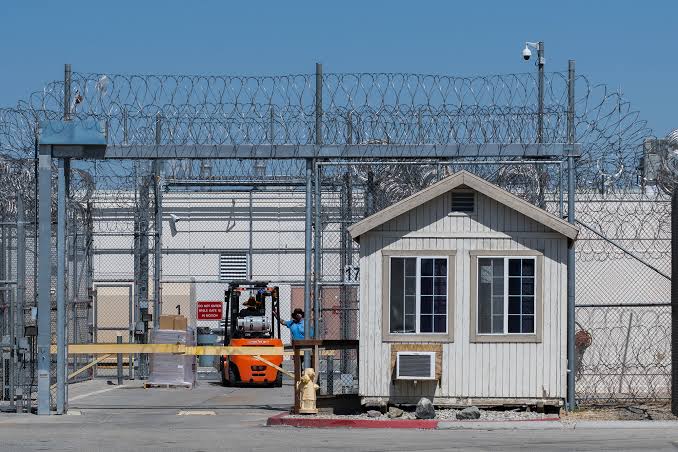
The Department of Homeland Security has awarded five construction contracts worth up to $7.3 billion to expand immigration detention capacity at government-owned sites in five states.
The contracts, awarded September 21, cover facilities in New York, Texas, Arizona, Florida and California. They are Indefinite Delivery, Indefinite Quantity (IDIQ) agreements, meaning they establish a framework for future construction rather than authorize immediate building.
No construction has begun and no money has been spent under the contracts. DHS will issue task orders as it determines project needs, with funding also dependent on congressional appropriations.
Three Contractors Receive Five Awards
Three firms received the five contracts.
Rapid Deployment Inc. of Alabama received the largest share, including a $2.2 billion contract for a detention facility in El Paso, Texas, and a $1.5 billion contract for a facility in Batavia, New York.
GardaWorld Federal Services received two $1.2 billion contracts covering projects in Florence, Arizona, and Miami, Florida.
Rudiarius Holdings Corp. received a $1.2 billion contract for a facility in El Centro, California.
The contractors did not provide substantive comments. Rapid Deployment did not respond to requests for comment, while Rudiarius could not be reached. GardaWorld directed inquiries to DHS, which did not immediately respond.
Five Government Sites Targeted for Expansion
The contracts cover a mix of existing detention centers, former detention sites and government-owned properties.
The Batavia and Florence projects will expand existing ICE detention centers. El Centro previously housed an ICE facility that closed in 2014 and is now used by the U.S. Marshals Service.
The El Paso and Miami contracts will add detention capacity on government-owned properties, although the Miami award does not identify a specific facility.
The first construction packages could involve standardized “secure housing units.” ICE asked bidders to price one unit at each of the five sites, with estimated costs ranging from $24 million to $42 million.
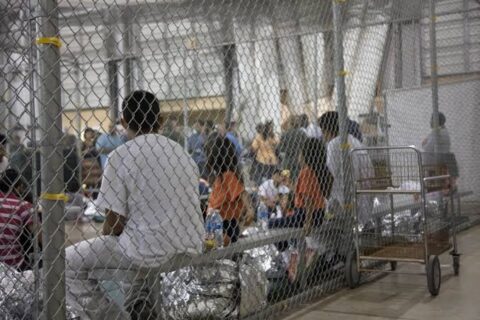
Plans for a similar unit at Port Isabel, Texas, show a one-story building with 26 steel cells, including 21 men’s cells, three women’s cells and two accessible cells. The design also includes day rooms, showers, search rooms, a control room, staff offices, storage and separate fenced recreation yards.
Port Isabel is further along in planning and was the only unit ICE identified as funded when it solicited bids. Its design could serve as a template for similar additions at other sites.
Detention Construction Strategy Shifts
The awards mark a change in ICE’s approach to expanding detention capacity.
After receiving $45 billion under the One Big Beautiful Bill Act for immigration enforcement, ICE initially focused on acquiring vacant warehouses and converting them into detention facilities.
Between December 2025 and April 2026, the agency spent more than $1 billion on 11 vacant properties, according to the material in the draft. Those purchases drew scrutiny, including a DHS inspector general investigation into the broader warehouse detention program.
The agency later reassessed that strategy and moved toward construction on government-owned land while increasing its use of private prison operators.
DHS also spent $2.2 billion acquiring four private prison facilities from CoreCivic in California, Minnesota and Kansas. The department plans to retain CoreCivic as an operator and has agreed to pay CoreCivic and GEO Group $240 million annually to reactivate defunct facilities.
Billions Remain for Future Detention Projects
The five new IDIQ contracts account for $7.3 billion of a $10 billion program limit, leaving roughly $2.7 billion for additional projects.
The remaining work includes a new wing at Port Isabel and seven locations grouped under the “Mega Hub DC” designation. Those locations include Honolulu, St. Thomas in the U.S. Virgin Islands, and the naval base at Guantánamo Bay, Cuba.
DHS has not disclosed bed counts, total square footage or construction schedules for the five newly awarded projects. The scope and cost of individual projects will depend on future task orders.
From a construction standpoint, the contracts could support specialized secure facilities, medical and administrative buildings, perimeter security systems and related infrastructure upgrades. But the scale and timing of that work remain dependent on future federal funding and project orders.
The planned ICE detention expansion also reflects a broader push to increase federal detention capacity through new and expanded facilities. That approach can be seen in Wyoming, where the Big Horn Contract Detention Facility project is advancing as another major detention infrastructure development. Together, the projects highlight the growing construction pipeline for secure detention facilities as federal agencies expand available capacity.
ICE Detention Expansion — Project Factsheet
Total contract value: Up to $7.3 billion
Program limit: $10 billion
Contracts: Five IDIQ agreements
Contractors: Rapid Deployment Inc., GardaWorld Federal Services and Rudiarius Holdings Corp.
Award date: September 21, 2026
Contract period: Five years
States: New York, Texas, Arizona, Florida and California
Sites: El Paso, Batavia, Florence, Miami and El Centro
Secure housing unit estimate: $24 million–$42 million each
Standard unit: 26 cells
Construction status: No construction has begun
Remaining program capacity: About $2.7 billion
Key limitation: Future work requires task orders and federal funding

Leave a Reply