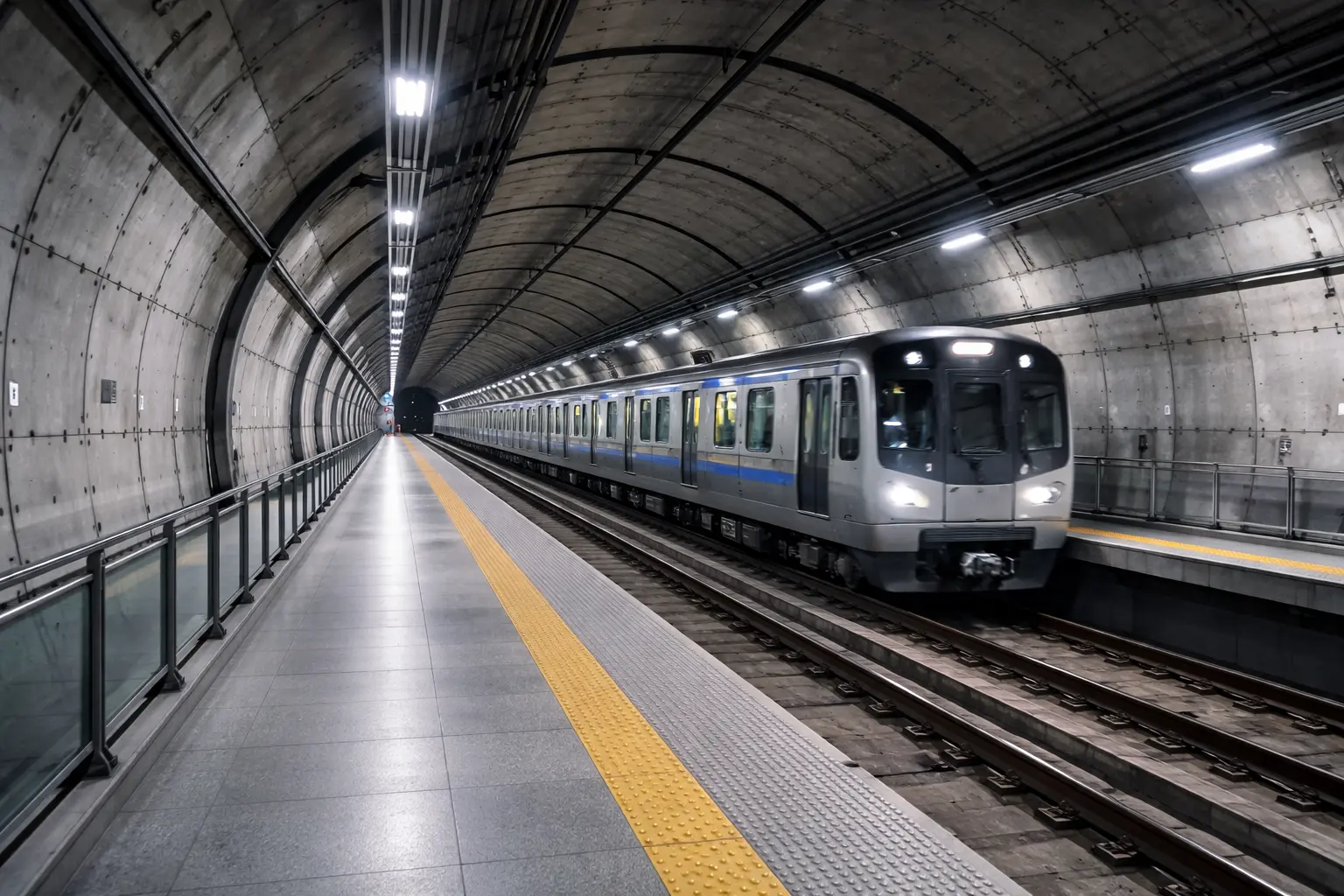
The Dublin MetroLink M500 procurement race has narrowed to three international consortia competing for a €7.3 billion ($7.7 billion) contract. Transport Infrastructure Ireland (TII) formally selected the finalists out of five initial applicants to deliver the core railway systems and operations package.
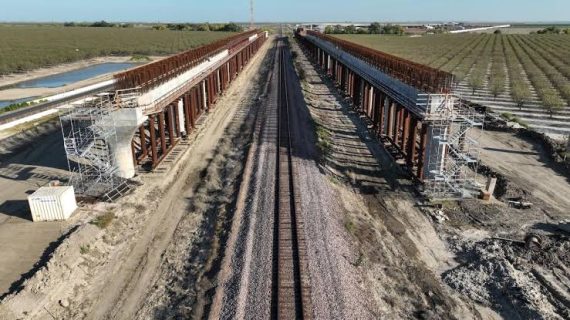
Similarly, major European transit developments continue to advance across the region, including the Colne Valley Viaduct in the United Kingdom. Furthermore, this single contract represents the largest financial package within Ireland’s broader €15.75 billion underground railway megaproject.
Global Consortia Competing for Dublin MetroLink M500
TII issued formal regret letters to two unsuccessful bidding groups on November 13, 2026, leaving three global alliances in contention.
Italian engineering giant Webuild anchors the Turas Link consortium alongside Plenary Group, Hitachi Rail, and Keolis. Notably, Webuild executives publicly named this Irish underground railway package a top strategic priority for the firm. Arup and Egis also support Turas Link on engineering design.
Meanwhile, the GoConnect consortium brings together Meridiam, John Laing, Spanish builder FCC, French rolling stock manufacturer Alstom, and operator RATP Dev.
In addition, Ériu Metro Partners forms the third shortlisted group under the leadership of Macquarie Group. This third alliance includes Hyundai Rotem, Korea Overseas Infrastructure & Urban Development Corporation (KIND), Mota-Engil, MTR Corporation, and Nippon Signal.
Technical Scope of the Dublin MetroLink M500 Package
The Dublin MetroLink M500 contract follows a 32-year availability-based Public-Private Partnership (PPP) delivery model. Specifically, the winning consortium will spend roughly seven years constructing and installing systems before operating the network for 25 years.
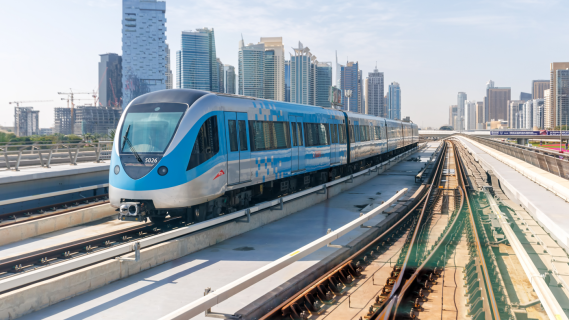
Under this Design, Build, Finance, Operate, and Maintain (DBFOM) structure, the partner will supply Grade of Automation 4 (GoA4) driverless trains.
Moreover, the scope covers line-wide trackwork, power supply networks, signalling, communications, and an operational control centre. The contractor will also build a primary railway depot, a maintenance facility, and a 3,000-space park-and-ride hub at Estuary.
Interior architectural fit-outs and finishes for all 16 stations fall directly within this package. Separate M400 civil engineering contracts will handle the heavy underground tunnelling and structural station shells.
Dublin MetroLink M500 Timeline and Economic Impact
Transport Infrastructure Ireland plans to launch the detailed tender stage for the Dublin MetroLink M500 package in the first quarter of 2027. Subsequently, state officials expect to name a preferred bidder in early 2028 and reach financial close by late 2028. Main underground tunnelling works will begin in 2028, targeting full passenger services between 2036 and 2038.
Once operational, the 19-kilometre automated north–south line will connect Swords in north County Dublin to Charlemont in the south city centre. Trains will stop directly at Dublin Airport, carrying up to 20,000 passengers per hour in each direction. Consequently, the high-capacity corridor will move more than 50 million passengers annually while cutting airport-to-city-centre journey times to roughly 20 minutes.
Project Fact Sheet
Name: Dublin MetroLink — M500 Railway Systems, Rolling Stock, and Operations Package
Type: Automated Underground Rapid Transit Railway (DBFOM Public-Private Partnership)
Location: Greater Dublin Area, Ireland (Swords to Charlemont via Dublin Airport)
Value/Investment: €7.3 billion ($7.7 billion) for M500 package; €15.75 billion total MetroLink programme budget
Developer/Parent Company: Transport Infrastructure Ireland (TII) / Department of Transport (Government of Ireland)
Status: Procurement / Shortlisted Tender Stage (3 consortia selected November 2026)
Construction Employment: Over 8,000 direct and indirect construction jobs projected across the wider MetroLink programme during peak build years
Permanent Employment: Approximately 300 to 400 permanent operational, maintenance, control centre, and station management roles over the 25-year concession
Timelines/Production Targets: Detailed tender Q1 2027; preferred bidder Q1 2028; financial close Q4 2028; main construction start 2028; passenger service launch 2036–2038; capacity of 20,000 passengers per hour per direction (50–53 million annually)
Technology: Grade of Automation 4 (GoA4) unattended driverless metro trains, Communications-Based Train Control (CBTC) signalling, platform screen doors, automated fare collection, and integrated control centre telemetry
Raw Material Supply: High-grade steel rails, copper traction cabling, precast concrete track slabs, architectural station cladding, electromechanical plant, and specialized rolling stock components sourced from European and Asian supply chains
Economic Impact: Estimated €13.7 billion in wider economic benefits for Ireland over 60 years through reduced road congestion, lower carbon emissions, improved airport connectivity, and transit-oriented urban regeneration
Key Infrastructure/Equipment Needs: Driverless metro train fleet, 19 km double-track railway systems, high-voltage traction substations, central operations control facility, maintenance depot, 3,000-space Estuary park-and-ride facility, and MEP/architectural fit-outs for 16 stations
Delivery Risks: Complex interface management between M400 heavy civil tunnelling contractors and M500 systems installers, global rail supply chain inflation, long-term PPP financing costs, and urban utility diversions
Primary Target Markets: Daily commuters across North Dublin, international and domestic air travellers at Dublin Airport, students, and city-centre commercial districts
Project Team
Developer: Transport Infrastructure Ireland (TII) — MetroLink Programme Directorate (led by Programme Director Dr. Sean Sweeney)
Parent Company: Government of Ireland (Department of Transport and National Transport Authority)
Operators (Shortlisted M500 Consortium Contenders):
Turas Link: Plenary Group, Webuild, Hitachi Rail, Keolis (supported by Arup and Egis)
GoConnect: Meridiam, John Laing, FCC, Alstom, RATP Dev
Ériu Metro Partners: Macquarie Group, Hyundai Rotem, KIND, Mota-Engil, MTR Corporation, Nippon Signal
Government/State Stakeholders: Department of Transport (Ireland), National Transport Authority (NTA), Department of Public Expenditure, NDP Delivery and Reform, and An Coimisiún Pleanála
Local Economic Development Stakeholders: Fingal County Council, Dublin City Council, Dublin Airport Authority (daa), Dublin Chamber, and Enterprise Ireland

Leave a Reply