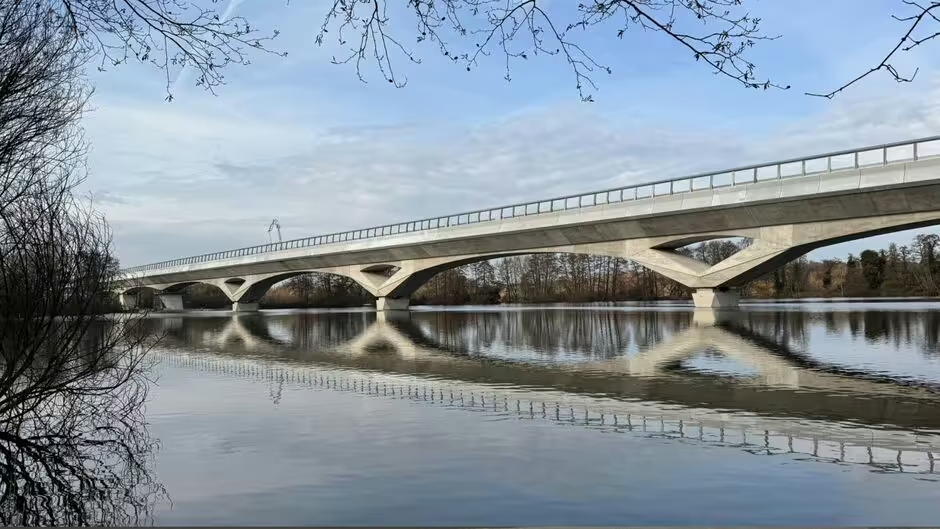
The Colne Valley Viaduct has officially completed its main civil engineering phase and is now transitioning toward railway systems installation, track laying, and overhead electrification.
Following the completion of structural construction across the 2.1-mile (3.38 km) span, main works contractor Align JV is executing final landscaping, ecological restoration, and caretaking works before handing over the asset for track and signalling fit-out. Similarly, major European transit developments continue advancing their systems procurement stages, including Dublin MetroLink M500 in Ireland.
Read also: Dublin MetroLink M500: Three Consortia Shortlisted for €7.3 Billion Rail Systems Contract
Moreover, HS2 Ltd signed a reset civil engineering agreement with Align JV in August 2026 to align payment incentives across the 104 km London-to-West Midlands corridor. Stretching across the Colne Valley Regional Park between Hillingdon and the Chilterns, the Colne Valley Viaduct takes over from Scotland’s Tay Bridge as the UK’s longest railway bridge.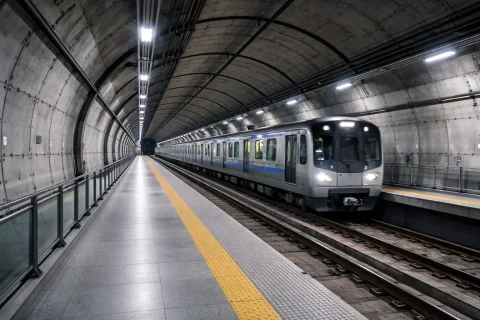
Supported by 56 piers across 57 spans, the 116,000-tonne structure connects HS2’s London and Chiltern tunnels while preparing to carry high-speed trains at up to 200 mph
The Colne Valley Viaduct is UK’s longest railway bridge taking over from the Tay Bridge which still ranks as one of the UKs longest bridges. Stretching just over two miles, the bridge connects HS2’s London and Chiltern tunnels and represents a major milestone in British engineering.
Construction timeline: Began in 2021, completed in August 2025.
- Structure: Built from 1,000 concrete deck segments, each weighing 140 tonnes.
- Cost: £1.6 billion, part of HS2 Phase One.
- Speed capacity: Trains will cross at up to 200mph, taking only 38 seconds.
- Design inspiration: Shaped like a stone skipping across water, blending into Colne Valley Park.
- Environmental plan: Area around the bridge will be restored into chalk grassland and woodland under HS2’s ‘Green Corridor’ initiative.
A landmark in UK infrastructure
The Colne Valley Viaduct is more than just a bridge. It is a feat of design and construction, made with immense precision. Each segment weighs more than the world’s largest animal, the blue whale, highlighting the sheer scale of the project.
Its completion marks one of the largest civil engineering achievements of HS2 Phase One. The viaduct carries the railway 10 metres above lakes, rivers, and canals, offering passengers stunning countryside views as they leave London.
Speed and efficiency
When the HS2 line opens between 2029 and 2033, trains will travel at speeds of up to 200mph. The viaduct itself will take only 38 seconds to cross. The entire London to Birmingham journey is set to take just 49 minutes, reshaping UK travel. Similarly, transformative projects like the Messina Strait Bridge in Italy are set to redefine connectivity and infrastructure on a continental scale.
An award-winning structure
In 2024, the viaduct received the Engineering Award at the Royal Fine Art Commission Trust’s Building Beauty Awards. Judges praised its ability to “tread lightly” on the landscape despite its vast size.
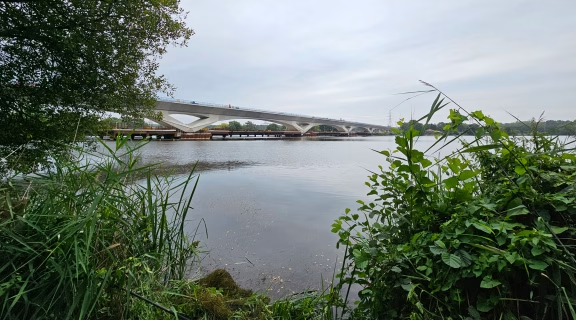
The viaduct’s journey to this point included several major construction milestones. In September 2024, engineers lowered the final deck segment into place after 28 months of precision assembly, an event celebrated as one of HS2’s biggest breakthroughs.
Voices behind the project
Engineers involved in construction expressed pride in their work. Construction manager Naz Huseinmiya compared her role to her earlier work on Crossrail, saying she now sees the Elizabeth Line in use daily. Engineer Katy Hodgson added that every time she passes the bridge, she feels proud to say, “I built that.”
The Colne Valley Viaduct is now a permanent landmark in Britain’s rail history—an architectural masterpiece combining speed, sustainability, and beauty.
Across Europe, similar large-scale rail projects are redefining connectivity, including the Brenner Base Tunnel linking Italy and Austria. This 64 km tunnel through the Alps demonstrates how underground rail solutions can drastically reduce travel times while alleviating road congestion and environmental strain, much like HS2 aims to do in Britain.

Leave a Reply