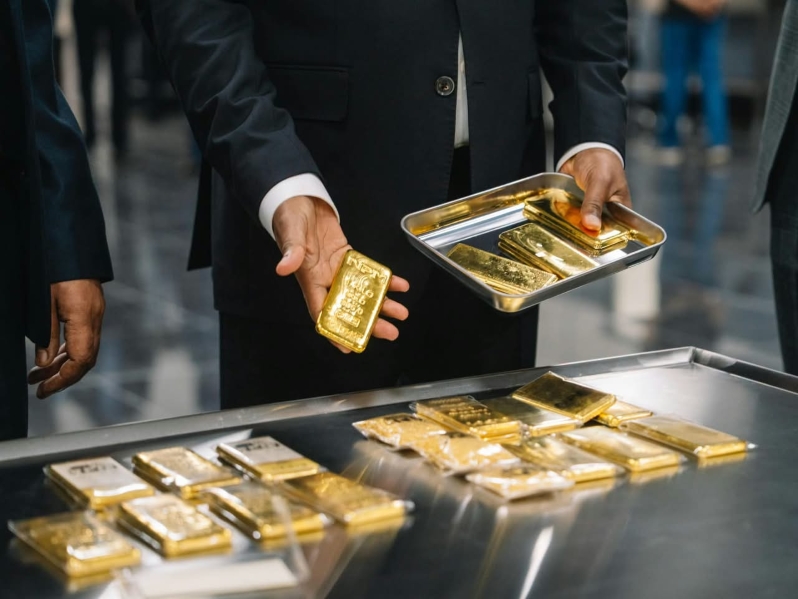
Ethiopia has inaugurated a US$50 million precious metals refinery at Bole Lemi Special Economic Zone, with plans to attract gold from across East Africa and expand domestic processing, bullion manufacturing and export capabilities.
Inaugurated on October 10, 2026, the National Precious Metals Refinery is located at Bole Lemi Special Economic Zone. It was established through a partnership between state-owned Ethiopian Investment Holdings (EIH) and UAE-based investor Sam Precious Metals.
The project represents an initial investment of US$50 million and is intended to serve both domestic producers and international customers.
The facility has an annual processing capacity exceeding 600 tons of precious metals at full capacity. Its services will cover gold melting, assaying, refining, casting, bullion-bar minting and die-making.
Bole Lemi refinery as a regional processing market
The refinery’s wider significance lies in its potential to establish Ethiopia as a processing destination for gold produced elsewhere in the region.
According to Ethiopia’s Government, the facility will provide refining, testing, certification and value-addition services to neighboring countries. This could allow producers to process and certify their gold within Africa.
This strategy gives the project a regional industrial role. Instead of serving only as an endpoint for Ethiopian mine output, the refinery could develop into a service center for the wider precious metals supply chain. It will also attract business from producers seeking refining capacity and access to international markets.
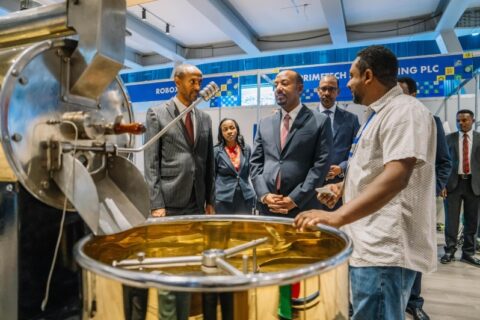
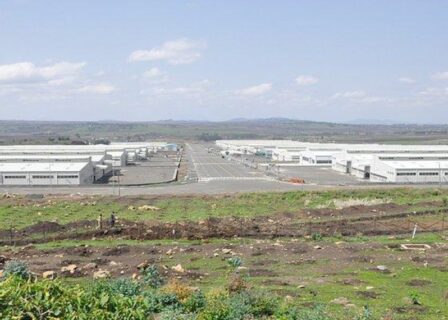
Its location within Bole Lemi Special Economic Zone also places the facility within Ethiopia’s broader industrial-development framework. The framework seeks to connect production, processing and export activities.
However, the extent to which the refinery will attract regional customers will depend on several factors. These include competition on services offered, reliable sourcing arrangements and international acceptance of its assaying and certification standards.
New infrastructure seeks to capture more value from gold
The launch of Ethiopia’s first gold refinery also addresses a longstanding gap between mineral extraction and domestic value addition. Ethiopia has sought to increase the economic returns from gold. This is by moving beyond the export of less-processed material towards refining and the manufacture of finished bullion products.
Prime Minister Abiy Ahmed has also presented the refinery as part of a wider effort to reduce dependence on exporting raw materials. The government has also highlighted the potential to recover valuable by-products, including silver, and improve the transparency and quality assurance of gold transactions.
Ethiopia’s first gold refinery’s planned capabilities could support several stages of the value chain. This ranges from testing incoming material to producing refined bars for sale. Its bar-minting and die-making services could also support the development of a domestic bullion-manufacturing industry.
For Ethiopia, the intended benefits include retaining a greater share of processing revenue. The gold refinery is also expected to strengthen export quality controls and create skilled employment, objectives shared by Ethiopia’s new US$2.5 billion Gode Oil Refinery project.
Partnership at new gold refinery in Ethiopia provides foundation for expansion
Ethiopian Investment Holdings is the state-owned investment partner in the US$50 million venture, alongside Sam Precious Metals. Prime Minister Abiy Ahmed said the Ethiopian state-owned company holds a majority stake in the refinery. However, a detailed breakdown of the ownership structure and the partners’ respective operational responsibilities has not been disclosed.
The project is part of Ethiopia’s wider drive to build domestic industrial capacity around its natural resources. Its commercial performance will depend not only on the availability of locally mined gold but also on the ability to secure external feedstock. The performance of the new refinery will also depend on maintenance of consistent refining standards and establishment of dependable export and trading relationships.
A capacity of more than 600 tons annually also provides substantial scope for processing, but it should not be confused with actual throughput. The facility’s utilization will depend on the volume of precious metals secured for treatment and the development of a customer base.
Regional ambitions will depend on market access
The refinery’s longer-term prospects rest on whether Ethiopia can turn its new US$50 million gold refinery plant into a competitive regional service. Attracting gold from other countries will require trusted certification, transparent pricing, efficient logistics and access to buyers in international bullion markets.
Its launch nevertheless gives Ethiopia an additional industrial asset through which to pursue mineral-sector development. By combining refining, testing, casting and bullion manufacturing in one facility, the project creates a platform for expanding domestic processing and potentially supporting related commercial activities.
The next phase will be to establish sustained operations and build regional supply relationships. This will also incorporate the demonstration that the facility can process gold at commercially viable volumes. If those conditions are met, the new Bole Lemi gold refinery could become an important component of Ethiopia’s strategy to move further downstream in the precious metals industry.
Ethiopia Gold Refinery: Project Factsheet
Name: National Precious Metals Refinery
Location: Bole Lemi Special Economic Zone, Addis Ababa
Project type: Gold and precious-metals refining and bullion manufacturing facility
Project cost: US$50 million
Annual processing capacity: More than 600 tons of precious metals
Who is involved in the project?
Ethiopian Investment Holdings (EIH): State-owned investment partner with 51% ownership.
Sam Precious Metals: International precious-metals refining company and 49% joint-venture partner.

Leave a Reply