The UK is backing plans to explore the development of a new subsea data cable project between Britain and Norway, in a move aimed at strengthening digital connectivity and improving the resilience of critical communications infrastructure across Northern Europe.
The proposed project, which is still at the feasibility-study stage, would establish another digital link between the UK and Norway. It also comes amid growing concerns over the security of undersea infrastructure, particularly subsea telecommunications cables that carry substantial volumes of international data traffic.
The initiative also reflects increasing European efforts to diversify digital infrastructure routes. The EU is also aiming to reduce vulnerabilities associated with dependence on a limited number of critical connections.
UK-Norway Digital Corridor: Project Overview
The proposed connection is expected to link Shetland, off the northern coast of Scotland, with western Norway. VodafoneThree is leading the feasibility study, which is expected to begin in summer 2027.
The study will examine potential cable routes and landing locations. It will also determine the technical and commercial considerations involved in delivering the connection.
If developed, the cable would provide an additional international data route between the UK and Norway. This will support businesses, public services, defense infrastructure and data centers. It would also provide an alternative connection in the event that existing subsea cables experience disruption.
The proposal would represent the first new direct subsea cable connection between Norway and Scotland in approximately 25 years. Three UK-Norway cables are currently operational, with another connection already planned.
Why is the UK-Norway Subsea Data Cable Project Important?
The proposal comes amid increasing concerns over the vulnerability of subsea telecommunications infrastructure to accidental damage, sabotage and other security threats.
Subsea cables are essential to international communications, carrying data that supports financial transactions, cloud computing, government services and commercial operations.
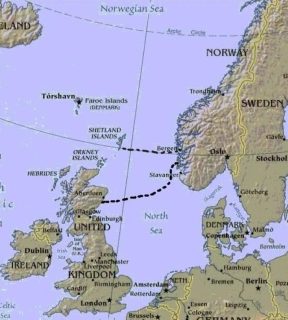
The proposed Shetland-Norway data cable connection project would also introduce another route for international data traffic. This has the potential to improve redundancy and reduce dependence on existing cable infrastructure.
The UK government’s interest in the proposal also reflects wider concerns about protecting critical infrastructure in the North Atlantic. Recent monitoring of suspected Russian submarine activity near undersea cables and pipelines has reinforced the need for improved surveillance and resilience. This is as the European Union continues with its own initiative to develop the Middle Corridor digital infrastructure project also aimed at supporting telcom growth, satellite activity and AI.
What Happens Next?
The immediate next step for the UK-Norway subsea data cable connectivity project is the feasibility study led by VodafoneThree. Its findings will help determine whether the proposed connection is technically and commercially viable.
However, the project has not yet reached the construction or procurement stage. No confirmed construction budget, cable specifications, final route, landing sites or installation contractor have also been announced.
Consequently, the timeline for construction and commissioning remains uncertain.
UK-Norway Subsea Data Cable Project Fact Sheet
Project type: Subsea telecommunications cable
Route: Shetland, Scotland – Western Norway
Project lead: VodafoneThree
Next milestone: Feasibility study expected to begin summer 2027
Purpose: Improve international data connectivity and network resilience.
Potential users: Businesses, defense infrastructure, public services and data centers.
Existing infrastructure: Three operational UK-Norway cables.
New connection: Would be the first new direct Norway-Scotland subsea data cable in approximately 25 years.
Current status: Proposed project undergoing feasibility assessment.
Who is Involved in the Project?
VodafoneThree – Feasibility study lead and telecommunications operator.
UK Government – Government backing and infrastructure policy.
Norwegian authorities – Counterpart in the proposed cross-border connection.




Leave a Reply