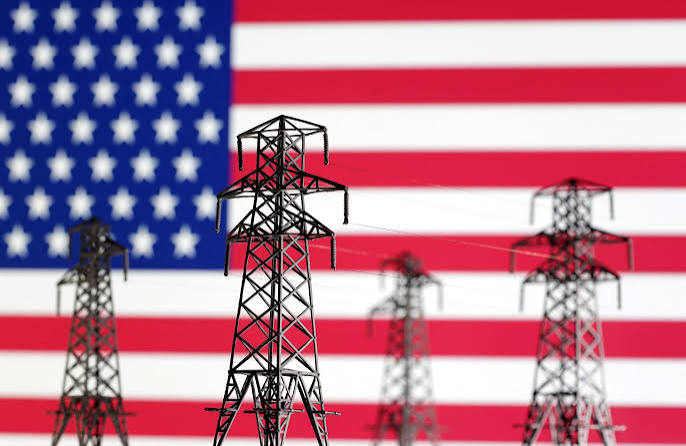
America’s biggest grid operators now have 60 days to explain whether their rules can handle the electricity demands of artificial intelligence—or whether they need to change.
On October 15, the Federal Energy Regulatory Commission issued show-cause orders to all six major regional grid operators: PJM Interconnection, MISO, Southwest Power Pool, CAISO, ISO New England, and NYISO. The orders direct each operator to justify its existing tariffs or propose reforms governing how data centers, manufacturing facilities, and other very large electricity users connect to the grid.
The action does not stop data-center construction. It does something more consequential: it puts the rules for connecting AI infrastructure—and deciding who pays for it—under formal federal review.
Why FERC acted now
Data centers are no longer ordinary customers. A single AI campus can require hundreds of megawatts or, in some proposed projects, several gigawatts of electricity—enough to reshape local transmission planning, generation needs, and utility finances.
FERC’s concern is that the country’s grid rules were largely designed for a slower era of electricity demand. As data centers and large manufacturing facilities multiply, operators must determine how to connect them quickly without weakening reliability or forcing ordinary households and small businesses to absorb costs they did not create.
The commission framed the action as both a consumer-protection measure and an effort to speed up the connection of new large loads. FERC Chairman Laura V. Swett said the agency wants to protect communities and consumers while also giving investors certainty and unlocking opportunities for technological expansion.
“We are setting the stage for a resilient, reliable, and forward-thinking grid that empowers communities and safeguards consumers by transforming the way large energy users access the grid,” Swett said. “It also is critical that FERC provide certainty for investors by directing the markets to protect existing deals and unlock opportunities for technological advancement and economic expansion.”
The five issues under review
FERC identified five areas where grid operators may need to change their rules.
- Faster and smarter interconnection studies.
Before a large customer can connect, grid operators study whether the transmission system can handle the new demand. FERC wants those studies to be more efficient, including consideration of alternative transmission technologies that could deliver capacity faster than traditional upgrades. - Cost transparency and cost shifting.
This is the most politically sensitive issue. FERC is asking whether the current system prevents large users from shifting transmission costs onto other customers, and whether transmission costs are transparent across the system.
In practical terms, the question is simple: when a massive data center requires new wires, substations, or grid reinforcements, should the company behind it pay, should all utility customers share the cost, or should the burden be divided another way?
- Co-location and behind-the-meter generation.
Some data centers want to locate beside a power plant or use generation directly on their own site. These arrangements can reduce the need for new long-distance transmission, but they also raise questions about grid reliability, market rules, and whether the arrangement gives one customer an unfair advantage. - Flexible load service.
Data centers do not always need full power every second. Some can reduce consumption during periods of grid stress, shift workloads, or use on-site backup resources. FERC wants grid operators to consider new transmission services designed for these flexible large loads. - Generation serving nearby large loads.
FERC also wants a clearer process for studying power plants built to serve electrically nearby or co-located large customers. That matters because many AI developers are now proposing dedicated generation sources beside their data centers.
What the deadlines mean
The orders set two clocks running.
Within 60 days, each grid operator must either justify its current tariff provisions or file changes that address the issues FERC identified. Within 30 days, each must submit an informational report on generation adequacy for existing and new large loads.
That second deadline is important. It forces grid operators to show not only whether they can connect new data centers, but whether the generation exists—or can realistically be built—to serve them.
Who is affected
The order covers the six regional operators that coordinate much of the country’s wholesale electricity system: PJM, MISO, SPP, CAISO, ISO New England, and NYISO.
That means the review reaches many of the places where the AI buildout is most intense, including the Mid-Atlantic, the Midwest, Texas-adjacent markets, California, New England, and New York. It also affects utilities, developers, technology companies, and ratepayers far beyond the sites of individual data-center projects.
For technology companies, the outcome could determine how quickly new campuses can secure grid access. For utilities, it could change how they plan transmission and recover costs. And for households, it could influence whether the AI boom shows up as new jobs and investment—or as higher electricity bills.
What FERC is not deciding
The orders do not approve or reject any specific data-center project. They direct grid operators to defend their existing rules or bring forward reforms.
The next stage will be closely watched by developers, utilities, state regulators, and consumer advocates, because the answers could shape the terms of future data-center connections for years.
The AI boom has created a new kind of infrastructure problem. Technology companies can announce enormous data-center campuses quickly, but electricity systems cannot always be expanded at the same speed.
FERC’s action acknowledges that tension. It is trying to make room for AI-driven demand while preventing the costs and risks from being quietly transferred to the public.
The larger question is whether the country can build a system in which data centers grow quickly, grid reliability is protected, and the people who benefit from AI infrastructure are not the only ones who escape its costs.
The next 60 days will not settle that debate. But they will show whether America’s grid operators are prepared to rewrite the rules for an electricity system that AI is rapidly changing.
FERC’s order is ultimately about a question that projects across the country are already forcing into the open: when enormous new electricity users arrive, who builds the power they need—and who pays for it? In Georgia, that question is no longer theoretical. A record $3.3 billion federal loan is helping Oglethorpe Power complete a 1.4-gigawatt natural-gas plant near a Google data-center project, raising a difficult question about whether rural utilities are building for local reliability, AI-driven demand, or both.

What we know
- FERC issued show-cause orders to six regional grid operators on October 15.
- The operators have 60 days to justify current rules or propose tariff changes.
- They must also report within 30 days on generation adequacy for existing and new large loads.
- The review covers study processes, cost transparency, co-location rules, flexible load services, and generation studies for nearby large loads.
What remains unclear
- Whether all six operators will propose major reforms or defend their existing rules.
- How FERC will respond if it finds the operators’ justifications insufficient.
- Whether new rules will speed up data-center connections or add new conditions and costs.
- How the outcome will affect electricity bills in states with major data-center growth.
Factsheet
- Action: Show-cause orders under Section 206 of the Federal Power Act.
- Issued by: Federal Energy Regulatory Commission.
- Date: October 15, 2026.
- Entities covered: PJM Interconnection, MISO, Southwest Power Pool, CAISO, ISO New England, and NYISO.
- Deadline: 60 days to justify or reform tariffs; 30 days to report on generation adequacy.
- Five reform areas: Efficient study processes, cost transparency, co-location rules, flexible load service, and generation studies for nearby large loads.
- Main goal: Protect ratepayers, strengthen reliability, and speed the connection of AI data centers and manufacturing facilities.


Leave a Reply