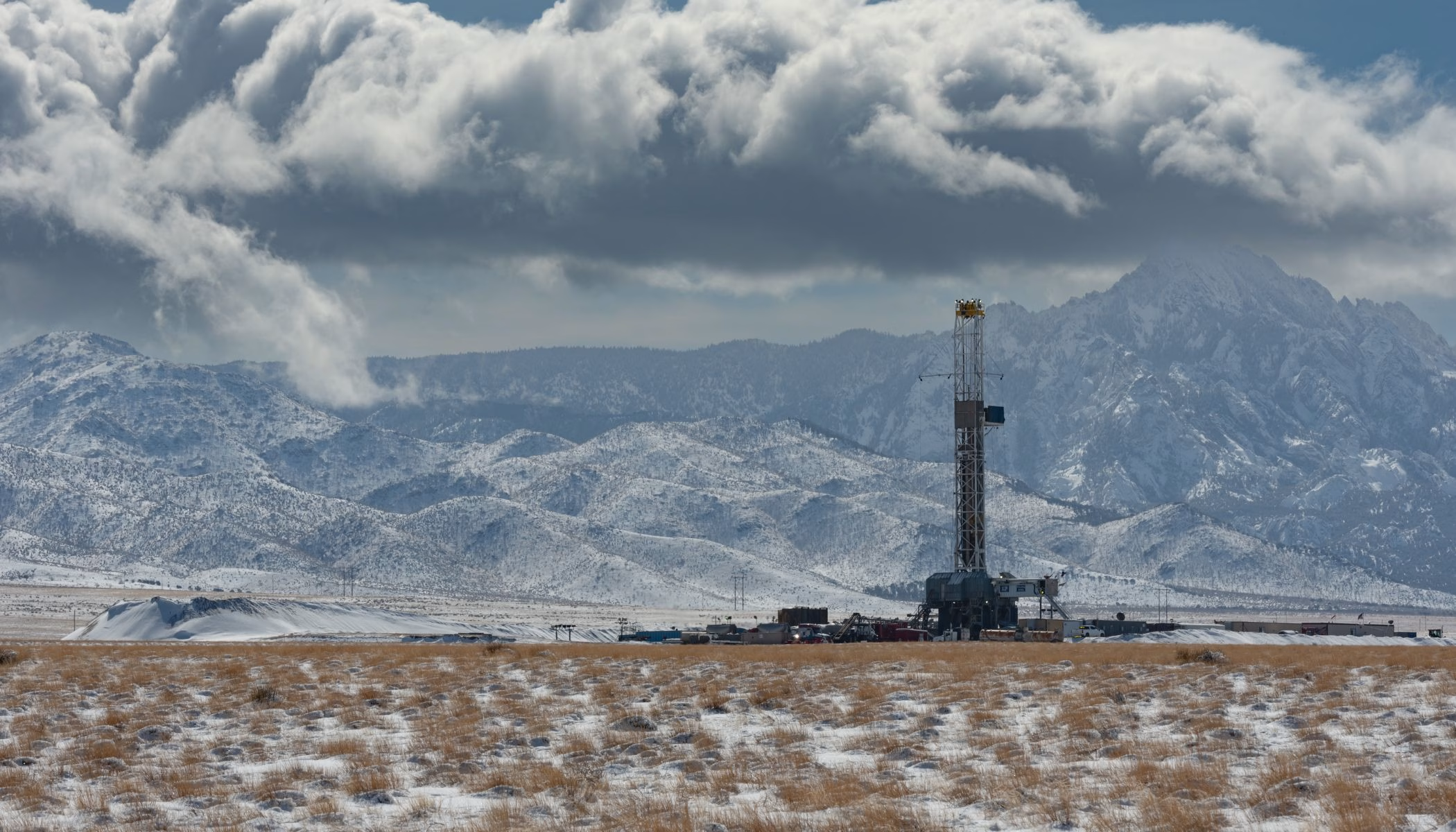
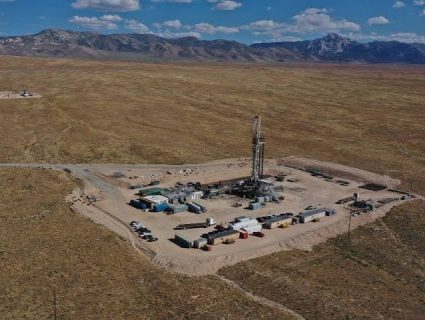
The Cape Station Geothermal project in Beaver County, Utah, has reached first power as Fervo Energy advances its 500MW development. The milestone marks a significant step in commercial-scale enhanced geothermal systems (EGS) deployment. Fervo announced on September 24, 2026, that Cape Station had synchronized its first GeoBlock with the electricity grid and begun exporting power.
The company is now commissioning the remaining units in Phase I while constructing a further 400MW expansion. The development positions Utah as an emerging centre for geothermal electricity generation, supported by long-term power purchase agreements and investment in advanced drilling technologies.
Cape Station Geothermal Project Begins Commercial Power Delivery
Cape Station Phase I comprises approximately 100MW of generation capacity across three 33MW GeoBlocks. Fervo has completed the initial drilling, stimulation and well-completion programme for this phase.
The first GeoBlock achieved mechanical completion in the first quarter of 2026. Fervo subsequently synchronized the unit with the grid and began exporting electricity in September.
The company’s November 2026 update reported further progress on the remaining units. GeoBlock 2 has achieved grid synchronization and entered early operations. Meanwhile, GeoBlock 3 has reached mechanical completion and entered cold commissioning.
Fervo expects both units to achieve commercial operation by January 1, 2027. Their completion will bring the first phase closer to its full operating capacity.
The company secured approximately $421.4 million in non-recourse project financing for Phase I. The financing supports construction and demonstrates growing lender interest in utility-scale enhanced geothermal infrastructure.
Cape Station Geothermal Project Advances 400MW Expansion
Fervo began construction on Phase II during the first quarter of 2026. The expansion will add 400MW through eight 50MW GeoBlocks, taking the development’s planned capacity to approximately 500MW.
Two Helmerich & Payne drilling rigs are operating at the site. Fervo has drilled the four initial wells on the first Phase II well pad. These wells use the company’s Generation 3.0 design, which incorporates longer 7,500-foot horizontal laterals.
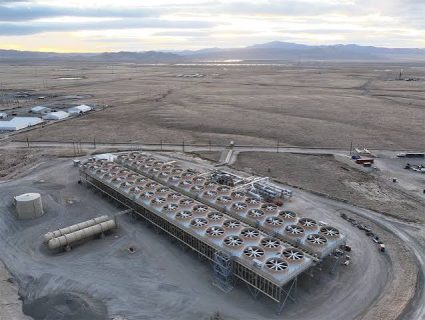
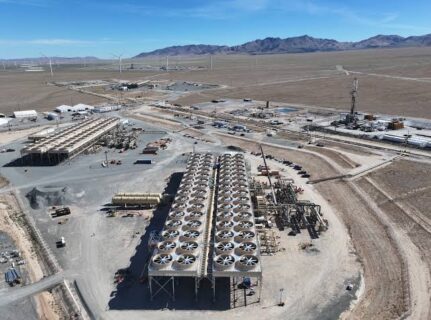
The expanded design aims to improve drilling efficiency and reduce construction costs. Fervo is also advancing surface infrastructure, including power-generation facilities and structural steel for air-cooled condenser systems.
Its November update placed drilling progress for the expansion at approximately 18%. The first 50MW turbine sets have passed factory acceptance testing. Additionally, key equipment, including recuperators and air-cooled condensers, has reached the site.
Fervo expects Phase II to enter commercial operation in 2028. The company is targeting lower installed costs as it standardizes well designs and repeats construction across the GeoBlocks.
The expansion also builds on Fervo’s equipment partnership with Baker Hughes. In September 2025, Baker Hughes secured an award to design and supply equipment for five 60MW Organic Rankine Cycle power plants at Cape Station Phase II. The scope included turboexpanders and BRUSH power-generation equipment.
Cape Station Geothermal Project Secures Major Power Agreements
Cape Station’s expansion is supported by growing demand for reliable, carbon-free electricity. Fervo has secured power purchase agreements with Southern California Edison, Shell Energy and community choice aggregators.
In September 2026, Fervo also announced a 396MW geothermal power purchase agreement with Google. The agreement supports development of the Cape Station GeoCluster, with power delivery expected from 2028.
Google also received an option to expand its contracted capacity by approximately 600MW. This could bring the potential agreement to nearly 1GW, subject to the relevant commercial and regulatory conditions.
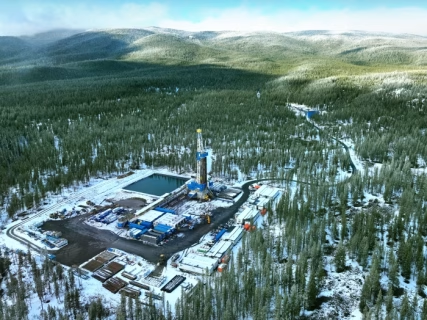
The project reflects wider investment in geothermal technologies that can provide continuous electricity. Project Obsidian in Oregon, developed by Quaise Energy, is pursuing a different approach using millimetre-wave drilling to access superhot underground rock. The two developments illustrate how geothermal construction is advancing through distinct technologies, including engineered reservoirs and deeper drilling methods. Project Obsidian’s superhot geothermal power plant development.
Fervo’s progress at Cape Station could provide an important commercial reference for future EGS projects. However, the company must complete commissioning, sustain reliable output and deliver the next phase on schedule. These milestones will help demonstrate whether modular geothermal developments can scale into major sources of firm electricity.
Updated September 11, 2025:
Microsoft CEO, Bill Gates, has shown great enthusiasm and zeal in the Cape Station geothermal project in Utah, noting its significance. Fervo Energy is moving swiftly to ensure that the project is delivered as it is gradually taking shape. The geothermal project is ready to move into its second phase of development, with the 100 MW Phase I breaking ground in 2026. On the other hand, Phase II which entails adding 300 MW by 2028 is also in the pipeline following recent funding and a new deal for Baker Hughes to supply equipment to five power plants. Fervo Energy’s advanced geothermal system will be the largest in the world, deploying advanced drilling and reservoir technology. Baker Hughes is gradually becoming amassed in the geothermal sector as it recently joined Controlled Thermal Resources in developing one of the world’s largest geothermal project in California.
March 9, 2025: Houston-based geothermal pioneer Fervo Energy has appointed energy tech giant Baker Hughes to design, manufacture, and deliver five 60 MW Organic Rankine Cycle (ORC) units for Phase II of its flagship Cape Station geothermal project near Milford, Utah. This collaboration cements Cape Station’s status as a world-class, scalable model for clean, round-the-clock power generation.
The feature scope includes Baker Hughes’ advanced turboexpanders and BRUSH Power Generation systems, customized to integrate with Fervo’s Enhanced Geothermal System (EGS) technologies. In addition, the setup will deliver firm, low-carbon baseload power equivalent to powering approximately 180,000 homes once fully commissioned.
Geothermal in Utah: A Burgeoning Power Hub
Utah’s southwest region holds vast geothermal potential, estimated at over 10 GW of untapped capacity. The mere 73 MW currently online is dwarfed by this figure. Furthermore, Cape Station directly benefits from the DOE’s FORGE research hub nearby. It has spent years validating the feasibility of EGS deployment in local geology.
Meanwhile, licensing activity is accelerating: BLM has approved 22 geothermal drilling permits this year, doubling the pace from 2023, and is planning a new 50,813-acre lease sale in April 2025 to enable further exploration.
Cape Station: Ambitious Scale, Deep Impact
Originally envisioned as a 400 MW project, Cape Station has since been scaled to 500 MW. This reflects surging demand for clean, reliable energy. Construction began with a groundbreaking in September 2023, supported by substantial community and government backing.
Economic impact estimates are staggering:
6,600 construction jobs and 160 ongoing full-time positions, over $437 million in wages injected into local economies and $1.1 billion catalyzed in local supply chains and business growth.
Additionally, environmental safety has been prioritized via an Environmental Assessment and a Finding of No Significant Impact from the BLM, paving the way for exploration and surface operations.
Innovation at the Core
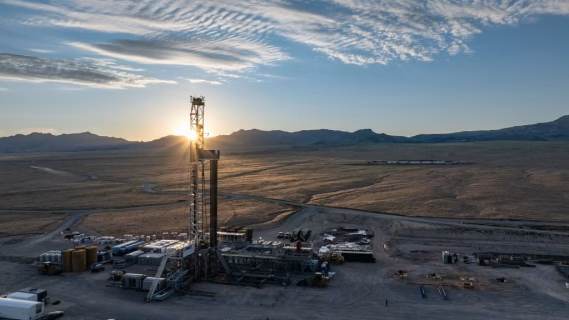
Fervo’s technology harnesses horizontal, stacked well systems extending over 10,000 feet, with multi-level injection and production setups designed to prevent short-circuiting and maximize output.
Furthermore, their record-breaking 30-day reservoir test at Cape Station delivered 107 kg/s at high temperatures, outperforming expectations and marking the project as one of the most productive EGS sites ever.
Strategic Financing & Power Contracts
Financing has been secured through multiple sources:
$244 million raised in equity funding led by Devon Energy and other institutional investors. A $100 million bridge loan from X-Caliber Rural Capital (XRA LLC), later supplemented by $46 million for Phase I completion, totaling $146 million in debt financing.
Fervo has locked in long-term 15-year power purchase agreements. These include the 31 MW sold to Shell Energy North America and 320 MW to Southern California Edison. Additional volumes to Clean Power Alliance and other CAISO-serving utilities, all ensuring robust revenue visibility.
Wider Momentum in U.S. Geothermal
Despite currently making up less than 1% of U.S. electricity generation, enhanced geothermal is gaining traction thanks to bipartisan political support and private-sector investment from the likes of Bill Gates’ Breakthrough Energy Ventures. Geothermal’s 24/7 capacity, often exceeding a 90% capacity factor, makes it a unique complement to intermittent renewables. Its growth is also linked to rising energy demand from power-hungry industries such as Utah’s rapidly expanding data center sector, where projects like Joule’s deal to power the state’s largest and most advanced data center campus highlight the urgent need for reliable clean baseload power.
Challenges remain, potential policy uncertainty including tax incentive rollbacks and tariffs, and permitting hurdles under shifting federal priorities.

Leave a Reply