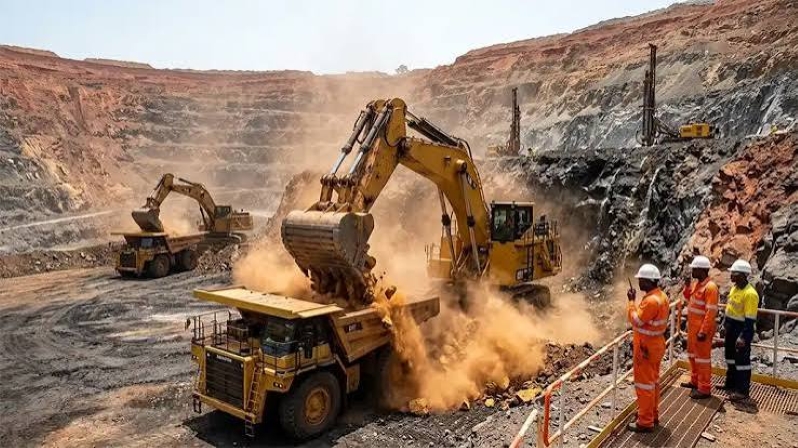
Ghana is targeting a ban on the export of unprocessed mineral ores by 2030, in a major policy shift aimed at expanding domestic mineral processing.
President John Dramani Mahama announced the target while addressing the Mining in Motion Summit in Accra. The government plans to introduce a phased prohibition on raw mineral exports. This will be supported by new legal measures, mineral-specific requirements, and clearly defined implementation timelines.
The proposed restrictions will cover minerals including bauxite, manganese, iron ore, lithium, and other mineral resources that Ghana intends to channel into domestic processing and manufacturing.
According to the President, Ghana must move beyond exporting mineral resources in their unprocessed form and importing finished products manufactured from those same materials. Instead, the country intends to use its mineral endowment to support industrial development, create skilled employment, and strengthen domestic manufacturing.

Investors seeking access to Ghana’s mineral resources will also face clearly defined processing obligations. This is as the government seeks to increase local value addition across the mining industry.
Ghana raw mineral export ban to be introduced in phases
The proposed 2030 deadline forms part of a broader government strategy to transform Ghana’s mining industry. The goal is to turn a predominantly extractive sector into a stronger industrial and manufacturing base.
President Mahama also pointed to existing restrictions on the export of iron scrap and non-ferrous metals as evidence of the government’s direction towards retaining more mineral value within Ghana.
The policy is intended to encourage companies to invest in processing facilities and develop domestic supply chains. It is also seen as a move to establish stronger links between mining operations and local manufacturing industries.
Also noteworthy is that the proposed mineral export ban by Ghana sets out a policy target. It does not confirm that all the necessary regulations, enforcement mechanisms, and processing facilities are already in place. The detailed requirements and implementation schedules for individual minerals will be important in determining how the transition unfolds before 2030.
Mining law reforms to support domestic value addition
Ghana’s planned restrictions are being pursued alongside wider reforms to the country’s mining regulatory framework.
In July 2026, the government announced that Cabinet had approved a revised Minerals and Mining Policy. It also endorsed a review of the Minerals and Mining Act, 2006 (Act 703), for onward consideration by Parliament.
The proposed legislative changes seek to strengthen oversight and expand local participation. It also seeks to improve environmental protection and ensure that mining contributes more directly to national development.
Additionally, among the proposed changes are the introduction of district mining committees and a revised licensing framework. Also included are the requirements for mining leases to include community development agreements. The government has also emphasized local content, technology transfer and Ghanaian enterprise development.
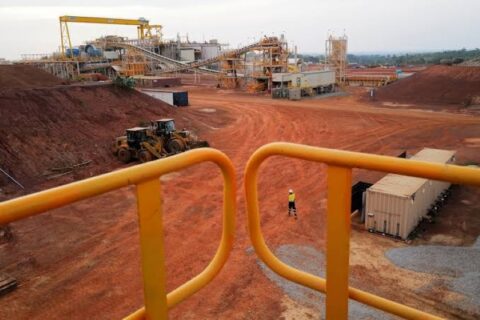
These reforms provide a wider regulatory context for the 2030 raw mineral export target. Their implementation will help determine how processing obligations are established, monitored, and enforced across different mineral categories.
The government is also seeking to ensure that local participation extends beyond supplying consumables and basic services. It is expected to include more advanced activities such as mineral processing, equipment manufacturing, engineering, and technical services.
Processing infrastructure required for Ghana’s 2030 target
Meeting the 2030 deadline will require significant investment in industrial infrastructure. This will include mineral processing plants, refineries, smelters, supporting transport networks and reliable electricity supplies.
Bauxite processing will require facilities capable of converting the ore into alumina and potentially supporting further development of aluminum production. Manganese processing will require appropriate beneficiation and refining capacity, while the iron ore value chain will depend on investments in processing and steelmaking infrastructure.
Lithium will present its own requirements. These will include facilities capable of upgrading mined material into products suitable for downstream industrial use. The precise level of processing required for compliance will depend on the mineral-specific rules adopted by the government.
Beyond the processing facilities themselves, the transition will also require dependable power, water supply and logistics infrastructure. Technical expertise and access to finance are also important factors.
The policy therefore has implications beyond mining companies. They will potentially create opportunities for engineering contractors, plant designers, construction firms, equipment manufacturers, energy developers, and industrial infrastructure investors.
Government seeks to retain more value from Ghana’s mineral wealth
The planned mineral export restrictions by Ghana also builds on the country’s wider efforts to increase the domestic economic benefits generated by its mineral resources.
In February 2026, President Mahama reiterated his intention to eliminate raw mineral exports within five years. Mahama also called for the establishment of refineries, bullion infrastructure, and mineral-based industrial clusters. The president’s October announcement reinforces the same policy direction and places the 2030 deadline at the center of the government’s current agenda.
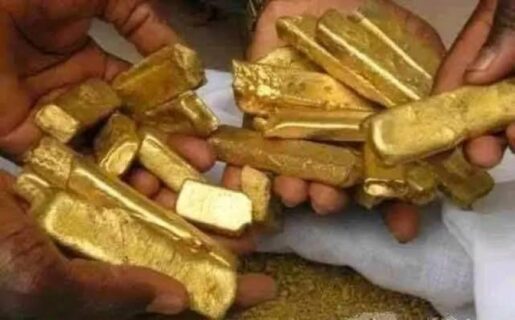
Gold processing is another important part of this strategy. In June 2026, the Ghana Gold Board announced an agreement under which large-scale mining companies would sell 30% of their gold output to the board locally, in dore form. The semi-pure, heavy metal iron will then be used for domestic refining at facilities such as the Royal Ghana Gold Refinery under the Ghana Accelerated National Reserve Accumulation Program.
The arrangement is clearly intended to support local gold refining. It will also help Ghana achieve international accreditation for at least one domestic gold refinery by 2030.
Although gold and the targeted industrial minerals have different processing requirements and regulatory arrangements, both initiatives reflect the government’s objective of capturing more value within the domestic economy.
Ghana raw mineral export ban: Investment opportunities and implementation challenges
Ghana’s proposed ban on raw mineral exports is also expected to encourage investment in mineral processing facilities. This will be more particular to where investors can establish commercially viable operations with access to sufficient feedstock and reliable utilities.
Local processing could also support the development of industrial clusters and Special Economic Zone (SEZs). It could also create demand for construction, power generation and transmission, water infrastructure, warehousing, transport facilities, and engineering services.
However, the transition will depend on whether the necessary infrastructure can be delivered within the proposed timeframe. Processing plants can require substantial capital investment. Also, their commercial viability depends on factors such as electricity costs, available technology, financing conditions, mineral supply, and access to buyers.
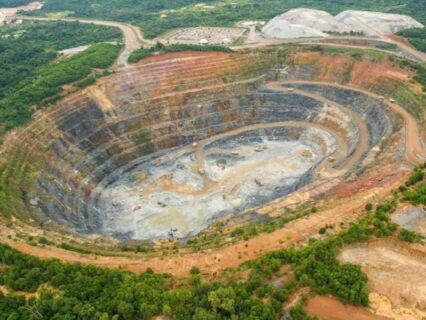
The government will also need to provide clear and predictable rules for existing mining operations and future investors. Mineral-specific timelines, processing standards, transitional arrangements, and transparent enforcement will be particularly important in allowing companies to plan long-term investments.
The challenge is to ensure that restrictions on raw exports are accompanied by sufficient domestic capacity to process the minerals economically. Without that capacity, the policy could create difficulties for producers and disrupt existing export arrangements.
For construction and infrastructure stakeholders, the 2030 target represents a potential source of new industrial projects. It is, nonetheless, a deadline against which the delivery of supporting infrastructure will be measured.
Ghana targets a shift from mineral extraction to industrial production
President Mahama’s announcement that Ghana plans to phase out raw mineral export by 2030 establishes a clear policy objective for the country’s mining sector. Simply, unprocessed mineral ores should no longer leave Ghana by 2030.
If implemented alongside commercially viable processing capacity, the policy could strengthen links between Ghana’s mining industry and domestic manufacturing. It will also create opportunities for construction and engineering companies involved in delivering the necessary industrial infrastructure.



Leave a Reply