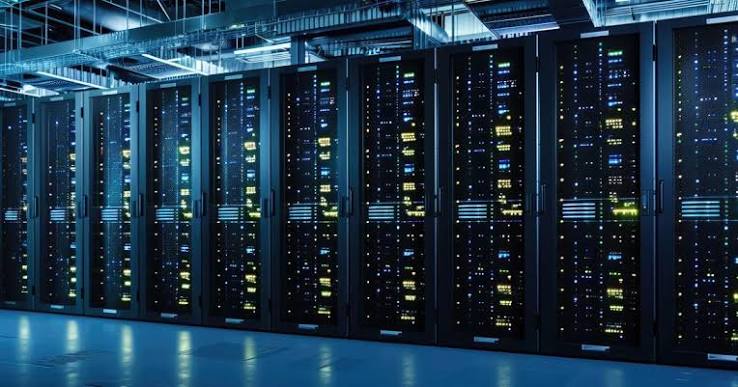
Glendale, Arizona, has approved annexation and rezoning for a 160-acre data center development that would combine three computing facilities with an on-site natural gas power plant rated at approximately 700 megawatts.
The City Council voted 6-1 on October 27 to bring the property near Litchfield Road and Olive Avenue into Glendale and approve a project-specific zoning plan. The development, known as Project Eagle, includes a separate power-generation component called Project Baccara, with 18 natural gas turbines and a planned Arizona Public Service (APS) substation.
The approval moves the development past a major land-use hurdle, but it does not mean the campus is ready to begin construction. The power plant still faces air-quality permitting requirements, while the data center buildings need further development approvals. Water supply, electricity delivery and the project’s environmental conditions also remain important issues as the development moves toward its next stage.
Three data centers and a dedicated power-generation site
The latest Glendale plans describe three one-story data center buildings totaling approximately 1.1 million square feet. The site allocation includes about 108 acres for the data center facilities, 33 acres for the power plant and 12 acres for the future APS substation.
The 18 turbines would provide approximately 700 MW of generating capacity. That figure describes the proposed power plant’s output, not the data centers’ IT capacity.
The project’s electricity arrangement is more specific than a simple private power plant directly feeding an adjacent campus. Under the plan presented in Maricopa County permitting documents, Baccara Power would sell electricity wholesale to Electric District No. 7, which would then supply the data center. The planned APS substation would provide another important connection to the regional power infrastructure.
This distinction matters because the project combines private generation with utility delivery rather than operating as an entirely isolated power system. The final operating arrangements, including how the plant’s output will be divided between the data center and the wider grid, will be important to understanding its actual contribution to regional electricity supply.
The project also represents a change from earlier public descriptions. The developer’s project website initially described two data center buildings, while the later Glendale zoning plans identify three buildings totaling about 1.1 million square feet. The latest city-approved layout is the more current basis for describing the development.
Air-quality approval remains a major outstanding step
Project Baccara has received a Certificate of Environmental Compatibility from the Arizona Corporation Commission and a military compatibility permit from Maricopa County. Those approvals advanced the power plant through important siting and land-use reviews, but they do not replace the air-quality permit required for operation.
Maricopa County published a draft air permit in March 2026. The draft proposed emissions limits for the facility, but the final permit had not been issued in the latest available project records. The application also needs to account for the emissions associated with the plant’s turbines and the data center’s backup generators.
The distinction between a draft permit and a final authorization is important. The campus cannot be treated as having completed its environmental permitting simply because it has secured the state generation certificate and county military compatibility approval.
The proximity of Luke Air Force Base adds another layer of conditions. The base reviewed the development for compatibility with military operations, including issues involving pilot visibility, emissions and potential safety risks. Those requirements were incorporated into the project’s approval conditions.
The city has also attached requirements relating to emergency response. The developer must agree to contribute toward specialized hazardous-materials and fire services before the development receives its first certificate of occupancy.
Water supply and neighborhood concerns
Water has been one of the most contentious issues in the public review process. Residents have questioned how a large data center campus and its power plant will affect local water resources, particularly in a region where long-term water availability is a major planning concern.
Project representatives have said EPCOR would provide water and wastewater services. They have also argued that the proposed cooling systems would use less water than the site’s historical agricultural operations.
However, a comparison with past agricultural use does not provide the same information as a data center water budget. The public information available so far does not establish the campus’s annual water consumption, peak daily demand or the detailed cooling requirements of each building.
Noise, air pollution, turbine operation and the storage of backup fuel have also featured in public concerns. The project includes underground propane storage for backup fuel, while the data centers would require their own backup generators and mechanical equipment.
The site is approximately two miles from the entrance to Luke Air Force Base and near residential communities in the West Valley. Glendale’s annexation gives the city greater authority over the development’s appearance and local requirements, but it does not remove concerns raised by residents outside the city’s boundaries.
The $10.27B investment estimate includes equipment
Project Eagle’s financial scale has also been described inconsistently. A $36 billion figure has appeared in media coverage, but Glendale’s economic-impact materials put estimated private investment at approximately $10.27 billion.
That estimate needs context. It includes approximately $370 million in data center building construction, $1.7 billion for the power plant and about $8.2 billion in equipment investment. The equipment figure includes replacement spending over the development’s operating life, with approximately $1.5 billion in annual replacement equipment spending projected to begin in 2033.
The $10.27 billion figure therefore should not be read as the initial construction cost of the buildings and power plant. A substantial portion reflects equipment purchases and replacement over time.
The economic analysis also projects more than 3,000 construction jobs over the development period and hundreds of permanent positions. Glendale has cited approximately $10.3 million in average annual net fiscal benefit, in addition to one-time fees. Those are forecasts based on the proposed development and its expected operations, not guaranteed revenue or employment.
Construction timing depends on the remaining approvals
Glendale has said construction could begin in November 2026, with the first data center building targeted to open in 2028. But that timetable must be viewed alongside the remaining permit work.
The final air-quality permit for the power plant had not been issued in the latest available project records. City planning materials also indicated that the data center’s permit was expected in the first quarter or early second quarter of 2027.
The October 27 vote is therefore a major step in establishing where and under what zoning conditions the campus can be developed. It is not a blanket authorization for all construction and operations.
Michigan proposal highlights a different data center power strategy
The Glendale approval comes as other U.S. communities weigh proposals for large data center campuses and the infrastructure needed to support them. In Holt, Michigan, LEAP and Lighthouse Sustainability are exploring a proposed $10 billion, 700-MW development on 423 acres. That proposal remains at an early stage, with no identified customer or formal development application, and its proposed energy strategy emphasizes clean-energy procurement and battery storage rather than an on-site natural gas power plant. The contrasting approaches illustrate the different power and community challenges facing large data center developments.
Project Eagle’s defining feature is the scale of its planned on-site gas generation and the way that electricity would be sold through a local utility before reaching the data center. The next stage will show whether the project can turn that arrangement into a permitted, deliverable power supply while addressing outstanding questions over air emissions, water use and the effects on nearby communities.
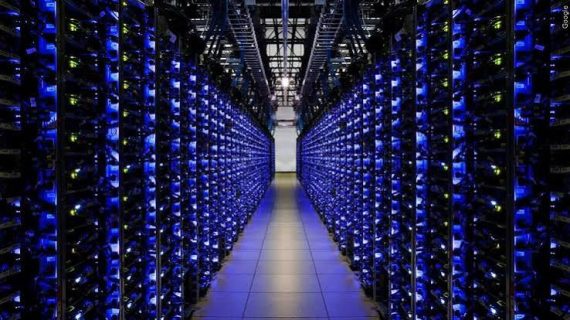
Project Eagle data center campus / Project Baccara power plant: Factsheet
Location: Near Litchfield Road and Olive Avenue, Glendale, Arizona
Site area: Approximately 160 acres
Data center buildings: Three one-story buildings
Combined data center area: Approximately 1.1 million square feet
Power plant: 18 natural gas turbines
Proposed generation capacity: Approximately 700 MW
Site allocation: About 108 acres for data centers, 33 acres for power generation and 12 acres for the APS substation
Electricity arrangement: Baccara Power would sell electricity wholesale to Electric District No. 7, which would supply the data center
Estimated private investment: Approximately $10.27 billion in Glendale’s economic-impact materials
Land-use approval: Annexation and rezoning approved October 27, 2026, by a 6-1 vote
Other approvals: State generation certificate and county military compatibility permit secured
Outstanding permitting: Final air-quality permit and further data center development approvals
Construction target: City has indicated a November 2026 start, subject to remaining requirements
First building target: 2028


Leave a Reply