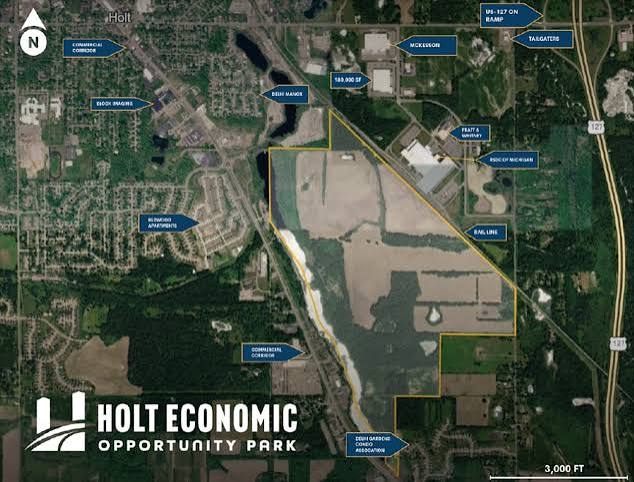
A proposed $10 billion data center campus on 423 acres in Holt, Michigan, faces an early test of local support as Delhi Township trustees prepare to consider a resolution opposing data center development in the community.
The Lansing Economic Area Partnership (LEAP) and Lighthouse Sustainability announced the proposed development on October 27, outlining a concept for a 700-megawatt campus at the Holt Economic Opportunity Park. The township scheduled a special Board of Trustees meeting for 5:30 p.m. on October 30 to consider formally opposing data centers and calling on the development partners to abandon their pursuit of the site if residents reject the proposal.
The meeting comes after township officials said they learned about the initiative at the same time as the public. Delhi Township subsequently ended its membership in LEAP, adding an immediate political challenge to a development that has not yet entered the formal planning and approval process.
The proposed investment exceeds $10 billion, but the project remains at an exploratory stage. No end user has been identified, no formal development application has been filed and the township has not approved the industrial zoning that a data center campus would require.
A 423-acre site prepared for economic development
The proposed campus would occupy the 423-acre Holt Economic Opportunity Park on College Road in Delhi Township, south of Lansing. The property has been identified for economic development for years: the township recognized it as an opportunity site in 2003 and incorporated it into its long-term planning.
LEAP has worked to prepare the property for industrial redevelopment since 2024, supported by approximately $6.5 million in funding through the Michigan Economic Development Corporation’s Strategic Site Readiness Program. LEAP holds an option to purchase the land, which is owned by a holding company associated with DTN Development.
The economic development group selected Lighthouse Sustainability through a request-for-proposals process to explore a potential data center development. That selection, however, does not mean a tenant has committed to the site or that the project has secured planning approval.
The property’s current agricultural zoning would need to change before the proposed data center could proceed. Delhi Township adopted a 12-month moratorium on data center proposals in April 2026, scheduled to run until April 2027. LEAP and Lighthouse say they intend to use the intervening period to engage residents and develop a proposal that could eventually be submitted for local review.
The community-first process faces its first major test
LEAP and Lighthouse have presented their approach as an effort to involve residents before filing a formal development application. Their proposed engagement program includes weekly public webinars, small-group discussions, individual interviews and a resident advisory committee.
But the announcement exposed a gap between that community-first approach and the relationship with the local government. Township Manager Tracy Miller said officials had not been consulted before the proposal became public. The township then withdrew from LEAP, while state Rep. Kara Hope criticized the way the initiative was introduced.
The October 30 resolution would put the township board on record opposing data center development and ask LEAP and Lighthouse to honor a stated commitment to stop pursuing the proposal if the community rejects it. The vote is not itself a rezoning decision or a formal rejection of a development application, because no such application has been submitted.
The distinction matters. Even if the board adopts the resolution, the proposal’s future will depend on the partners’ response, the community engagement process and any later decisions on the moratorium and land-use rules.
Power and water claims need measurable details
The concept calls for a 700-MW data center campus supported by six hours of battery storage, closed-loop cooling and a clean-energy procurement strategy. The partners have said they intend to power the development with energy that is 100% clean on an annual basis.
They have also discussed securing additional electricity through Consumers Energy, the local utility. A separate proposal with Resilience Energy would involve installing and maintaining rooftop solar panels and batteries on participating homes, with the project team estimating that households could reduce their energy bills by as much as 50%.
Those commitments have not yet been accompanied by a publicly identified power purchase agreement, a confirmed grid-interconnection plan or a detailed account of the transmission and substation work required to serve a 700-MW load. The proposed battery system’s energy capacity in megawatt-hours has also not been disclosed.
The annual clean-energy target leaves another important question: whether the campus would match its electricity use with carbon-free generation at the time it consumes power, or rely on annual renewable-energy purchases and credits.
Water use requires similar scrutiny. Lighthouse has proposed closed-loop cooling, which recirculates cooling water, but the partners have not published a detailed water budget showing expected consumption, peak demand, supply sources or wastewater requirements. Those figures will be essential to assessing the project’s impact on local resources.
The proposal also reserves approximately 90 acres for natural areas. The partners have referred to a green-space easement, but the final legal protections, site layout and amount of land available for buildings and supporting infrastructure remain to be established.
Tax projections, jobs and a proposed $20M fund
The development team has outlined significant economic benefits if the campus moves forward. Its projections include increasing Delhi Township’s annual tax revenue from approximately $23 million to $76 million. Other public statements have cited roughly $16 million in additional annual school-tax revenue for the Holt and Mason school districts.
The partners have also described approximately 1,000 temporary construction jobs and 100 permanent positions. These are estimates tied to a project that has no identified end user or construction schedule, not jobs already secured.
A proposed $20 million community investment fund would sit separately from estimated tax revenue and a community benefits agreement. LEAP and Lighthouse say residents would help identify priorities for the fund and negotiate the protections and benefits that should accompany any future proposal.
Two independent economic studies were expected in November 2026. Their findings should help clarify the assumptions behind the employment and tax estimates and compare a data center with other possible uses for the site. The difference between projected tax revenue, the increase in the local tax base and the proposed community fund will be important when evaluating the project’s claimed benefits.
The stated capacity also needs clarification. LEAP and Lighthouse have publicly described a 700-MW concept, while some reporting has referred to a development of up to 1 gigawatt. Until the partners publish a consistent design basis, the 700-MW figure is the clearest description of the announced concept, rather than a final engineered capacity.
A different approach to powering large data centers
The proposed Holt campus is one example of how developers are pursuing large power supplies to support growing data center demand. In Arizona, Glendale has approved Project Eagle, a separate 160-acre development that would pair three data center buildings with an 18-turbine natural gas power plant rated at approximately 700 MW. Unlike the Michigan proposal, which is still at an exploratory stage and is pursuing a clean-energy strategy, the Arizona project is designed around on-site gas generation and a utility-based electricity arrangement.
For now, the Michigan proposal’s immediate challenge is winning the confidence of the community whose approval it will eventually need. The October 30 meeting will offer an early indication of the township board’s position, but the larger questions concern whether the partners can turn their promises on energy, water, jobs and community benefits into verifiable commitments.
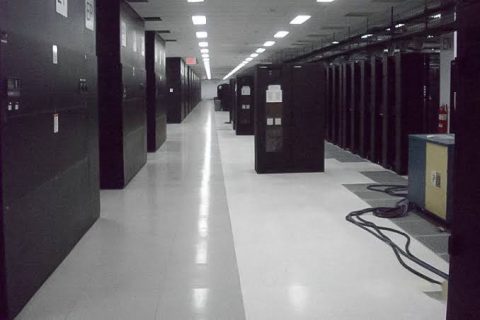
Project factsheet: Proposed Holt Economic Opportunity Park data center campus
- Location: College Road, Delhi Charter Township, Holt, Michigan
- Site area: 423 acres
- Proposed investment: More than $10 billion
- Announced capacity: 700 MW; some reporting has cited up to 1 GW
- Battery storage: Six hours proposed; MW/MWh capacity not disclosed
- Cooling: Closed-loop system proposed
- Natural areas: Approximately 90 acres proposed
- Community investment: Proposed $20 million fund, separate from tax projections
- Development partners: Lansing Economic Area Partnership and Lighthouse Sustainability
- Land: Owned by a DTN-associated holding company; LEAP holds an option to purchase
- Township meeting: Special meeting scheduled for October 30, 2026, at 5:30 p.m. to consider an opposing resolution
- Current status: Exploratory stage; no formal development application or end user identified
- Moratorium: Township data center moratorium scheduled to run until April 2027



Leave a Reply