
The Grand Paris Express is Europe’s largest current infrastructure project. This multi-billion-euro project will expand the Paris rapid transit network and transform the Greater Paris region. It adds 200 kilometers of new automated metro lines and 68 new stations. It also extends several existing lines.
The main goal is to link the suburbs of Paris to each other. The network will also connect them to airports, universities and business districts. Today, many suburban trips force riders to pass through the city center. The new lines will cut those commute times sharply. Planners expect the network to open in stages between 2024 and 2030. It should serve nearly three million passengers each day. It will also ease traffic and support the region’s climate goals by drawing drivers onto public transport.
Elsewhere in Europe, the Rail Baltica project is also taking shape. The EU recently approved funding for its development. Experts expect these major rail projects to boost regional connectivity and economic integration.
Reported on September 28, 2024
The Grand Paris Express may be one of the largest infrastructure projects in Europe. Its vision is to change how people travel in Paris and the surrounding area. Once complete, it will add 68 new stations and 200 kilometers of new rail lines. About 90 percent of these lines run underground. The full project should finish in 2030. However, the first phase, Line 14, will run by late 2024.
The new lines will link Paris with its populous suburbs. The wider region has about 10.5 million people, far more than the central city’s 2.2 million. Today, suburban residents face long journeys. The new system will greatly reduce travel times between major suburbs. For example, the trip from Orly Airport to the Paris-Saclay University campus now takes over an hour and a half. With the new line, it will take only 15 minutes.
Read also Microsoft signs PPA’s for new US$4.3 billion France data center investment
Significance
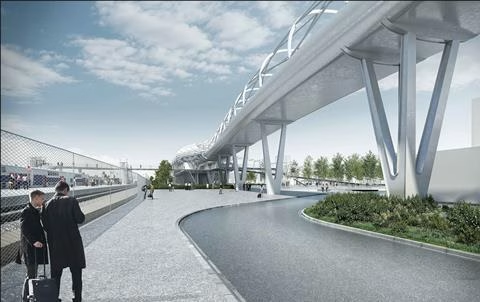
The project also shows architectural and environmental ingenuity on a grand scale. Dominique Perrault Architecture designed modern stations such as Villejuif-Gustave Roussy. This station has a cylindrical shape that allows natural ventilation. As a result, it needs no extra air conditioning or smoke extraction systems. In the deep underground stations, an optical canopy brings in natural light. This design links the surface with the space below.
Environmental concerns have also shaped the Grand Paris Express. The project recycles 70% of its excavated soil. Some of it becomes land art, like the giant “eyes” visible to passengers flying over Charles de Gaulle Airport. The builders also use low-CO₂ concrete in place of conventional concrete. This choice supports France’s sustainable development goals.
Some supporters also argue that the new transport system will bring more social housing near the new stations. This would improve access to affordable homes and car-free living. Paris is already moving toward its target of 25% social housing by 2025. Planners predict that areas along
the new lines will gain 70,000 additional homes.
Cost
The Grand Paris Express will cost an estimated €42 billion (about $54.34 billion). Even so, planners project daily ridership of 2 million people. The network could transform transport in Paris. It will make the city more accessible, greener and better connected.
Work continues on this huge project. Residents eagerly await the changes it will bring. The new lines should reduce traffic delays and improve quality of life for people in Paris and beyond.



Leave a Reply