The Liberia-Bea Mountain deal could reshape the country’s power supply and road network. The government and Bea Mountain Mining Corporation have concluded a proposed $5.7 billion Master Infrastructure Development Agreement after months of negotiations. President Joseph Boakai received the agreement on November 22, and formal signing is scheduled for November 25.
What the Liberia-Baoma Mountain deal would build
The program runs over five years. It would add 270 megawatts of generating capacity through four power plants: three hydropower plants and one biomass plant. One of them is a 100 MW hydropower plant on the Via River. That total is more than three times the capacity of the Mount Coffee hydropower plant.
Water storage is a major part of the plan. Three reservoirs would hold a combined 10 billion cubic meters, so the turbines can keep running when river flows fall. The government cautions that actual output will depend on rainfall, river flows, and how the plants and reservoirs are run.
The grid and roads come with it. A 150-kilometer transmission line would connect the plants to the Mount Coffee substation, and another 150-kilometer line would link the Via plant to Nimba County. In addition, $230 million is set aside for substations, transformers, and transmission upgrades. On the roadside, the flagship is the 146-kilometer Liberia Development Road, with a further $1 billion earmarked for roads across the country.
Who pays, and who is watching?
The financing is the key question. According to the government, extra revenue that Bea Mountain pays, made possible by higher gold prices, would be set aside to help fund the program. Bea Mountain’s regular tax and contract obligations would stay separate from that arrangement.
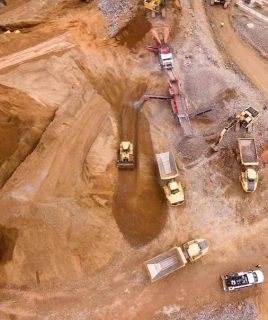
Bea Mountain operates the New Liberty Gold Mine in Grand Cape Mount County, Liberia’s largest industrial gold operation. In 2023, the Legislature extended its mineral development agreement by 25 years.
The proposal faces scrutiny. Religious leaders, civil society groups, and commentators are questioning the financial terms, the company’s tax record, its environmental record, and the treatment of affected communities. The government defends the plan as a way to tackle Liberia’s two biggest development constraints at once. Meanwhile, commentators note that a $5.7 billion program is not the same as $5.7 billion in secured financing.
What happens next for Liberia?
First comes the signing. The president and Bea Mountain are due to sign on Wednesday, November 25. After that, the agreement goes to the Legislature for ratification. Lawmakers will review the contracts, the financing terms, and the construction schedules.
The details will decide the outcome. Watch for who builds each plant, how the funding is structured, and when the first work begins.
Elsewhere in Liberia’s power sector, a World Bank package is expanding the country’s solar park from 20 to 30 megawatts, with battery storage.
Other projects
The global mining sector in 2026 continues to be dominated by a handful of diversified giants, but the composition, strategy, and competitive dynamics of the top 10 mining companies in the world have evolved significantly over the past few years. While firms such as Glencore, BHP, Rio Tinto, and Vale remain at the top by revenue, the industry is undergoing a structural shift toward critical minerals, supply chain control, and energy transition commodities.
In 2025, the top 10 mining companies in the world collectively generated over $600 billion in revenue. This highlighted their central role in powering industries from construction and infrastructure to clean energy and advanced manufacturing. Since then, rising demand for copper, lithium, nickel, and rare earth elements has reshaped investment priorities, with companies increasingly repositioning portfolios toward future-facing commodities.

Leave a Reply