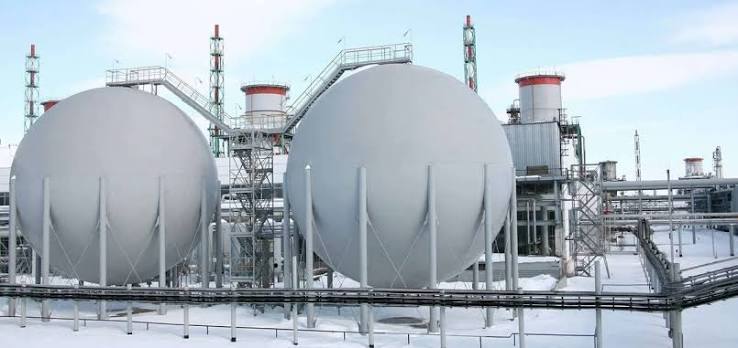
The next source of U.S. helium supply may come from a processing plant taking shape near the Canadian border in Montana. Avanti Helium’s Sweetgrass project moved closer to equipment installation on October 26, with civil construction substantially complete and pipelines connecting two wells to the processing facility already in place.
The update came three days after the U.S. Department of Energy designated helium a critical material, citing its role in semiconductor manufacturing and advanced technologies, growing supply-chain risks, and constraints on domestic production.
The timing matters beyond Washington. Disruptions to Qatar’s helium supply, restrictions on exports from other producing countries, and the concentration of demand in industries that cannot easily switch materials have turned a specialist industrial gas into a strategic supply-chain concern. Sweetgrass is a relatively small project, but its progress comes as manufacturers and governments look for more reliable sources.
Qatar’s supply disruption changed the stakes
Helium is extracted during natural-gas processing, making its supply vulnerable to disruptions in the gas industry. Qatar, one of the world’s largest helium producers, supplied approximately 63 million cubic meters in 2025—nearly one-third of global output, which the U.S. Geological Survey estimated at about 190 million cubic meters.
That concentration became a major vulnerability after the Iran conflict disrupted operations at Qatar’s Ras Laffan industrial complex and shipping through the Strait of Hormuz. QatarEnergy halted production at its major liquefied natural gas facility and declared force majeure on LNG shipments in March. Reuters reported that helium spot prices had doubled since the conflict began, as buyers sought alternative supplies.
Disruption reaches well beyond the Gulf
The disruption reaches well beyond the Gulf. South Korea sourced 64.7% of its helium imports from Qatar in 2025, according to the Center for Strategic and International Studies. Germany’s government has said Qatar accounted for 39% of the country’s helium imports over the preceding decade, ahead of the United States and Algeria at 15% each. Those figures describe different periods and should not be treated as current, identical measures, but both show how heavily major industrial economies have relied on a concentrated supply base.
Other restrictions add to the uncertainty. Russia introduced a temporary authorization requirement for helium exports outside the Eurasian Economic Union through the end of 2027. China imposed a temporary helium export ban in July, saying it needed to protect domestic supply. China is itself a major helium importer, so its restriction is not equivalent to the loss of a major net-exporting producer; its significance is that it reflects growing competition to secure available material.
The supply picture is not simply one of a global market running out of helium. It is a market in which production, purification, transport and access to dependable suppliers can become bottlenecks at the same time. Helium is difficult and expensive to store and transport, and disruptions to processing or shipping can take time to work through the supply chain.
Why the U.S. designation matters
On October 23, Energy Secretary Chris Wright added helium to the Department of Energy’s Critical Material List under the Energy Act of 2020. The department pointed to helium’s importance in semiconductor production and advanced energy technologies, alongside supply-chain exposure and constraints on domestic refining capacity and permitting.
The designation raises helium’s profile in federal industrial policy, but it does not guarantee that a particular project will receive public money or reach commercial production. It does, however, provide a policy backdrop for new domestic supply projects at a time when manufacturers are looking to reduce exposure to disruptions abroad.
The United States is already the world’s largest helium producer. USGS estimated U.S. production at approximately 81 million cubic meters in 2025, around 43% of global output. The country also exported about 38 million cubic meters and imported about 8 million cubic meters that year.
Those figures illustrate an important distinction: domestic production and net exports do not make the U.S. immune to global price swings, shortages of particular grades, or supply interruptions affecting individual customers. The DOE’s concern is that demand is growing faster than production and that limited refining capacity and lengthy permitting timelines constrain how quickly new supply can reach the market.
Helium’s uses help explain the concern. Semiconductor manufacturers rely on it in processes that require precise temperature control, inert environments and leak detection. It also supports MRI scanners, fiber-optic manufacturing, aerospace applications and quantum technologies. No substitute works for every application: USGS says nothing can replace helium in cryogenic applications requiring temperatures below minus 429 degrees Fahrenheit, although alternatives exist in some other uses.
Sweetgrass moves from site preparation toward plant assembly
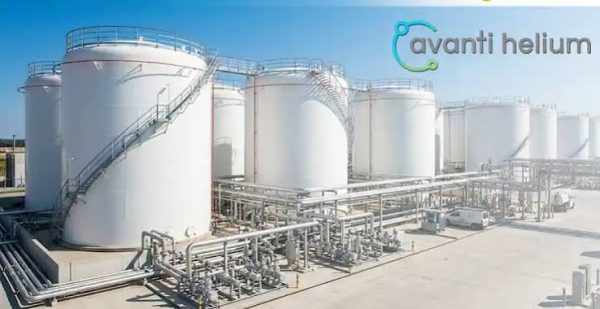
Avanti Helium’s Sweetgrass project sits in Montana’s Greater Knappen area, close to the Canadian border. The development centers on two wells, WNG 11-22 and WNG 10-21, and a dedicated facility designed to recover and purify helium from the gas stream.
In its October 26 update, Avanti reported that civil construction and site preparation were substantially complete. Gathering pipelines linking both wells to the processing facility had also been completed, establishing the route for helium-bearing gas to reach the plant.
The main processing building remains under construction, with completion expected in early November. Major components of the helium recovery unit, designed and fabricated by Quantum Technology, are scheduled to be transported to the site in the coming weeks. Avanti also expects the inlet separator module to ship during the first week of November.
These milestones put the project closer to assembly, but they do not mean the facility is operating. Avanti and Quantum still need to install and integrate the recovery equipment, complete associated piping and electrical and instrumentation systems, and carry out testing and commissioning. The October 26 update did not establish a confirmed date for commercial production.
Avanti has previously described plans to recover helium from the wells at Sweetgrass, with output depending on plant capacity and operating performance. The company’s near-term challenge is to turn the wells and completed gathering infrastructure into a functioning processing operation—and then demonstrate that it can consistently produce helium to commercial specifications.
Financing and competition will determine how far the project goes
In August, Avanti secured a convertible credit facility of up to US$10 million from RiverFort Global Opportunities, providing a source of financing as the project advances. The facility is not a disclosed total construction cost, and its availability should not be confused with proof that all capital needed for commissioning and sustained operations is secured.
Sweetgrass is also entering a more competitive domestic market. USGS recorded six new U.S. helium operations beginning production in 2025, including one in Montana. Pulsar Helium is advancing its Topaz project in Minnesota, where the company has reported helium concentrations of 8.1% in one well and 5.6% in another. Royal Helium has been developing helium-processing capacity in Alberta, while other companies are pursuing projects in the U.S. Southwest and elsewhere in North America.
Reported helium concentrations alone do not determine which project will win customers. Commercial success also depends on recoverable volumes, sustained well performance, processing efficiency, capital requirements, transport logistics and the ability to deliver purified helium reliably. A high-grade discovery may have advantages, but it still needs the infrastructure and commercial arrangements to turn gas in the ground into saleable product.
Sweetgrass’s position is different: Avanti has two wells connected to a facility that is moving toward equipment installation. That gives the project a tangible construction milestone to pursue, but not yet a proven operating record.
The critical-material label is not the finish line
The U.S. government’s decision puts helium more firmly within the country’s supply-chain security agenda. The Qatar disruption and export restrictions elsewhere have also demonstrated why manufacturers may seek more geographically diverse sources—even when their home country already produces substantial quantities.
For Avanti, the next stage is much more practical than the geopolitical headlines. The processing building must be completed, equipment delivered and installed, systems integrated, and commissioning finished before Sweetgrass can become a commercial source of helium.
The project’s potential value rests on that execution. A critical-material designation can sharpen policy attention, but it cannot replace reliable production, adequate financing or customer contracts. As Sweetgrass approaches plant assembly, the decisive test will be whether Avanti can move from construction progress to consistent, saleable output.
The same logic that made helium a critical material is what makes Solid Power’s electrolyte line a policy bet. Both are materials with no substitute, both are dominated by foreign supply chains, and both got federal money because Washington decided the risk of depending on someone else was too high. Helium’s choke point is Qatar. Electrolyte’s is China, which already produces more sulfide electrolyte than the rest of the world combined and is cutting prices to lock in the market before Western suppliers like Solid Power can scale.
Sweetgrass project factsheet
Project: Sweetgrass Helium Project
Location: Greater Knappen area, Montana, near the Canadian border
Project company: Avanti Helium Corp.
Plant designer and provider: Quantum Technology
Production wells: WNG 11-22 and WNG 10-21
Latest reported construction status: Civil construction substantially complete; gathering pipelines installed; main processing building under construction
Next milestones: Building completion, equipment delivery and installation, systems integration, testing and commissioning
Building completion target: Early November 2026, according to Avanti’s October 26 update
Financing: Convertible credit facility of up to US$10 million secured from RiverFort in August 2026
Commercial production: No confirmed start date in the October 26 construction update


Leave a Reply