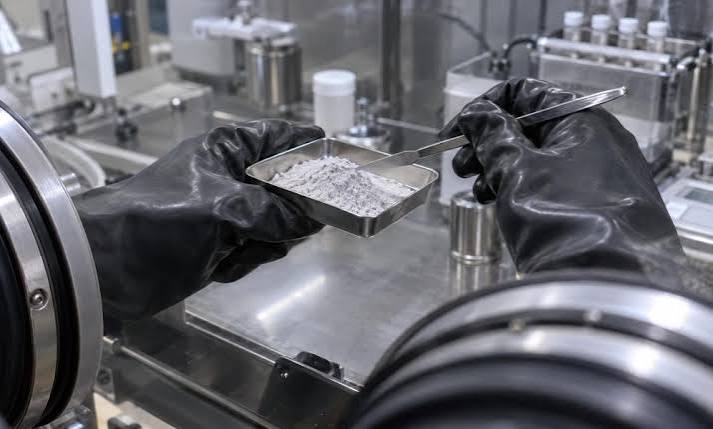
Solid Power is moving closer to a business built around supplying the material inside next-generation batteries rather than manufacturing batteries for mass-market vehicles itself. On October 26, the company began commissioning MOBIUS, a continuous manufacturing pilot line at its SP2 facility in Thornton, Colorado, designed to expand its annual solid-electrolyte production capacity by 150%.
Construction has reached substantial completion, materials are entering the line, and Solid Power has completed site acceptance testing for its primary powder-processing equipment. The company expects full equipment testing to finish by the end of October, with plant validation and operational startup planned for the fourth quarter of 2026.
MOBIUS will add 45 metric tons of annual capacity, bringing expected production capacity at SP2 to approximately 75 metric tons. That is a significant increase for Solid Power, but it remains pilot-scale output—not evidence that the company can yet supply the volumes, prices and consistency required for mass-market electric vehicles.
The line’s importance lies in what it is intended to prove: whether Solid Power can manufacture sulfide-based solid electrolyte consistently enough to supply battery manufacturers and automakers as they move solid-state technology toward commercialization.
Solid Power is building the material supply chain, not a mass-market battery factory
Solid Power’s business model differs from that of companies seeking to manufacture and sell complete battery cells at commercial scale. The Colorado-based company develops sulfide-based solid electrolyte, sells the material to battery manufacturers and licenses its cell designs and manufacturing processes.
That distinction shapes the purpose of MOBIUS. Rather than expanding a factory that builds finished electric-vehicle batteries, Solid Power is expanding the manufacturing capacity for a material that other companies can incorporate into their own cells.
In conventional lithium-ion batteries, an electrolyte allows ions to move between electrodes. Solid-state designs replace the liquid or gel electrolyte with a solid material. Solid Power’s sulfide-based approach is intended to support battery cells with potential improvements in energy density, battery life and safety, although those benefits depend on the performance of the completed cell.
Solid Power still manufactures cells at its research and pilot facilities to develop its technology and help partners evaluate it. But it does not plan to become a commercial cell manufacturer competing directly with its battery-manufacturing customers.
That strategy places consistent material supply at the center of its commercial prospects. Battery manufacturers need electrolyte that meets precise specifications from batch to batch and performs reliably within their own cell designs. A promising laboratory sample is not enough.
MOBIUS takes the next step toward repeatable production
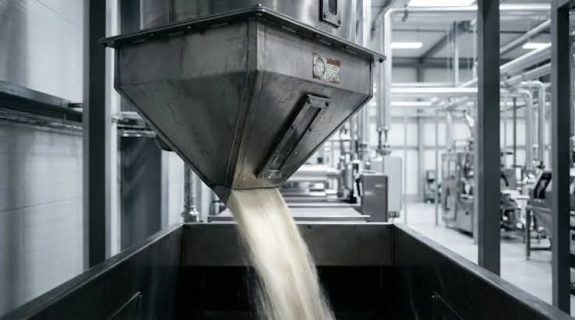
The new line, previously known as the SP2.5 Continuous Manufacturing Pilot Line, will operate alongside the existing batch-production lines at SP2.
Solid Power expects continuous manufacturing to improve process control and repeatability while providing a pathway toward larger production volumes and lower manufacturing costs. Those gains remain targets to demonstrate through operation, rather than results established by the commissioning announcement.
The construction milestone is tangible. Civil and building work has substantially advanced, materials are being introduced into the line, and primary powder-processing equipment has passed site acceptance testing. Solid Power and its equipment supplier must still complete full equipment acceptance, validate the plant and demonstrate that the process operates as intended.
The company expects MOBIUS to raise total SP2 electrolyte capacity from approximately 30 metric tons to 75 metric tons per year. But rated capacity and usable commercial output are different measures. Actual production will depend on commissioning, operating performance, product quality and the amount of material that customers qualify for their applications.
That distinction matters because MOBIUS is intended to support material qualification with automotive and battery-cell partners. The project does not, by itself, establish that those partners will use the electrolyte in mass-produced vehicles.
The chemistry creates a manufacturing challenge
Sulfide-based electrolytes are attractive partly because of their ability to conduct lithium ions. But their moisture sensitivity creates additional manufacturing and handling requirements. Exposure to moisture can generate hydrogen sulfide, a toxic gas, so producers must carefully control conditions during processing, storage and handling.
These requirements add complexity to equipment design, production controls and material logistics. They also make manufacturing consistency and cost central to commercial adoption.
Continuous production could help Solid Power improve control over the process, reduce variation and build experience before expanding toward larger commercial volumes. The question is whether those benefits will translate into a product that customers can qualify and purchase at a competitive cost.
The 75-metric-ton target should therefore be read as a manufacturing milestone, not a forecast of vehicle production. The quantity of electrolyte needed for a given battery volume depends on cell design and material loading, while commercial demand depends on qualification results and customer production plans.
Solid Power faces a different race from cell manufacturers
Solid Power is advancing MOBIUS as other companies pursue their own routes to solid-state battery commercialization.
QuantumScape announced on October 21 that it plans to develop a 100-megawatt-hour solid-state battery cell production line for markets including artificial-intelligence data centers, aerospace and defense. The company is targeting a 2028 start for cell production.
In Japan, Idemitsu Kosan is developing a large solid-electrolyte pilot plant in Chiba, with construction completion planned for 2027. The facility is expected to produce hundreds of metric tons of electrolyte annually and supports Idemitsu’s work with Toyota toward all-solid-state batteries for electric vehicles in 2027–2028.
These projects are not directly equivalent. QuantumScape’s announced line targets finished battery cells, while Idemitsu’s Chiba plant will produce electrolyte, and MOBIUS is a smaller pilot line at an existing U.S. facility. But together they illustrate the breadth of the race: companies are developing cell technology, production equipment and the materials needed to make solid-state batteries commercially viable.
For Solid Power, the competitive question is not simply whether it can produce more electrolyte. It is whether its material and manufacturing process can meet the needs of battery manufacturers already building their own commercialization plans.
BMW, Samsung SDI and SK On provide routes to customers
Solid Power’s strategy depends on partnerships with companies that can evaluate its electrolyte and integrate it into cell-development programs.
In October 2025, Solid Power announced a joint evaluation agreement with Samsung SDI and BMW. Under the arrangement, Solid Power supplies sulfide-based electrolyte to Samsung SDI, which uses it to build cells for evaluation against performance requirements agreed with BMW.
Solid Power also completed a line installation agreement with SK On in 2026, receiving a milestone payment. The agreement involved designing, procuring and installing a pilot cell-manufacturing line at an SK On facility in South Korea. Solid Power’s filings describe a separate electrolyte supply agreement under which SK On will purchase material for validation and further development.
The company has also been discussing a potential joint venture for commercial-scale electrolyte production in South Korea. In its August 2026 results, Solid Power said those discussions had advanced, but it had not announced a completed joint venture.
MOBIUS could strengthen these relationships by expanding the amount of electrolyte available for sampling and qualification. It does not guarantee that any partner will adopt the material at commercial scale. That depends on technical performance, cost, production consistency and the partners’ own development schedules.
Federal funding supports the project, but commercialization remains the test
The U.S. Department of Energy is supporting MOBIUS through an assistance agreement providing up to $50 million in federal funding. The project fits a wider effort to develop domestic capabilities in advanced battery materials and manufacturing.
Solid Power also has the financial capacity to continue investing in development. At June 30, 2026, it reported total liquidity of $419.3 million and no debt financing. The company nevertheless recorded a $23.8 million net loss in the second quarter, underscoring that a strong balance sheet does not mean the business has reached profitability.
The immediate test is operational: complete commissioning, validate the line and produce material that meets partner requirements. The larger test is commercial: secure sustained demand for electrolyte at a price and volume that can support an economically viable business.
MOBIUS moves Solid Power closer to that point. But the difference between installed capacity and qualified, saleable output remains the central measure to watch. The line is nearing operation; its commercial value will depend on what it can consistently produce—and whether customers are ready to buy it.
Solid Power’s sulfide chemistry has a hidden dependency: inert manufacturing. Sulfide electrolyte reacts with any trace of moisture and releases hydrogen sulfide gas, so every step of MOBIUS has to run in a sealed, helium-purged environment. The pilot line can’t function without a reliable supply of the same gas Avanti is trying to produce in Montana. As domestic helium output grows and prices stabilize, one of the quiet beneficiaries is exactly this kind of advanced materials manufacturing — which means the two stories aren’t just parallel federal bets. They’re inputs to each other.
MOBIUS pilot line factsheet
Project: MOBIUS continuous manufacturing pilot line
Location: Solid Power’s SP2 facility, Thornton, Colorado
Company: Solid Power, Inc.
Manufacturing focus: Sulfide-based solid electrolyte
Construction status on October 26, 2026: Substantial completion; materials entering the line
Additional designed capacity: 45 metric tons per year
Expected total SP2 capacity: Approximately 75 metric tons per year after commissioning
Equipment testing: Primary powder-processing site acceptance testing completed; full testing expected by the end of October 2026
Operational target: Plant validation and startup planned for the fourth quarter of 2026
Federal support: Up to $50 million from the U.S. Department of Energy
Key partners: BMW, Samsung SDI and SK On
Commercial objective: Supply solid electrolyte to battery manufacturers and automotive original equipment manufacturers

Leave a Reply