
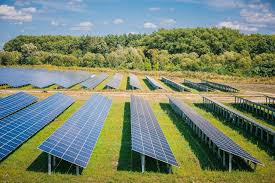
The Kanoya Osaki Solar Hills project is a 100 MW solar power plant located in Kanoya City and Osaki Town in Kagoshima Prefecture, Japan, built on land once set aside for an abandoned golf course. That origin now looks typical. A Bloomberg analysis reported by Yale Environment 360 in September 2026 found 9% of Japan’s utility scale solar capacity sits on former golf courses.
How Kanoya Osaki Solar Hills Was Financed
The plant remains in operation, with its sponsors estimating output of about 117,000 MWh a year, enough for roughly 39,300 households. Tokyo Century and The Bank of Fukuoka arranged its debt through a syndicated loan with 17 regional banks, a pooled domestic model echoed as ESR gathered 23 Japanese investors for its $762 million Higashi Ogishima logistics hub near Tokyo.
Project Factsheet
- Project Name: Kanoya Osaki Solar Hills Solar Power Plant
- Location: Kanoya City and Osaki Town, Kagoshima Prefecture, Japan
- Project Type: Utility scale solar photovoltaic plant on a former golf course site
- Capacity: About 100 MW peak
- Key Components: 356,928 Kyocera solar modules
- Annual Generation: About 117,000 MWh, equal to roughly 39,300 households (sponsor estimate)
- Project Value: Not publicly disclosed by the sponsors
- Client or Owner: Kanoya Osaki Solar Hills LLC (GF Corporation 72.7%; Kyocera, Kyudenko and Tokyo Century 9.1% each)
- Commercial Operation: Announced by the sponsors in May 2020
- Strategic Impact: Described by its sponsors as the largest power plant in Kyushu at opening, and an example of Japan’s shift to reusing disused golf courses for solar
Project Team
- Owner and Operator: Kanoya Osaki Solar Hills LLC
- Majority Shareholder and EPC Consortium Partner: GF Corporation
- Module Supplier and Shareholder: Kyocera
- EPC Consortium Partner and Shareholder: Kyudenko
- Financing Arranger and Shareholder: Tokyo Century
- Joint Loan Arranger: The Bank of Fukuoka
- Lenders: Syndicate of 17 regional banks
- Local Government Partners: Kagoshima Prefecture, Kanoya City and Osaki Town
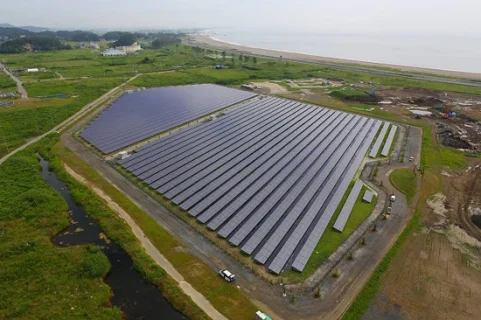
Reported 3rd June 2020: The Kanoya Osaki Solar Hills solar power plant is located across Kanoya City and Osaki Town in Kagoshima Prefecture. It is fully operation following construction of a ground-mounted installation with approximately 100 MW peak capacity and some 356,928 solar modules. The facility started operations in March 2020 and is expected to generate around 117,000 MWh annually. This is enough to power nearly 39,000 households. The solar project is also one of Kyushu’s largest solar power plants. Kyushu is also home to the largest battery storage project in Japan by developers Sonnedix and Osaka Gas.
Kanoya Osaki Solar Hills Project Starts Operation in Japan
Reported August 14, 2021 – A new 100 MW solar power park supplied by Kyocera solar modules has begun operation in Kagoshima Prefecture, Japan. Operated by the Kyocera and backed Kanoya LLC joint venture, the solar park is one of the largest PV facilities in Japan on the island of Kyushu.
Project Stakeholders
Venture partner Tokyo Century coordinated financing for the project with 17 regional banks. Kanoya Osaki Solar Hills LLC, a joint venture that counts Japanese electronics and solar cell and module manufacturer, Kyocera, as one of its main shareholders, is operating the 100 MW Kanoya Osaki Solar Hills Solar Power Plant. The site uses 356,928 high-efficiency Kyocera solar modules. These are expected to generate some 117,000 MWh of renewable electricity annually.
Kanoya Osaki Solar Hills’ backers also comprise of the GF Corporation and Kyudenko Corporation. The two established a consortium to oversee the plant’s design, construction and maintenance. In addition to the backers, Tokyo Century worked with the Bank of Fukuoka in arranging a syndicated loan for the project. Kanoya Osaki Solar Hills LLC, which will handle operations of the facility, working on the construction of the site with the cooperation of Kagoshima Prefecture, the city of Kanoya, the town of Osaki and other members of the community.
Also Read: Toshiba signs Onikoube Solar Power Plant construction agreement in Japan
More on the Project
Planning of the project began in January 2014. This is after the local community in expressed interest in repurposing land designated for a golf course that had been subsequently abandoned.
“We believe that this installation will contribute greatly to the local community through the creation of jobs and increased tax revenues in both Kanoya and Osaki.” Kyocera also said in a statement.
Akihito Kubota, executive officer and general manager of Kyocera, also added, “GF, Kyocera, Kyudenko and Tokyo Century started this project with a commitment to contribute to the community. This will be in cooperation with local governments by assisting with a long-term land redevelopment vision.”

Leave a Reply