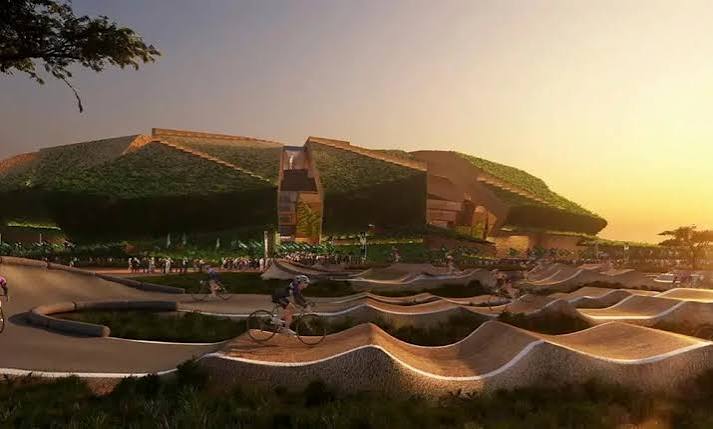
King Salman Stadium works in Riyadh are advancing through Saudi Arabia’s procurement process, bringing the kingdom closer to delivering a landmark venue for the 2034 FIFA World Cup final. The development will create one of the world’s largest football stadiums, combining a 92,000-seat arena with extensive sports and recreational infrastructure.
Moreover, the project will strengthen Riyadh’s position as a major international sporting destination. The latest tendering activity signals another important step towards delivering the stadium before the tournament.
The stadium forms part of Saudi Arabia’s broader program to expand its sports infrastructure under Vision 2030. In addition, its development will support the kingdom’s preparations to host major international sporting events. The project’s estimated investment stands at approximately $2 billion, according to Knight Frank’s Saudi Arabia Giga Projects Report 2025.
King Salman Stadium works and the latest tendering developments
The Ministry of Sport oversees the project alongside the Royal Commission for Riyadh City. Meanwhile, US-based architectural firm Populous leads the stadium’s architectural design. The authorities selected the design from submissions by six international architectural firms.
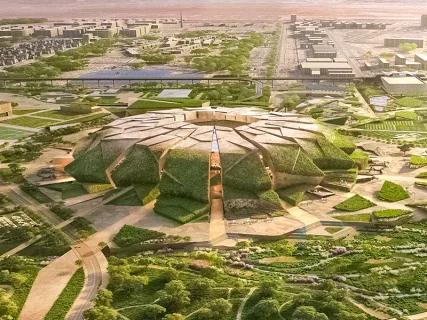
The stadium will occupy approximately 660,000 square meters in northern Riyadh, next to King Abdulaziz Park. Furthermore, the development will integrate sports facilities covering more than 360,000 square meters. These facilities will accommodate different sporting disciplines, recreational activities and training requirements.
The Ministry of Sport initiated the main construction procurement process in November 2025. It invited experienced contractors to prequalify for the stadium’s main design-and-build contract. Subsequently, companies submitted their prequalification statements in February 2026.
In April 2026, the ministry also invited contractors to prequalify for preliminary construction works. The submission deadline fell on 28 April 2026. This process established another procurement stage ahead of the stadium’s major construction activities.
MEED’s October 26, 2026 report, signals further procurement activity. However, its publicly accessible information does not disclose the tender’s specific scope, contract value or submission deadline. Therefore, the latest tender should not be confused with an announced contract award.
King Salman Stadium works expand Riyadh’s sports infrastructure
The stadium’s design incorporates several premium hospitality facilities. These include a 150-seat royal suite, 120 hospitality suites, 300 VIP seats and 2,200 dignitary seats. Additionally, the venue will serve as the Saudi national football team’s main headquarters.
Beyond the main arena, the wider development will include two training fields and dedicated fan zones. It will also feature a closed sports hall, an Olympic-sized swimming pool and an athletics track. Furthermore, outdoor courts will accommodate volleyball, basketball and padel.
These facilities will support year-round sporting activities beyond the World Cup. Consequently, the project will provide Riyadh with an extensive sports complex rather than a standalone football venue.
The stadium’s location beside King Abdulaziz Park will also connect the development with Riyadh’s wider recreational infrastructure. Meanwhile, its architectural design will incorporate the surrounding landscape into the visitor experience.
Saudi Arabia prepares King Salman Stadium for 2034
Saudi Arabia expects to complete the stadium by 2029, leaving several years before the 2034 World Cup. The venue will host the tournament’s final, making it a central component of the kingdom’s hosting preparations.
Saudi Arabia plans to construct 11 new stadiums and refurbish four existing facilities for the tournament. Riyadh will accommodate eight of the planned stadiums, while Jeddah will receive four. Additionally, Al-Khobar, Abha and Neom will each host one stadium.
The kingdom also plans 134 training sites across its cities. These will include 61 existing facilities and 73 new venues. Therefore, King Salman Stadium forms part of a much larger national construction program.
The stadium’s progression through procurement will remain important for contractors, suppliers and infrastructure stakeholders. As tendering advances, further contract disclosures should clarify the construction packages, delivery responsibilities and implementation schedule.
Saudi Arabia’s preparations for the 2034 FIFA World Cup also include upgrading existing sporting infrastructure. In Jeddah, the planned renovation of the 62,000-seat King Abdullah Sports City Stadium will complement Riyadh’s new stadium development. Together, the projects highlight the kingdom’s strategy of combining new construction with existing venue upgrades to meet tournament requirements.
Project Fact Sheet
Name: King Salman International Stadium.
Type: Major sports stadium and associated sports infrastructure development.
Location: Northern Riyadh, Saudi Arabia, adjacent to King Abdulaziz Park.
Owner: Royal Commission for Riyadh City and Saudi Arabia’s Ministry of Sport.
Project Cost: Approximately $2 billion.
Main Stadium Capacity: Approximately 92,000 spectators.
Total Stadium Site Area: Approximately 660,000 square meters.
Wider Sports Facilities: More than 360,000 square meters.
Project Architect: Populous.
Delivery Model: Main design-and-build contract, alongside separate preliminary works.
Planned Completion: 2029.
Primary Event: 2034 FIFA World Cup final.
Additional Function: Main headquarters of the Saudi national football team.
Procurement Status: Tendering activity reported in October 2026.
Project Background: Part of Saudi Arabia’s wider 2034 FIFA World Cup stadium development program.
Project Team
Owner: Royal Commission for Riyadh City.
Government Project Partner: Ministry of Sport, Saudi Arabia.
Lead Architect: Populous, responsible for the stadium’s architectural design.
Main Construction Procurement: Ministry of Sport, managing contractor prequalification and procurement.
Preliminary Works Procurement: Ministry of Sport, responsible for inviting qualified contractors.


Leave a Reply