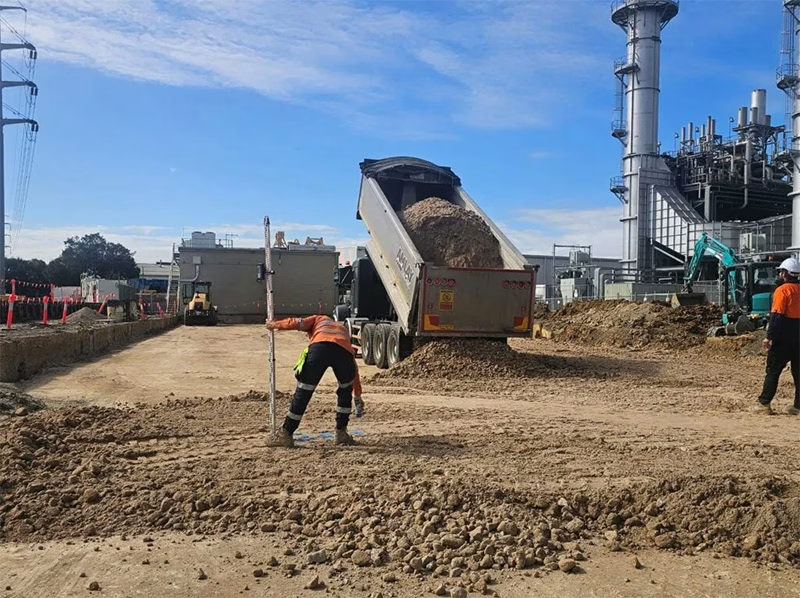
Every construction professional knows that delays are expensive. Projects fall behind schedule, budgets balloon, and stakeholders grow frustrated. What many don’t realize is that most of these problems start long before concrete gets poured or steel gets erected. They begin during site preparation.
Site prep might seem straightforward. Clear the land, level everything out, and start building, right? In reality, groundwork requires careful planning, precision, and expertise. Skip critical steps or rush through processes, and you’ll pay for it later through costly delays and rework.
After working on numerous government and corporate infrastructure projects, we’ve seen how even experienced teams make preventable mistakes during early phases. Understanding these common errors helps project managers avoid setbacks that can derail entire developments.
Insufficient Soil Testing Creates Foundation Problems
Many construction teams treat soil testing as just another box to tick. They collect a single sample, get basic results, and move forward. This approach leads to serious problems once construction begins.
Different soil types behave completely differently under load. Clay soils expand and contract with moisture changes. Sandy soils may not provide adequate support. Rocky terrain requires specialized excavation techniques. Without comprehensive testing across the entire site, you’re essentially gambling on ground conditions.
Proper soil investigation reveals composition, loadbearing capacity, and water absorption characteristics. Testing should happen at multiple locations and depths throughout the development area. Results guide foundation design, excavation methods, and stabilization requirements.
Skipping thorough soil analysis often means discovering unsuitable ground conditions only after excavation begins. Teams then face expensive delays while engineers redesign foundations or implement additional stabilization measures. Major infrastructure projects worldwide have learned this lesson the hard way, with some experiencing months of delays due to unexpected ground conditions.
Poor Drainage Planning Causes Long-Term Headaches
Water doesn’t care about your construction timeline. Without proper drainage systems in place, rain and groundwater will find their own path. Unfortunately, that path often runs directly through your project site, causing erosion, flooding, and structural instability.
Drainage planning needs to happen during initial site design, not as an afterthought. Engineers must assess natural water flow patterns, identify low-lying areas prone to pooling, and design systems that redirect water safely away from foundations and work areas.
Effective drainage includes multiple components. Surface grading directs rainwater toward collection points. Underground systems handle subsurface water movement. Retention ponds manage stormwater during heavy rainfall. Each element works together to keep sites dry and stable.
Projects that neglect drainage planning face predictable consequences. Work stops during rain events. Excavated areas fill with water and mud. Equipment gets bogged down. Foundation work becomes impossible. These delays compound quickly, especially during wet seasons.
Rushing Through Approvals and Permits Backfires
Nobody enjoys dealing with bureaucracy. Permit applications, environmental assessments, and regulatory approvals take time and patience. Yet some project managers try to speed through this process or even begin work before receiving proper authorization.
This approach always backfires. Government agencies have specific requirements for civil construction projects. Environmental regulations protect sensitive areas. Utility companies need advance notice before excavation near underground lines. Building codes ensure structural safety. These aren’t arbitrary rules to ignore.
Starting work without complete approvals puts the entire project at risk. Inspectors can issue stop-work orders. Agencies may require expensive remediation if environmental damage occurs. Fines and legal challenges drain budgets. Even after resolving these issues, delays stretch timelines significantly.
Smart project managers build approval timelines into initial schedules. They work closely with regulatory bodies, submit complete applications, and address concerns proactively. This front-loaded effort prevents major disruptions later.
Inadequate Site Investigation Leads to Surprises
What lies beneath the surface? Without thorough site investigation, that question becomes very expensive to answer during construction. Underground utilities, buried debris, contaminated soil, and unknown geological features all create major obstacles if discovered unexpectedly.
Professional earthworks contractors emphasize comprehensive site investigation before breaking ground. This process goes beyond basic surveying to examine everything affecting excavation and foundation work. Ground-penetrating radar detects buried objects. Utility mapping identifies existing infrastructure. Geotechnical studies reveal subsurface conditions.
Investigation findings directly inform project planning. Teams can design around obstacles, budget for necessary remediation, or adjust timelines to accommodate complex ground conditions. Compare this to discovering problems mid-excavation, when equipment sits idle and crews wait for solutions.
Large-scale developments, similar to those featured in mega infrastructure projects in Australia, invest heavily in thorough site investigation. They understand that spending time and resources upfront prevents exponentially larger costs later. Smaller projects benefit from the same approach, even if investigation scope differs.
Improper Soil Stabilization Methods Create Instability
Loose, unstable soil cannot support heavy structures. Everyone knows this. Yet many projects still skimp on proper soil stabilization, either through inadequate compaction, wrong stabilization techniques, or insufficient depth of treatment.
Soil stabilization transforms weak ground into solid foundations capable of bearing structural loads. Methods vary based on soil type, moisture content, and intended use. Mechanical compaction works for some applications. Chemical stabilization using lime or cement suits other conditions. Some sites require deep soil mixing or ground reinforcement.
Choosing appropriate stabilization methods requires expertise. Clay-rich soils need different treatment than sandy compositions. Wet conditions demand moisture management before compaction. Heavy structures require deeper stabilization than lighter buildings.
Cutting corners on soil stabilization sets projects up for settlement problems, structural damage, and potential failure. Foundations may crack or shift. Pavements develop uneven surfaces. Structures experience stress they weren’t designed to handle. Remediation becomes incredibly expensive, often requiring partial demolition and reconstruction.
Neglecting Environmental Controls
Construction sites generate significant environmental impacts. Erosion washes sediment into waterways. Dust affects air quality. Vegetation removal disrupts habitats. Without proper controls, these impacts trigger regulatory violations, community complaints, and project delays.
Environmental protection measures need implementation before major earthmoving begins. Silt fences contain sediment runoff. Dust suppression systems control airborne particles. Vegetation buffers protect sensitive areas. Stormwater management prevents pollution.
Looking at major construction projects worldwide, we see that environmental compliance has become standard practice. Projects allocate resources for controls from the start, recognizing that environmental violations cause expensive delays and damage reputations.
Reactive environmental management doesn’t work. By the time problems appear, damage has occurred. Regulators may halt work pending remediation. Community opposition builds. Legal challenges emerge. Proactive controls cost far less than addressing violations after the fact.
Underestimating Equipment and Expertise Requirements
Site preparation involves specialized heavy equipment and skilled operators. Excavators, bulldozers, graders, and compaction machinery all require experienced hands. Using undersized equipment or inexperienced crews slows progress and creates quality issues.
Projects sometimes try to economize by hiring less experienced contractors or using inadequate machinery. This penny-wise, pound-foolish approach backfires through poor quality work, safety incidents, and timeline delays. Rework becomes necessary. Accidents create liability. Progress stalls.
Professional site preparation requires investing in proper resources. Experienced operators work efficiently and identify potential problems early. Modern equipment includes precision controls for accurate grading and excavation. Specialized tools handle challenging conditions that basic machinery cannot.
Equipment selection should match project requirements. Small excavators work well for tight spaces but cannot handle large-volume earthmoving efficiently. Graders need laser guidance systems for precise finish work. Compaction equipment must suit soil types being stabilized.
Failing to Coordinate Utilities Installation
Utility installation timing often gets overlooked during site preparation planning. Water, sewer, electrical, and gas lines all need installation at specific project stages. Poor coordination means digging up already-completed work, damaging infrastructure, or delaying subsequent construction phases.
Effective utility coordination requires detailed planning. Engineers map out installation sequences. Trenching happens at appropriate depths before final grading. Connections align with building locations. Protection measures prevent damage during ongoing construction.
Some projects rush through initial earthworks without considering utility placement. They complete grading, then realize utilities need installation, requiring excavation through finished work. This approach wastes time, money, and materials while frustrating crews.
Smart scheduling integrates utility work into the overall site preparation sequence. Trenches get dug during initial excavation. Lines install before final grading. Testing happens before covering infrastructure. Each step flows logically into the next.
Moving Forward With Confidence
Site preparation sets the foundation for construction success. Getting it right means projects stay on schedule, budgets remain controlled, and quality meets expectations. Making mistakes during early phases creates cascading problems that affect every subsequent stage.
The common errors outlined here share one trait: they’re all preventable. Thorough soil testing, comprehensive drainage planning, proper approvals, detailed site investigation, correct stabilization methods, environmental controls, adequate equipment, and coordinated utilities all require upfront investment. However, this investment pales compared to costs associated with delays, rework, and project failures.
Successful projects recognize that professional site preparation is not an area to cut corners. They allocate appropriate time, budget, and expertise to groundwork phases. They partner with experienced contractors who understand local conditions and regulatory requirements. They plan carefully and execute methodically.
Whether developing government facilities, commercial properties, or infrastructure improvements, quality site preparation makes everything else possible. Taking time to get it right from the start pays dividends throughout the entire construction process and long into the structure’s operational life.