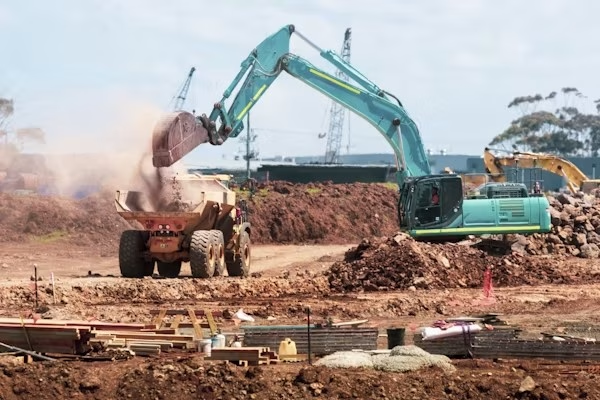
Construction processes usually do not proceed smoothly all the way through. Grading contractors may have completed their work several weeks ago, waiting for the utility contractors to start work. Work underground can already be going on while part of the site is still open. The concrete crew, landscaping contractors, and the paving team all join the project in different stages of progress. Each one of these handovers becomes a time frame when erosion control measures can become compromised, overlooked, or lack ownership altogether.
Specialists in environmental installation services help contractors manage these transitions. Syman, for instance, offers site stabilization services that include SWPPP preparation, BMP installation, inspection, hydroseeding, and environmental permitting consulting. By linking together these services in the course of the project, Syman makes sure that construction contractors comply with federal and state regulations.
The Hidden Risk Between Construction Phases
Most erosion problems do not begin with a major failure. They often start during a routine change in site activity. A truck drives over a sediment barrier to reach a new work area. An inlet protection device is removed during utility work and never replaced. The temporary slope is still visible since there has been a delay in the landscaping process.
These seemingly minor problems can turn into major issues due to rainwater. The water moves through the route left by the equipment ruts and compacted ground. The sediment will move towards the storm drain, adjacent land, wetland, stream, or street. Cleanup becomes more complicated when the material exits the construction site.
Construction handoffs create risk because every crew has a different priority. The grading contractor focuses on soil movement. Utility teams need trench access. Concrete crews need stable routes for delivery trucks. Landscapers are concerned with final soil preparation. Environmental controls can be damaged when they interfere with these activities.
Clear responsibility is essential. The site team should know who checks BMPs after a subcontractor leaves, who approves temporary removal, and who completes repairs. Without this structure, environmental work can fall between contracts.
A useful handoff review should cover:
- Areas of exposed soil
- Changes in drainage patterns
- Damaged silt fence or wattles
- Unprotected stormwater inlets
- New stockpile locations
- Mud tracked onto paved roads
- Temporary access routes
- Slopes awaiting permanent stabilization
This review can be completed before the next crew begins work. It gives the superintendent a clear record of current conditions and reduces arguments about when damage occurred.
SWPPP Updates Should Follow the Schedule
A Stormwater Pollution Prevention Plan is usually prepared before major site activity begins. The project may look very different several months later. Buildings change how water moves. Utility trenches interrupt existing drainage paths. New roads create hard surfaces that send runoff toward lower areas.
The SWPPP should reflect these changes. A plan that remains unchanged throughout the project may stop matching field conditions. This creates practical problems for crews and can weaken the contractor’s compliance records.
The construction schedule can help guide SWPPP updates. Each major phase should trigger a review. Useful review points include the end of clearing, completion of mass grading, start of utility installation, building dry-in, paving, and final landscaping.
During each review, the project team should compare the plan with the actual site. Drainage paths, discharge points, material storage areas, disturbed zones, and stabilized sections should be checked. BMPs can then be moved, added, or replaced based on current conditions.
Installation quality is equally important. A silt fence must be properly trenched and placed along the correct contour. Wattles need secure anchoring. Check dams require suitable spacing. Inlet protection should capture sediment while allowing water to drain safely.
Poor placement can create new problems. Water may flow around a control, collect near a building pad, or flood an access road. Environmental installations should work with the construction layout so crews can continue operating without repeatedly removing them.
Inspections Can Protect the Project Schedule
Environmental inspections are often viewed as a compliance requirement. They can also serve as an early warning system for schedule problems.
An eroded erosion control can indicate something more complicated than just poor maintenance. There might be signs of changing runoff, too many vehicles on a temporary road, and even failure in soil stabilization. Early fixing of the problem can save you from having to perform an even bigger repair down the road.
Inspections are especially useful before and after subcontractor transitions. A documented inspection creates a clear picture of the site at the end of one phase. Photos and written notes help identify existing damage, required repairs, and areas that need additional protection.
A practical inspection process may include these steps:
- Review recent and expected weather conditions.
- Walk from the highest disturbed areas toward discharge points.
- Check every active BMP for damage and sediment buildup.
- Review entrances, stockpiles, slopes, inlets, and drainage channels.
- Photograph areas that require corrective action.
- Assign each repair to a named person or crew.
- Confirm completion and update the site records.
Speed matters when repairs are required. A report that sits unanswered in an inbox provides little protection. Corrective actions should have a deadline and a responsible owner. The person completing the repair should also understand the original purpose of the control.
Inspection records can help during a regulatory visit. They show that the contractor has an active process for finding and correcting problems. Accurate documentation also gives project managers a better view of repeated issues and the cost of environmental maintenance.
Stabilization Should Begin Before Crews Leave
Temporary stabilization is often delayed because another construction phase is expected to begin soon. Schedules change frequently, and exposed soil may remain untouched longer than planned. Stabilizing an inactive area before a crew leaves can reduce this risk.
Hydroseeding is one option for covering larger disturbed areas. Seed, mulch, fertilizer, and binding products are applied as a mixture, allowing crews to treat slopes and open ground efficiently. The choice of treatment should consider soil type, season of the year, climate, and how long your site is going to be inactive.
In other places, erosion control blankets, mulch, soil stabilization, gravel, or other techniques will be needed. The method that you choose depends on several factors like the length of the slope, soil characteristics, volume of runoff, and sensitive locations around.
Also, early stabilization will create more comfortable working conditions. It can eliminate dust, reduce mud, preserve access roads, and help future workers walk around the area. Sediment will enter drainage systems less often.
Final stabilization requires careful coordination. Landscaping, paving, building work, and drainage installation must reach the correct stage before temporary controls are removed. Removing them too early can expose the project during the final weeks, when teams may assume environmental risks have already passed.
Environmental compliance is most effective when it uses the same principles as scheduling, safety, and quality. Each construction phase modifies the site and introduces new obligations. SWPPP modification, BMP placement, inspection, hydroseeding, and environmental compliance support enable contractors to handle these new situations without letting erosion problems slow down the following crew.
Effective site transfer means that the site will be prepared for its next stage through stability and documentation. This preserves adjacent land and water resources and minimizes the need for cleanup and rework, while also minimizing budget pressure.