The Shift Towards Energy-Independent Commercial Buildings
The global construction industry is experiencing a monumental paradigm shift in foundational design philosophy. Modern developers are actively moving away from traditional, grid-dependent models toward highly sustainable, energy-independent architectures.
This transition involves embedding large-scale solar arrays and high-capacity electric vehicle (EV) charging stations directly into the blueprints of new data centers, corporate campuses, and retail hubs. While this integration significantly reduces long-term operational carbon footprints, it introduces severe electrical engineering complexities.
As commercial facilities transition into localized power hubs, contractors are faced with managing increasingly complex high-voltage networks. Ensuring the stability of these systems requires BENY integrating highly reliable solar PV and EV charging solutions, from module-level rapid shutdown devices to advanced DC circuit breakers, which serve as the foundational safety layer against electrical faults.
Core Electrical Safety Considerations in Solar Construction
Fire Mitigation and Rapid Shutdown Mechanisms
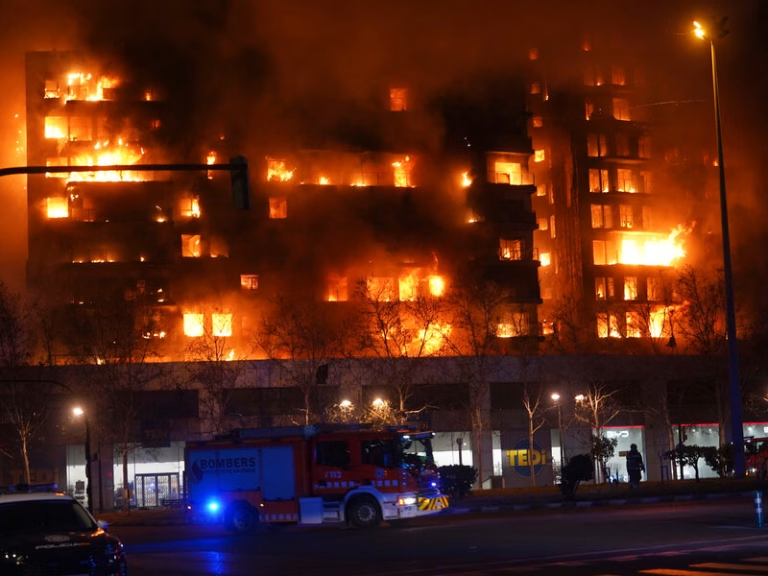
Navigating modern commercial building codes requires rigorous adherence to advanced fire safety protocols. This is especially critical when mounting high-capacity photovoltaic arrays on commercial roofing structures where physical access may be limited.
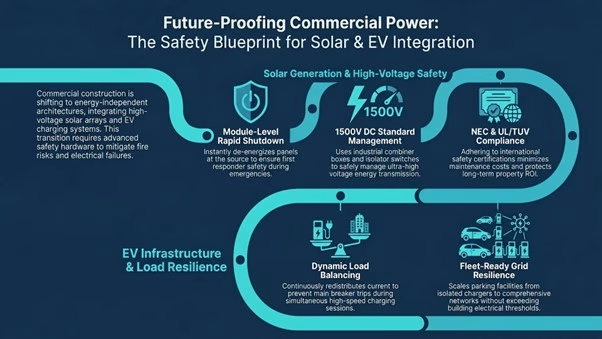
System designers must implement Module-Level Rapid Shutdown hardware to strictly comply with National Electrical Code (NEC) regulations. This technology instantly de-energizes the solar panels at the source, effectively eliminating high-voltage risks and protecting first responders during structural emergencies.
Key structural safety measures for solar PV include:
- Utilizing industrial-grade Arc Fault Circuit Interrupters (AFCI) to detect and instantly sever abnormal electrical arcs before they ignite surrounding building materials.
- Installing remote mechanical disconnects that allow facility managers to isolate solar modules immediately during grid anomalies.
- Specifying highly durable, non-combustible conduit materials for all primary DC wiring runs to prevent external fire propagation.
Managing High-Voltage DC Systems
Utility-scale and commercial solar installations frequently operate at ultra-high voltages, primarily utilizing the 1500V DC standard. While this elevated voltage drastically improves overall energy transmission efficiency, it concurrently magnifies the risk of catastrophic system failure if mismanaged.
Engineers control these intense electrical loads by deploying industrial-grade Combiner Boxes, which are engineered to consolidate multiple incoming PV string connections safely.
Additionally, incorporating heavy-duty DC Isolator Switches provides a secure, physical break within the circuit. This mechanism ensures that maintenance crews can safely service central power inverters without risking lethal electrocution or exposure to lightning-induced electrical surges.
Scaling EV Charging in Commercial Parking Facilities
Transitioning a commercial property from hosting a few isolated chargers to supporting a comprehensive, fleet-ready parking structure demands rigorous electrical infrastructure planning.
Deploying high-voltage DC Fast Charging hardware places an immense, fluctuating burden on a building’s primary electrical service panel. Without proper mitigation, simultaneous charging sessions can trigger main breaker trips.
To prevent localized grid collapse and mitigate exorbitant peak-demand utility penalties, heavy infrastructure projects must actively utilize Dynamic Load Balancing.
This sophisticated energy routing technology continuously monitors total site power consumption and actively redistributes available current across the EV charging network, ensuring optimal vehicle charging without ever exceeding the facility’s maximum electrical thresholds.
Long-Term Grid Resilience and Project ROI
The economic viability of modern construction developments is fundamentally tied to their long-term energy performance and operational stability. Selecting premium, field-tested electrical components directly influences a commercial property’s overall return on investment (ROI).
Procuring internal hardware that carries rigorous international safety certifications, such as UL and TUV, drastically minimizes future maintenance expenditures and shields property owners from unpredictable facility downtime.
Just as major utility-scale solar projects meticulously engineer their localized grids to handle heavy industrial demands, building-level infrastructure must prioritize permanent asset protection from day one.
Key Takeaways
| Area | Key Takeaway | Impact/Data |
| Fire Safety | Mandate rapid shutdown & AFCI hardware | Prevents structural fires & protects responders |
| HV Systems | Install DC isolators for 1500V loads | Eliminates lethal electrocution & surge risks |
| EV Charging | Deploy Dynamic Load Balancing systems | Prevents grid collapse & peak-demand penalties |
| Asset ROI | Procure UL/TUV certified components | Minimizes downtime & future maintenance expenditures |
Conclusion
The economic viability of modern construction projects is increasingly tied to their energy performance. According to global energy analysts, achieving robust grid resilience and meeting net-zero goals relies heavily on the rapid expansion of renewable energy technologies, making the integration of reliable solar arrays and battery storage systems a non-negotiable standard for future-proof buildings.