Industrial energy decisions have long prioritized keeping operations steady while the grid handles demand swings. Distributed batteries and factory algorithms now offer plants a more active role through peak reduction and grid-service revenue. Plant operators must weigh those gains against the risks of handing software greater control over equipment and production schedules.
How Manufacturers Became Grid-Scale Power Resources
A factory battery holds electricity for later use and, alongside solar panels, provides storage for surplus solar generation when output exceeds immediate needs. While battery storage remains less common in residential solar setups, industrial sites can use larger on-site systems to turn stored power into a grid-flexibility resource. The stored electricity becomes available when the plant would otherwise draw more power from the grid.
A factory can also contribute through equipment whose consumption can be safely paused or reduced. Across participating sites, software combines storage and flexible loads into a virtual power plant (VPP). When factories use less electricity together, the grid may rely less on peaker plants, which supply extra power during periods of high demand.
The Technology Stack Behind Software-Driven Factories
A grid request must be converted into an equipment action that aligns with the factory’s process. The software architecture connects local controllers with central coordination, while analytics help evaluate available flexibility and its potential value.
Edge Controllers That Bridge the Factory Floor and the Cloud
Industrial controllers and gateways link floor-level equipment to supervisory software. A factory that accepts external dispatch requests needs the local enforcement of permitted equipment actions, including when the cloud connection fails.
Predictive Analytics That Forecast Grid Strain
Predictive analytics can help estimate when the grid may need support and how much flexibility a factory could offer. Dispatch planning needs to account for production schedules, available battery charge and expected electricity demand. Financial models can then assess potential earnings without assuming every technically possible adjustment is practical for production.
Automated Orchestration That Acts as One Resource
An aggregator coordinates participating batteries and flexible equipment so the utility can request a combined response. During a grid event, the software could allocate that request across available sites according to each plant’s approved limits. A factory with little room to adjust production might contribute stored electricity, while another could temporarily reduce a noncritical load.
The Revenue and Emissions Case for Industrial Energy Flexibility
The Government Accountability Office identified 999 peakers operating in the United States in 2021. The median peaker’s sulfur dioxide emission rate per unit of electricity was 1.6 times as high as the median non-peaker’s. Reducing reliance on fossil-fueled peak generation can, therefore, support lower emissions, although individual projects need their own assessment.
For participating plants, compensation may come from demand response or other grid services. The Department of Energy (DOE) reported 33 gigawatts (GW) of North American VPP capacity and described the potential to deploy 80 to 160 GW by 2030, provided deployment accelerated. The same update described program launches under six months with less than $1 million up front that aim to provide more than 100 megawatts of peak reduction over time.
These utility-level examples demonstrate deployment potential. However, a factory’s earnings depend on program terms and the flexibility it can actually deliver.
Efficiency Gains That Boost the Savings
Combined heat and power (CHP) systems generate electricity and useful heat together and can reach up to 80% efficiency. Factories with suitable uses for the recovered heat may reduce energy waste, while participation in grid programs could provide additional revenue. The projected savings depend on how closely the system’s heat output matches the facility’s thermal needs.
The Operational and Safety Risks Software Can’t Fully Erase
A dispatch event creates a potential conflict between electricity savings and the conditions a process needs to maintain. Battery operation introduces a separate physical hazard that software coordination alone cannot resolve.
When Automated Demand Response Interrupts Production
In a hypothetical pressure-sensitive process, reducing compressor output could lower electricity use while inadequate pressure spoils a batch. A kiln interruption poses a similar concern if temperature must remain stable. Plant-approved response windows and operator overrides give process teams a way to constrain automation before a grid request affects critical equipment.
Thermal Runaway and the Fire Risk of On-Site Batteries
Thermal runaway occurs when heat generation inside a battery cell outpaces its ability to dissipate that heat. The National Fire Protection Association explains that the resulting reaction can cascade through neighboring battery cells and cause a fire or explosion. Thermal safeguards belong in the battery’s operating plan, without assuming that rapid dispatch itself demonstrates unsafe conditions.
A Larger Cyberattack Surface for Factories
The Cybersecurity and Infrastructure Security Agency warns that legacy operational technology protocols are insecure by design and lack robust protections against unauthorized access or data tampering. Connecting equipment communications to an external platform therefore warrants scrutiny of who can issue commands and how those commands reach machinery.
An aggregator breach could, in theory, distribute malicious instructions across facilities if local systems accept them. Security reviews need to test network separation and command permissions against that scenario, with particular attention to whether a compromised external account could bypass process protections.
Why Distributed Batteries Can’t Fully Replace Traditional Power Plants
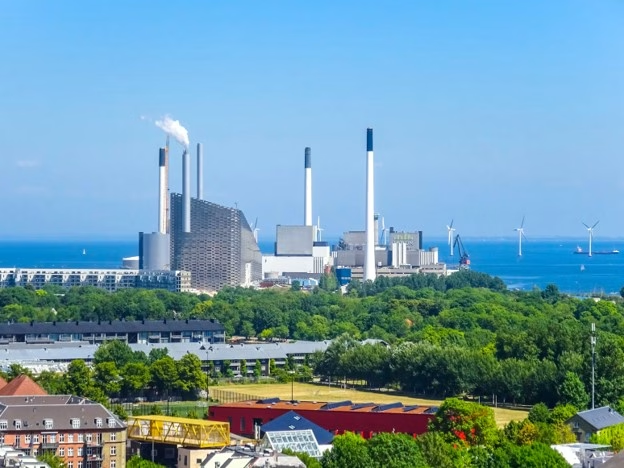
Short-duration batteries can support brief demand peaks, but sustained outages and multiday stress may require longer-duration storage or other resources. Flexible equipment also has to resume its work, and this limits how much a factory can commit.
Any participation assessment should include security controls and thermal protection as built-in costs. The commercial case weakens if revenue projections assume more flexibility than production can release or omit the investment needed to manage risk.
Frequently Asked Questions About Industrial Energy Flexibility
A factory’s contribution to the grid depends on how much flexibility its production schedule allows. Questions about payments and equipment risks also shape whether participation makes sense for the site.
Can factories really replace peaker plants with batteries?
Yes, for some peak-demand needs. Coordinated storage and flexible loads can reduce reliance on peaker plants, but short-duration batteries cannot cover every prolonged grid event.
What happens if the software misreads a grid signal?
The software could reduce power to equipment at the wrong time and disrupt production. Equipment limits and an operator’s ability to override the software help keep automated adjustments within approved boundaries.
How do factories earn money from grid participation?
Factories may receive payments for reducing electricity demand or providing other grid services. Earnings depend on the program’s rules and how much support the factory can provide when needed.
What makes on-site batteries a fire risk?
During thermal runaway, a battery cell releases uncontrolled heat that can spread to nearby cells and cause a fire or explosion. Protection against overheating is therefore an important part of battery safety.
Smarter Factories and Sharper Trade-Offs
Factories can outsmart legacy peakers during short demand spikes, provided the software respects the work behind the meter. Grid-service revenue and potential emissions reductions make flexibility valuable, but a plant’s strongest position comes from knowing exactly how much it can offer without putting its primary source of income at risk.