A steady afternoon rain delay is something every construction manager builds into the master schedule. You check the radar, throw tarps over exposed framing, and send the crews home early. Hail is a completely different beast. It strikes with violent speed and leaves a trail of physical destruction that a simple rainstorm can’t match. How do you recover when a fifteen-minute weather event shatters your timeline? Project managers are suddenly forced out of execution mode and into emergency triage. The logistical fallout from a severe hailstorm extends far beyond a few dented trucks or broken windows.
The Immediate Standstill: Site Safety and Triage
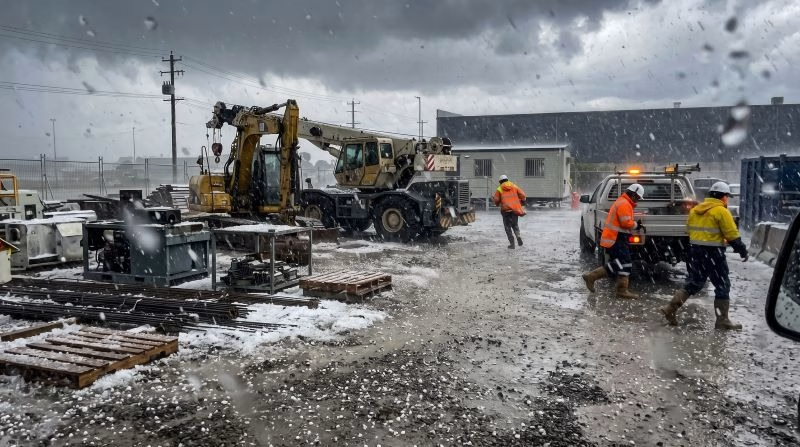
When the ice starts falling, the entire job site grinds to a mandatory halt. Crane operators must lock down their equipment immediately to prevent catastrophic swinging in the accompanying winds. Exterior crews scramble for cover, and all active pours or structural lifts are abandoned in place. Once the storm finally passes, you don’t simply pick up your tools and resume working as if nothing happened. The transition from a highly scheduled workday to a frantic damage assessment happens in minutes. Site supervisors must carefully walk the perimeter to inspect scaffolding integrity. They have to secure loose materials that were scattered by the wind and check for electrical hazards caused by pooling water and battered equipment enclosures. Under OSHA standard 1926.1412, equipment like cranes must be specifically inspected by a qualified person after exposure to extreme weather before hoisting can resume. Every single hour spent documenting this initial impact is an hour stolen directly from your critical path. You lose an entire day of productivity before any actual repair or rescheduling even begins. The crew is on the clock, but no actual building is happening.
The “Hail Alley” Effect on Local Workforce Availability
The true damage of a hailstorm often reveals itself the next morning when you try to get the project back on track. Severe weather doesn’t just hit your isolated job site. It blankets entire counties and creates a massive, simultaneous demand for repair crews across the neighboring districts.
We see this play out constantly along the Front Range of the Rocky Mountains. This specific geographical corridor is notorious for intense seasonal hail that damages residential and commercial roofs by the thousands. When a major storm system rolls through the Denver metropolitan area, local subcontractors are immediately pulled away from new construction builds. They drop their scheduled tasks to handle high-margin emergency triage for desperate property owners.
This creates a dangerous vacuum for commercial project managers trying to maintain a schedule. Your framing crews and exterior specialists suddenly vanish to chase immediate insurance work. To keep existing commercial projects moving forward on schedule, superintendents have to look beyond their usual local contacts. Relying on staffing solutions for Denver employers becomes a logistical necessity to backfill the missing tradesmen. You simply can’t afford to let your site sit empty while the local workforce addresses a regional state of emergency.
Cascading Delays from Ruined Staged Materials
Labor shortages are only one piece of the puzzle. The physical destruction of staged materials can cripple a project just as thoroughly as an empty job site. Think about the intricate logistics of modern commercial builds. You stage expensive, heavily backordered materials on site to ensure they’re ready the exact moment the installation crew needs them.
What happens when golf ball-sized hail destroys those vulnerable assets?
Uninstalled rooftop HVAC units suffer crushed condenser coils. Stacked roof decking becomes completely compromised by moisture and physical impact. Custom glass curtain walls shatter before they ever reach the structural frames. The immediate financial cost of these ruined goods is painful, but the lead time for replacing them is what actually breaks the schedule.
You’re suddenly thrown to the back of the manufacturing line.
Waiting six weeks for a replacement chiller unit means the interior ductwork can’t be finalized. Because the ductwork isn’t finished, the dropped ceilings can’t be installed. The subsequent trades are completely blocked from starting their contracted scopes of work, leaving the interior build completely stalled while you wait for a shipping confirmation on replacement parts.
Re-Sequencing the Critical Path and Subcontractors
Managing a construction timeline is a delicate exercise in mathematical precision. Every task on a Gantt chart relies heavily on the successful completion of the task right before it. When hail delays the exterior envelope of a building, the resulting chaos bleeds directly into the interior finishing schedule. If the roofers are delayed by a mere three days, the drywallers and electricians can’t physically begin their rough-ins. You have to call your high-demand subcontractors and ask them to push their arrival dates back. The core problem is that these specialized trades have their own rigid schedules and other lucrative jobs waiting for them. You risk losing your spot in line entirely. If a specialized electrical subcontractor can’t accommodate your new delayed timeline, they will simply move their crew to another active site. You’re then left scrambling to re-book them weeks later. The original weather delay of three days easily snowballs into a three-week scheduling gap.
Navigating “Force Majeure” and Master Schedule Adjustments
The physical and logistical hurdles eventually give way to a mountain of administrative fallout. Nobody likes to talk about the paperwork, but documenting weather delays properly is the only way to protect the firm from severe financial penalties.
Are you prepared to prove exactly how the storm impacted your critical path?
Project managers must activate the force majeure clauses in their contracts to avoid paying liquidated damages. This legal protection doesn’t trigger automatically simply because a storm hit the region. Proper documentation generally relies on a few standard evidentiary elements.
- Time-stamped photographic evidence: Pictures of the site before the cleanup begins.
- Detailed daily logs: Written notes outlining the exact labor hours lost to the storm.
- Official weather data: Meteorological reports confirming the severity of the event.
You have to present this documentation to developers and stakeholders without causing unnecessary panic. You must explain the revised timelines realistically while assuring the client that you’re actively mitigating the damage. Failing to properly execute this administrative step can easily turn an unavoidable weather delay into a costly, drawn-out legal dispute.
Building Weather Resilience into Future Bids
Proactive scheduling is the strongest defense against seasonal storm fallout. Building realistic weather buffer days into your master contracts during peak hail months gives your team the margin needed to absorb unexpected hits. However, when a severe storm actually strikes the site, your recovery speed matters most. Does your current contract give you the breathing room to re-sequence an entire month of labor? The speed of your logistical response directly dictates the ultimate profitability of the project. By anticipating regional labor shortages, tracking material lead times, and managing subcontractor relationships proactively, you can confidently guide your site through the chaos and get the build back on track.