Construction site roads often need to support different types of traffic at the same time. Cars, vans, delivery trucks and heavy equipment may all use the same routes, while workers may need to move between different areas during the working day.
Because of this, choosing the right speed control solution is not simply about selecting the strongest product available. The right option depends on how vehicles use the route, how much speed reduction is needed and what conditions exist on the site.
A speed bump may be suitable for one area of a construction site, while a speed hump may work better somewhere else. Understanding the difference helps site managers control vehicle movement without creating unnecessary delays for daily operations.
Understand the Difference Between Speed Bumps and Speed Humps
Although speed bumps and speed humps both help reduce vehicle speeds, they are designed for different situations.
A speed bump has a shorter and sharper profile. It creates a stronger speed reduction effect and is generally used in areas where vehicles should travel very slowly.
Typical applications include:
- small parking areas;
- restricted access points;
- areas near pedestrian activity;
- locations where vehicles need to approach carefully.
A speed hump has a longer and smoother profile. Instead of forcing vehicles to slow down suddenly, it encourages drivers to maintain a lower but more continuous speed.
Typical applications include:
- longer internal construction roads;
- routes used regularly by delivery vehicles;
- access roads where vehicles need to keep moving at a controlled speed.
The choice between the two depends on the purpose of the traffic control area. A location used by regular deliveries may need a different approach from a pedestrian crossing point or a temporary site entrance.
Choose Based on Vehicle Type and Traffic Conditions
Construction sites rarely have only one type of vehicle. A route used mainly by cars and vans may still need to accommodate delivery trucks, machinery or heavier construction equipment.
Before choosing a traffic calming solution, site managers should consider:
- vehicle size;
- ground clearance;
- wheelbase;
- vehicle weight;
- load type;
- how frequently different vehicles use the route.
A solution designed for small vehicles may create problems for larger equipment. For example, a vehicle with lower ground clearance may require a different speed control approach from a heavy-duty site vehicle.
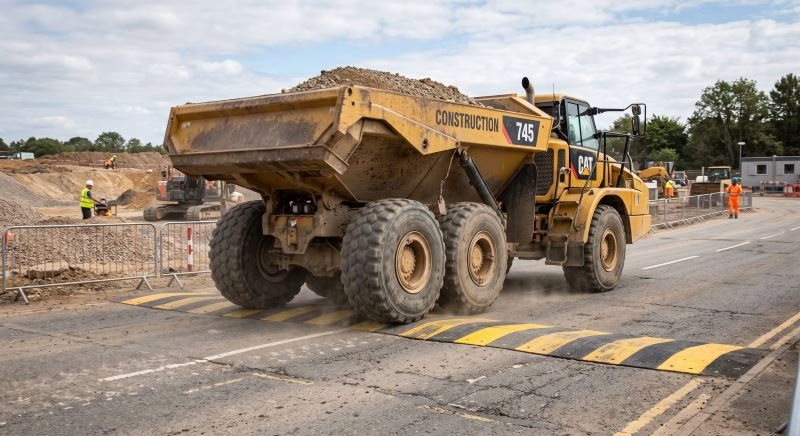
For many construction sites, rubber speed bumps can be a practical option because they are easier to install and relocate compared with permanent solutions, especially where traffic routes may change during different project stages.
This flexibility can be useful on temporary construction sites where access roads, working areas and vehicle movements may change as the project progresses.
Select the Right Location for Speed Control
The location of a speed bump or speed hump should match the reason why speed needs to be reduced.
A site entrance may require drivers to slow down before entering a busy working area. Pedestrian crossing points may need stronger speed control because workers and vehicles share the same space.
Other areas, such as longer internal roads, may only need drivers to maintain a lower and safer speed rather than stop suddenly.
The surrounding layout should also be considered. Installing a speed control measure too close to a corner, narrow access point or equipment area may create additional difficulties for larger vehicles.
The goal is to encourage predictable vehicle movement, not simply slow every vehicle as much as possible.
Check Installation Conditions Before Choosing a Product
The physical conditions of the site are another important factor.
Before installation, check:
- whether the road surface is suitable;
- whether the fixing method matches the ground conditions;
- whether drivers can clearly see the speed control measure;
- whether emergency vehicles still have access.
Visibility is particularly important on construction sites where conditions may change frequently. Temporary routes, changing lighting conditions and moving equipment can affect how easily drivers notice traffic control measures.
The fixing method should also match the expected use. A solution used on a busy access road may require different installation considerations from one used in a smaller parking area.
When Should You Use Another Traffic Management Method?
A speed bump or speed hump is not always the best solution.
Some areas may require different approaches, such as improving pedestrian separation, changing vehicle routes or redesigning the site layout.
For example, if vehicles and workers are regularly sharing the same narrow route, reducing speed alone may not solve the problem. A better solution may involve creating a separate pedestrian path or changing how vehicles enter and leave the area.
Traffic calming products work best when they are part of a wider site management plan.
Choosing the Right Solution for Your Construction Site
Choosing between speed bumps and speed humps depends on more than the product itself.
The best choice considers vehicle types, speed requirements, road function, installation conditions and possible changes during the construction project.
A well-planned traffic control solution helps create more predictable vehicle movement while allowing construction activities to continue efficiently.
By selecting the right product for the right location, site managers can improve traffic organisation and create a safer, more practical working environment.