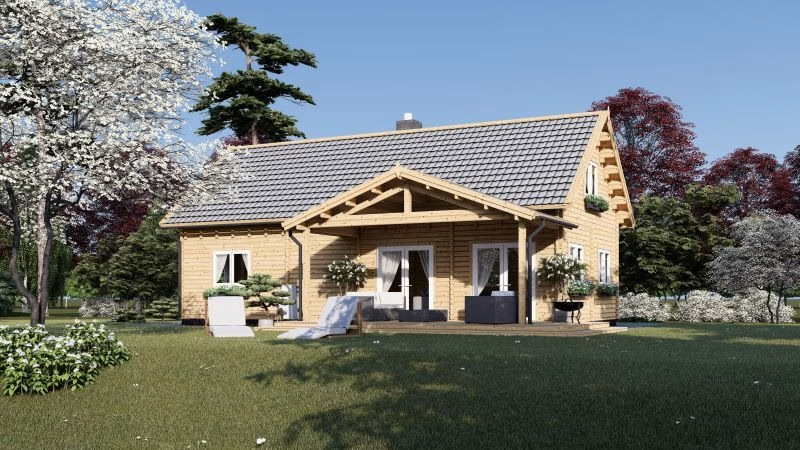
Selecting the appropriate log home materials for an Irish climate is a critical decision that impacts longevity, energy efficiency, and overall cost. Ireland’s unique weather patterns, characterised by high rainfall and humidity, demand specific material specifications to ensure a durable and compliant structure.
Ignoring these climate-specific requirements in a purchase can lead to significant remedial work and increased long-term expenses. This guide outlines a 4-Layer Material Evaluation Framework, providing a structured approach to assessing log home specifications against Ireland’s Building Regulations, particularly Part L for energy efficiency and Part C for moisture resistance.
Why Material Specifications Matter for Log Homes Ireland Homeowners
Material specifications are paramount for log homes in Ireland due to the country’s challenging climate. With some regions experiencing over 225 rainy days annually, the timber and protective elements must be exceptionally resilient.
Log homes intended for use as dwellings must meet the relevant requirements of Ireland’s Building Regulations, including Part L for energy efficiency and Part C for moisture resistance. The upfront investment in a home with proper materials significantly outweighs the potential costs and disruptions of rectifying issues caused by inadequate specifications.
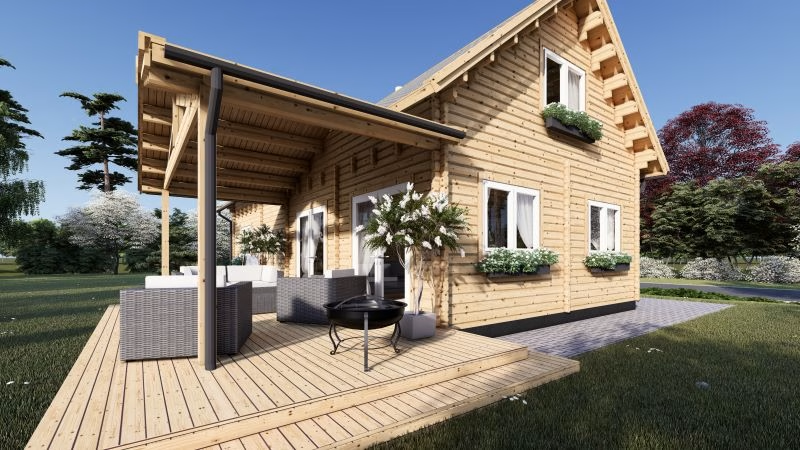
Understanding Ireland’s Climate Challenges for Log Home Selection
Log home materials must be selected with Ireland’s climate in mind. Annual rainfall varies greatly across Ireland. The western counties of Galway and Kerry, for example, regularly receive more than 1,400mm of rain each year. Meanwhile, Dublin in the east gets an average of 758mm.
The required durability of a home’s materials varies depending on the region. Average humidity can exceed 80%, which can influence the choice of timber species. Similarly, these conditions influence the treatment requirements of the timber.
- Western counties such as Galway and Kerry can receive more than 1,400mm of rainfall annually, requiring materials with higher moisture resistance and robust protection systems.
- Eastern counties (e.g., Dublin): rainfall, averaging about 758mm annually, is lower than in western counties but still requires durable materials.
- High wind zones require appropriate wall specifications and securely fastened roofing components to resist wind uplift.
- High humidity increases the risk of fungal growth. Therefore, timber species with natural resistance to decay or those that can be effectively treated should be considered.
The 4-Layer Material Evaluation Framework for Log Homes
A structured approach to evaluating log home materials ensures suitability for Ireland’s climate and regulatory compliance. This framework examines four critical layers of the home’s construction.
- Layer 1: Primary structural timber: Assess the timber species, its density, and natural resistance to moisture and decay, as specified by the supplier.
- Layer 2: Treatment and preservation systems: Understand the difference between pressure treatment and natural oil systems, and their effectiveness in Irish conditions.
- Layer 3: Insulation and thermal performance: Verify how the home achieves the 0.18 W/m²K U-value requirement for external walls under Part L 2021.
- Layer 4: External protection components: Examine the quality and inclusion of roof overhangs, breathable membranes, and external finishing systems.
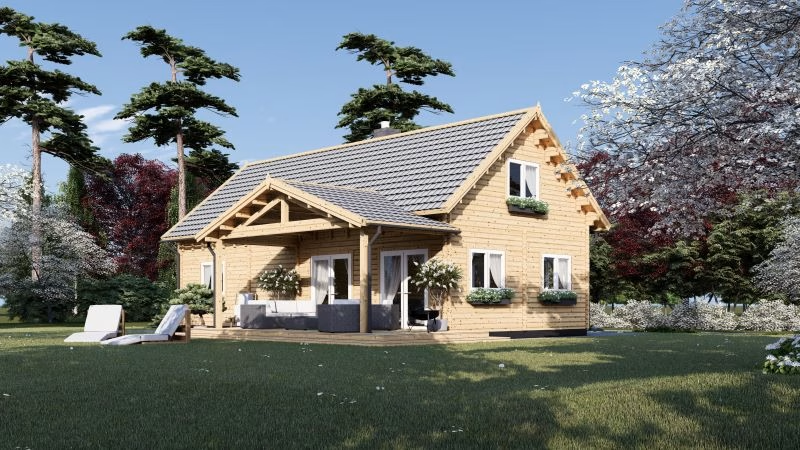
Evaluating Timber Species in Log Home Specifications
The choice of timber species is fundamental to a log home’s performance in Ireland. Each species offers varying degrees of natural durability and requires different levels of protective treatment.
For exterior use, heartwood should be specified for larch and Douglas fir where appropriate to maximise natural resistance to decay. The origin of the timber can also influence its durability, with Douglas fir from different regions varying in natural resistance to decay.
Spruce
Spruce is the most common and budget-friendly option for log homes. Its natural durability is generally rated as Durability Class 4 (DC 4), meaning it has low natural resistance to decay.
- Pros: Widely available, cost-effective, good workability.
- Cons: Low natural durability requires extensive treatment and ongoing maintenance in Ireland’s wet climate.
- Best Use: Suitable for protected applications or when accompanied by a robust, well-maintained pressure treatment system and significant roof overhangs.
Siberian Larch
Siberian Larch is a premium choice known for its superior natural durability. It typically falls into Durability Class 3–4, offering better resistance to rot and insect attack than spruce.
- Pros: High natural durability, attractive appearance, good density.
- Cons: Higher cost, can be harder to work with due to density.
- Best Use: Well suited to exposed elevations and areas with high rainfall, although appropriate treatment and maintenance are still important for long-term performance.
Douglas fir
Douglas fir represents a balanced option, offering good strength-to-weight characteristics. Its natural durability varies by origin, with North American Douglas fir rated as DC 3 and European-grown material ranging from DC 3 to DC 4.
- Pros: Good strength, reasonable natural durability, versatile.
- Cons: Durability can vary by origin and heartwood content.
- Best Use: A strong contender for structural elements and external cladding, offering a balance of performance and cost.
Tropical hardwoods, despite their high durability, are rarely suitable for Irish log homes due to prohibitive costs, sustainability concerns, and workability issues.
What’s Included in a Log Home: Roofing, Windows, and Foundation Components
Beyond the log walls, the quality and specifications of other home components significantly impact a log home’s performance and compliance. These elements are integral to the overall durability and energy efficiency.
Careful consideration of these components prevents costly upgrades or replacements shortly after construction.
- Roof material options: Homes may offer metal, shingle, or slate roofing. Metal and slate provide excellent longevity and weather resistance for Ireland’s climate, while shingles offer aesthetic variety.
- Window specifications: To meet Part L requirements, triple glazing is often the most straightforward solution, with an overall window U-value target of 1.4 W/m²K for dwellings. Frame material compatibility with log walls is also essential.
- Foundation specifications: Most homes exclude foundation work, which can add €70–€150 per m². Ensure the home documentation specifies damp-proof courses and moisture barriers suitable for Irish soil conditions.
- Breathable membranes and finishing systems: These external protection components are vital for moisture management and should be clearly detailed in the home’s specifications.
Conclusion: Making Your Home Purchase Decision
For homeowners considering log homes Ireland, evaluating material specifications against climate realities and regulatory demands is essential. Prioritising durability, energy efficiency, and a clear understanding of what’s included in the home will safeguard your investment.
In practice, focusing on the quality of timber treatment, moisture protection, and roofing can have a significant impact on the long-term durability of a log home. Always scrutinise ‘budget’ material claims and ensure all specifications are clearly documented before committing to a purchase.