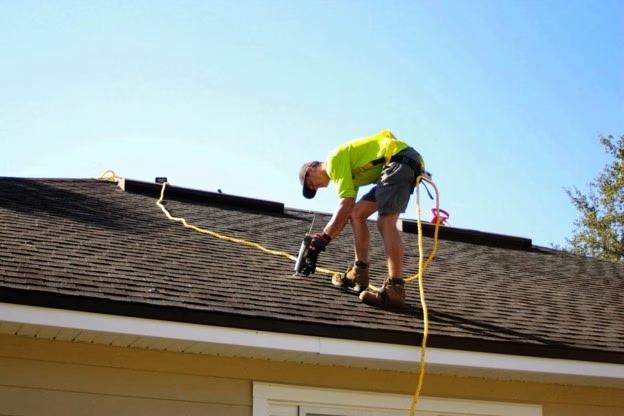
A roof is one of the largest investments a homeowner or commercial property owner will make, yet the contractor hired to install or repair it often gets less scrutiny than the shingles themselves. Oscar Elizondo of Pharr, Texas, a seasoned construction and home services specialist, has spent years watching property owners learn that lesson the hard way. The truth is that selecting a roofer is less about price and more about credibility, and the warning signs of a poor hire usually show up long before the first nail is driven.
Knowing what to look for can save thousands of dollars, prevent structural damage, and spare property owners months of frustration. The red flags below recur in the field, and catching them early is often the difference between a smooth roofing project and a costly one.
The Door-to-Door Pressure Pitch
Few warning signs are as telling as the contractor who shows up unannounced after a storm. Not every door-knocker is a scam artist, but the industry sees a noticeable spike in fly-by-night operators chasing severe weather. These crews pressure homeowners to sign on the spot, claim to have spotted damage from the street, or offer to handle insurance paperwork in exchange for the job.
Legitimate contractors don’t need urgency tactics. They have established reputations, scheduled inspections, and standing relationships with insurance adjusters. Any roofer who insists a decision must be made today, or who won’t leave a written estimate behind for review deserves a polite no.
Missing Licensing, Insurance, or a Local Address
Roofing is regulated work, and a reputable contractor will have no trouble providing proof of liability insurance, workers’ compensation coverage, and any state or municipal licenses the project requires. A roofer who hesitates, offers vague answers, or pushes past the question is showing the property owner exactly what kind of business they run.
No verifiable physical address is another red flag. A truck wrap and a cell phone number do not constitute a business. Property owners should be able to look up the company, confirm its registration, and find a track record of completed work tied to a real location.
Estimates That Are Suspiciously Low
Everyone wants a deal, but in roofing, the lowest bid is often the most expensive option in the long run. Estimates that come in well below the others usually mean corners got cut somewhere: the underlayment, the flashing, the labor crew, the warranty terms.
A trustworthy roofer will walk a property owner through every line of the estimate, explain material grades, and clarify what the warranty actually covers. If an estimate is a one-page total with no breakdown, it’s fair to assume the contractor is hoping no one asks.
Vague or Verbal Contracts
A handshake might feel personal, but it’s no substitute for a written agreement. Any roofer who resists putting the full scope of work in writing is creating room to renegotiate mid-project, swap materials without notice, or walk away from defects once the job is finished.
A solid contract spells out the materials being used, the timeline, the payment schedule, cleanup responsibilities, and the warranty terms for both the manufacturer and the workmanship. Oscar Elizondo, who has overseen construction and remodeling projects across South Texas, often points out that the quality of a contractor’s paperwork is usually a fair preview of the quality of their work.
Large Upfront Deposits
Roofing projects typically follow a structured payment schedule: a reasonable deposit at the start, a progress payment partway through, the final balance due on completion. A contractor who demands the full amount, or anything close to it, before work begins is asking the homeowner to shoulder all the financial risk.
This is one of the most common patterns in roofing fraud. The deposit clears, the crew never returns, and the homeowner is left chasing a phone that no longer rings. A deposit above a third of the total project cost should prompt serious questions.
No Verifiable References or Recent Work
Every legitimate roofer has finished jobs they can point to. Property owners should ask for references, drive by completed projects when possible, and check reviews across multiple platforms instead of relying on testimonials posted to the contractor’s own website.
A contractor who can’t produce recent local references, or one who only offers names from projects finished years ago and far away, may be new to the area, or operating under a fresh business name to outrun past complaints. Either way, the homeowner has every right to ask why.
Pressure to Bypass the Insurance Process
After a storm, some roofers offer to waive the deductible, inflate the claim, or run the entire insurance process without the homeowner’s involvement. These offers are illegal in most states and can leave the property owner liable for insurance fraud.
A reputable roofer works alongside the insurance company, documents damage thoroughly, and lets the homeowner review and sign every document submitted on their behalf.
Why the Right Roofer Matters
Roofing is one of the few trades where shortcuts stay nearly invisible until the next heavy rain or windstorm reveals them. Choosing a contractor with transparency, proper credentials, and a track record built on completed work is the single best way to protect a property and the people inside it.
Oscar Elizondo has long emphasized that good construction work rests on accountability, clear communication, and standards that hold up over time. The same principles apply to hiring any tradesperson. The right roofer welcomes questions, provides documentation without prompting, and treats the homeowner as a partner in the project, not an obstacle between the salesman and a signature.
A little extra time vetting candidates on the front end almost always saves significant money, stress, and structural headaches down the line.