Water management has become an increasingly important consideration across modern infrastructure, construction, and mining projects. Larger developments, deeper excavations, more demanding project schedules, and increasingly unpredictable weather conditions have all contributed to greater attention on temporary dewatering and site drainage.
Groundwater, stormwater, and unexpected flooding are no longer viewed simply as temporary inconveniences. Left unmanaged, they can interrupt excavation, delay foundation work, restrict equipment access, and increase both project costs and safety risks. As a result, reliable water management is becoming an integral part of project planning rather than a reactive measure after problems occur.
As these challenges become more common across different industries, contractors and project owners are placing greater emphasis on temporary water management strategies that can be deployed quickly without disrupting ongoing operations. Mobile pumping systems have become one of the most practical responses to this shift. Because they combine mobility, rapid deployment, and dependable performance, transportable pumping equipment can be brought online quickly wherever temporary drainage is needed — without the lead time that fixed pumping installations typically require.
Why Mobility Is Reshaping Temporary Water Management
As project sites become more dynamic, contractors increasingly value equipment that can be deployed wherever temporary water management is required, rather than relying solely on fixed pumping infrastructure.
Most water management problems on a job site are not permanent. A foundation excavation may only need dewatering for a few weeks. A mining site may need to move pumping capacity from one pit to another as operations progress. A municipality responding to a burst main or seasonal flooding needs equipment that can be on site within hours, not days.
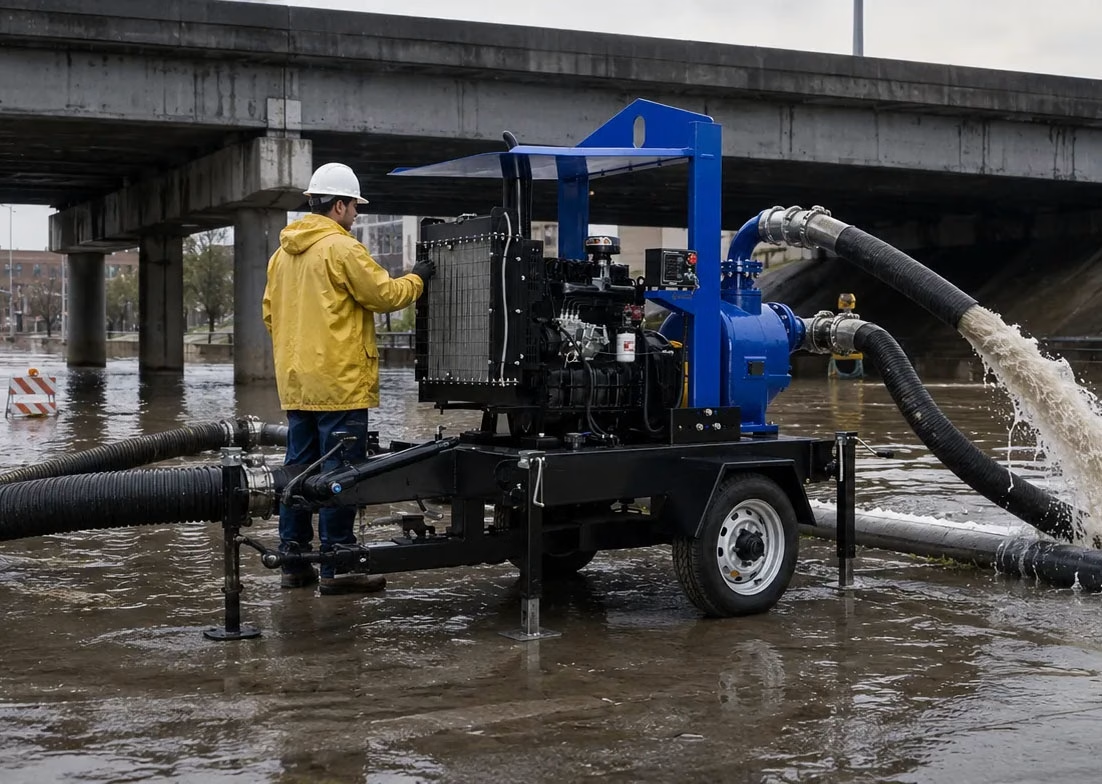
This is where mobility becomes the deciding factor. A trailer-mounted pump can be towed behind a standard pickup truck or utility vehicle, positioned close to the water source, and brought online without the trenching, wiring, or foundation work that permanent pump stations require. For contractors managing several active sites at once, this flexibility also means a single unit can be redeployed as priorities shift, rather than sitting idle at a location that no longer needs it.
Limited site infrastructure is another factor. Many temporary work sites do not have reliable grid power, which is why diesel-powered mobile pumps remain a practical choice — they operate independently of the local electrical supply and can run continuously for extended shifts with only routine refueling.
Common Applications for Trailer-Mounted Pumps
Construction Dewatering
Excavation for foundations, basements, and underground utilities frequently intersects with the water table or is exposed to surface runoff during rain events. Construction dewatering with transportable pumping equipment allows crews to keep excavations dry enough to continue work safely, without waiting for water to recede naturally.
Mining Dewatering
Open-pit and underground mining operations generate large volumes of water that must be managed continuously to keep pits accessible and equipment operational. Mining dewatering often requires pumps capable of handling water with suspended solids, along with the ability to relocate as the working face of the pit changes.
Emergency Flood Response
When storms or infrastructure failures cause sudden flooding, response time matters more than almost anything else. Mobile units designed for emergency pumping can be dispatched and operating within a short window, helping limit property damage and reduce downtime for affected facilities.
Municipal Water Transfer
Utilities and public works departments use temporary dewatering systems for bypass pumping during pipeline repairs, as well as for managing stormwater during heavy rainfall. Because these situations are usually short-term, a mobile unit is far more cost-effective than installing fixed infrastructure for occasional use.
Operational Reliability Matters More Than Ever
While technical specifications remain important, contractors are increasingly evaluating pumping equipment based on operational reliability rather than performance figures alone.
CANNASPRING engineers note that durability becomes particularly important for projects operating in remote or demanding environments. Dewatering equipment may be exposed to mud, suspended solids, changing weather conditions, vibration, and extended operating hours. In these conditions, pumping systems need to withstand the realities of field operation rather than simply deliver strong performance under controlled conditions. Low maintenance requirements are also important, particularly at remote sites where service resources may be limited. Equipment designed for simple routine inspection and servicing can reduce maintenance demands, minimize downtime, and help keep pumping operations running reliably over extended periods.
Equipment that can be deployed quickly, operate continuously, tolerate solids, and withstand demanding field conditions often delivers greater value over the lifetime of a temporary project than systems designed primarily around maximum flow capacity. Self-priming capability, engine reliability under extended unattended operation, and straightforward access for routine servicing have all become factors that site managers weigh alongside flow rate and head.
This shift reflects broader changes across the construction and mining industries, where minimizing downtime has become just as important as maximizing output. For many contractors, predictable performance throughout a project is often more valuable than achieving the highest possible performance under ideal operating conditions.
A Growing Segment of the Dewatering Equipment Market
As demand for mobile dewatering solutions continues to grow, manufacturers are placing greater emphasis on mobility, reliability, and simplified field operation. This shift is partly driven by contractors and mining operators looking to reduce the capital cost of permanent pumping infrastructure, and partly by the increasing frequency of short-notice weather events that require rapid-response equipment.
Manufacturers such as CANNASPRING have developed trailer-mounted diesel pumps for construction, mining, municipal, industrial, and agricultural irrigation dewatering applications, with an emphasis on durability, low maintenance demands, and dependable performance throughout the equipment lifecycle. The range includes self-priming, high-head, and portable water transfer configurations for different site requirements.
Mobile pumping systems are unlikely to replace permanent pumping infrastructure, nor are they intended to. Instead, they provide contractors, mining operators, and infrastructure teams with the flexibility to respond efficiently to changing site conditions and temporary water management requirements.
As infrastructure investment continues and projects become increasingly complex, reliable water management will remain an essential part of maintaining project continuity, improving site safety, and reducing operational risk across construction, mining, municipal, industrial, and agricultural applications.