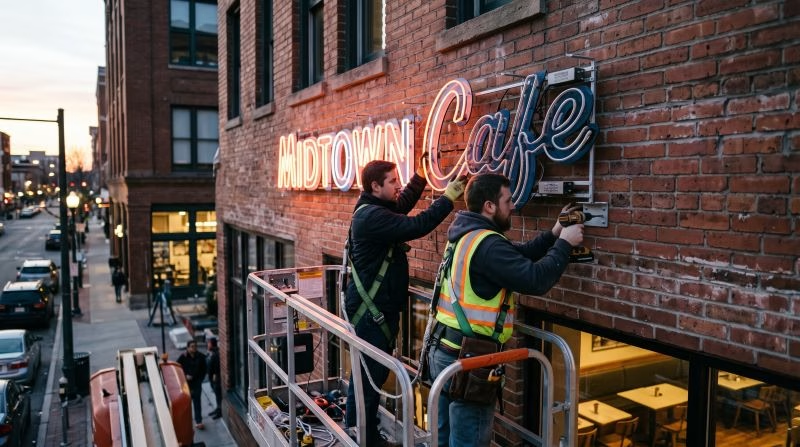
Commercial signage is one of the most visible physical assets on any commercial property. It marks property entrances, communicates tenant branding, guides vehicular traffic, and creates the critical first impression for visiting customers, prospective tenants, and community members. Yet despite its direct influence on property value and foot traffic, outdoor signage is often treated as a passive structure until a sudden failure occurs. A storm damages a face panel, internal transformers fail, neon tubing burns out, or aging wiring creates an unexpected safety hazard.
For property managers and facility directors, managing exterior signage across a single property or a regional portfolio requires a clear, objective decision-making framework. When an architectural sign or multi-tenant pylon begins showing signs of age or structural decay, facility managers must evaluate whether a simple service call, an energy-efficient LED retrofit, or a complete system replacement provides the most cost-effective long-term value. Understanding where a sign sits within its functional lifecycle helps managers optimize capital expenditure budgets, protect property aesthetic standards, and maintain brand compliance.
Evaluating Immediate Service Needs and Component Failures
The first phase of signage evaluation centers on targeted component repairs. Outdoor signage endures continuous exposure to high wind loads, extreme temperature fluctuations, solar radiation, moisture infiltration, and road grime. Over time, these environmental factors cause localized electrical and physical wear. Common surface-level issues include burned-out fluorescent lamps, cracked acrylic faces, water intrusion inside cabinet housings, and failing ballasts. When these isolated problems occur on a structurally sound, modern cabinet, simple component repair is almost always the most efficient path forward.
Working with an experienced technician for sign repair in Columbus Ohio allows facility management teams to quickly address localized electrical faults before minor moisture problems turn into extensive corrosion. A straightforward service call can replace spent power supplies, secure loose wiring harnesses, or install fresh acrylic panels with updated vinyl graphics. Routine servicing restores immediate visual appeal and maintains tenant satisfaction without drawing heavily from capital reserves.
Property managers should evaluate immediate repair viability using a few operational indicators:
- Structural integrity: The steel mounting poles, aluminum cabinet frame, and internal support trusses remain free from severe rust, stress cracks, or fatigue.
- Component availability: Replacement ballast units, standard acrylic faces, or matching paint colors remain readily accessible through commercial supply channels.
- Localized failure scope: The issue is confined to specific electrical components or single face panels rather than systematic wiring degradation across the entire unit.
- Overall asset age: The signage structure is under ten to twelve years old, making basic maintenance more practical than total capital reinvestment.
When localized electrical issues happen repeatedly within a short timeframe, searching for qualified commercial sign repair companies becomes the starting point for a broader diagnostic inspection. Consecutive electrical failures usually indicate that internal components have reached the end of their design life, signaling that the sign has moved from routine maintenance into the retrofit stage.
The Retrofit Advantage: Modernizing Internal Lighting Systems
When exterior signage remains structurally sound but relies on outdated neon or fluorescent lighting technology, retrofitting offers a powerful middle ground between basic repairs and total replacement. Older neon channel letters and fluorescent cabinet signs require significant electrical current, generate considerable heat, and experience frequent tube failures during cold weather conditions. Retrofitting these systems involves removing outdated high-voltage transformers, ballasts, and glass tubing, then replacing them with modern light-emitting diode (LED) modules.
An LED conversion transforms the operational profile of commercial signage. LED systems use up to 80 percent less electricity than legacy neon or high-output fluorescent setups, yielding immediate utility savings across large multi-tenant monuments or tall pylon structures. Additionally, modern LED modules operate on low-voltage direct current power, drastically reducing fire risks and eliminating the cold-weather flickering typical of traditional fluorescent tubes.
Property owners gain several practical advantages when choosing an LED retrofit:
- Lower maintenance expenses: LED modules feature operating lifespans between 50,000 and 100,000 hours, virtually eliminating monthly bulb replacement service calls.
- Consistent illumination: Solid-state LED layout designs deliver uniform light distribution across channel letter faces, avoiding dark spots and uneven color temperature.
- Environmental resilience: Sealed LED modules carry high ingress protection ratings, making them far more resistant to internal moisture and insect intrusion.
- Energy efficiency: Reduced wattage consumption aligns with corporate sustainability goals and lowers monthly utility expenses.
During an LED conversion, technicians also inspect internal structural members, clean reflective cabinet interiors, and apply fresh sealant around face channels. Finding a professional team for sign repair who specializes in structural and electrical upgrades ensures that retrofits adhere to modern Underwriters Laboratories safety standards and municipal electrical codes.
Assessing Structural Degradation and Full System Replacement
While component repairs and LED retrofits resolve many functional issues, there comes a point in the asset lifecycle where complete replacement becomes the safest and most financial sense. Exterior signage is subject to strict building codes, wind load requirements, and zoning ordinances. When internal steel supports corrode, cabinet structures warp, or mounting fasteners deteriorate, piecemeal repairs can no longer guarantee structural safety during high-wind events.
A complete replacement is also warranted when property rebrandings, major tenant turnover, or architectural modernizations occur. Adapting an outdated sign cabinet to fit new brand guidelines often results in awkward visual compromises. Installing a brand-new sign allows property managers to redesign mounting structures, incorporate high-contrast materials, and upgrade to modern architectural profiles that elevate the entire commercial site.
Property managers should consider full replacement when encountering the following conditions:
- Advanced corrosion: Severe rust or metal flaking on structural steel posts, base plates, or internal mounting trusses.
- Obsolete zoning compliance: Opportunities to grandfather existing sign heights or square footage through non-conforming use provisions while updating internal engineering.
- Extensive cabinet damage: Cracked, warped, or dry-rotted aluminum frame assemblies that allow continuous water penetration.
- Incompatible tenant changes: Monument or pylon structures that cannot accommodate updated tenant panel sizes or modern flex-face tensioning systems.
Scheduling a comprehensive structural assessment with a reliable provider for helps managers verify structural integrity before committing to major site renovations. When replacement is required, working with full-service professionals guarantees smooth execution through engineering approval, permit procurement, manufacturing, and crane installation.
Establishing a Proactive Signage Life Cycle Management Plan
To prevent unexpected failures and maintain consistent visual standards across commercial properties, facility managers should implement a structured maintenance schedule. Waiting for a sign to go completely dark before scheduling service leads to emergency dispatch fees, extended downtime, and negative tenant feedback. A proactive approach treats exterior signage like any other critical building system, such as HVAC equipment or roofing assemblies.
A comprehensive life cycle strategy combines semi-annual visual inspections, annual electrical testing, and planned budget allocations for future technology upgrades. During routine inspections, technicians check internal drain holes, clean acrylic surfaces, inspect mounting hardware, and verify power supply output levels. This preventative oversight catches minor seal failures and loose wiring before they cause catastrophic component burnouts or internal structural corrosion.
By partnering with an experienced regional service provider for commercial sign repair near me, property managers gain access to detailed site surveys, safety compliance documentation, and clear repair-versus-replace cost analyses. Having accurate technical data enables property management teams to present clear capital expenditure requests to ownership groups, ensuring long-term asset value and uninterrupted brand visibility.
Long-Term Capital Planning for Commercial Property Signage
Commercial signage represents a vital link between a property, its corporate tenants, and the surrounding community. Choosing between a simple service repair, an LED retrofit, or a full system replacement requires balancing immediate maintenance budgets against long-term operational costs. Minor electrical faults and broken faces are quickly resolved with targeted repairs, while aging neon and fluorescent lighting systems benefit immensely from LED conversions. When structural integrity is compromised or branding requirements change entirely, investment in a new custom sign yields the highest return. By applying a structured lifecycle framework and conducting regular inspections, property managers can protect their physical assets, control utility costs, and present a clean, professional image to every customer who drives onto the property.