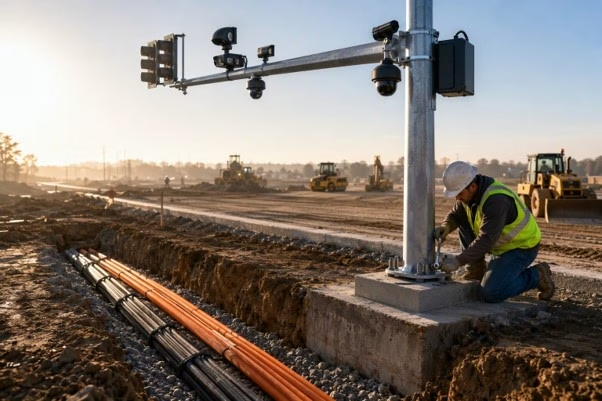
A modern road gets built twice. Once in concrete and conduit. Then again in software. Traffic detection and management influences underground services and cabinet locations long before the first excavator rolls in. Electrical capacity and communications routes must line up with the proposed intersection geometry; they cannot live on a separate equipment schedule.
The old sequence put the road first and bolted on intelligent transportation systems later. That habit carries a price. Technology decisions made late can force reopened pavement, duplicate trenching, and revised signal plans. Equipment bought on its own may never manage to exchange usable data. So settle these requirements before crews break ground.
Why Smart Traffic Infrastructure Must Enter the Base Project Scope
Strip away the jargon and traffic detection and management becomes a coordinated package: field sensors, signal controllers, communications equipment, software, and the operating procedures holding it together. The package exists to measure road demand and adjust network performance. Every component creates a physical construction interface. Cameras need unobstructed sight lines. Cabinets need protected foundations. Communications gear needs enough conduit plus a working route to the municipal traffic management system.
The Cost of Treating Technology as an Add-On
Specifications arriving late can force pole redesigns and cabinet-pad rework, and insufficient electrical capacity tends to surface at the worst possible moment. Worse still, maintenance teams inherit devices they cannot reach remotely, with no usable asset records. These are project risks, not mere cost overruns. Contracts should assign responsibility ahead of equipment procurement.
How Traffic Detection and Management Is Planned Before Construction
Contractors and city planners bring traffic systems into the plan early, translating operating goals into detection and control requirements. Power and communications needs get resolved during concept design. Equipment locations and acceptance responsibilities then take shape through preliminary engineering and detailed design.
Traffic Studies Define the Operating Requirement
Specify turning movements and approach volumes before choosing equipment. Where the corridor needs them, add vehicle classifications. Pedestrian and bicycle coverage belongs in the study beside queue or travel-time measurements. Temporary counts establish baseline conditions; permanent detection carries operations after the road opens.
Early studies should settle the data question for traffic detection and management solution: what teams collect, how long they retain it, who holds access permissions, and how the numbers will grade intersection performance once construction ends.
Civil and Electrical Drawings Must Carry the Technology
Coordinate pole and mast-arm positions with sensor coverage and the finalized lane or crossing geometry. Route conduits through communications handholes to tie devices to their cabinets. Give foundations safe access and drainage protection, with clearances and collision exposure addressed. Then calculate controller and detector loads together with network equipment and backup power requirements.
Procurement Must Protect Interoperability
Interoperability means one vendor’s equipment can exchange and use data across the city’s existing signal environment. So the specification must define interfaces and communications standards, including software access and data ownership. Assign cybersecurity duties and warranty obligations. Identify spare parts and acceptance requirements before tender.
| Project Phase | Traffic-System Deliverable | Construction Interface | Acceptance Evidence |
| Planning | Baseline traffic study and operating objectives | Survey limits and proposed geometry | Approved study scope |
| Detailed design | Detection zones; cabinet layouts; power and communications plans | Poles; foundations; conduit; handholes | Coordinated drawings |
| Construction | Installed field devices and network equipment | Civil and electrical works | Inspection records |
| Commissioning | Configured detection and signal operation | Live intersection testing | Test results and deficiency closeout |
| Handover | Asset records; credentials; warranties; training | Municipal operations | Accepted handover package |
Traffic Detection Systems for Road Projects at the Intersection
At the intersection itself, detection systems combine sensors, signal-controller inputs, and communications hardware. Software turns raw observations into operational data. Geometry, climate, and visibility drive selection. So do maintenance capacity and the accuracy each road-user type demands.
What the Field Equipment Package Contains
Above-ground video or radar sensors reduce pavement disturbance. Thermal detectors offer a third option. Each needs suitable mounting and coverage. In-pavement detection gives you defined sensing zones, but it ties installation to paving schedules and every future pavement repair.
Signal cabinets house controllers and detection interfaces, plus power protection and network equipment. Accessible pedestrian signals deliver audible or tactile crossing information, and their pushbuttons should match the crossing geometry and approved timing. Edge processing analyzes inputs locally, then transmits only selected data to central systems.
Assign one accountable operator to oversee the complete package: mounting hardware, power and communications connections, configuration, and testing. Verify specified performance under actual site conditions. Field testing must substantiate any accuracy claims.
Field sensors connect through the cabinet’s detection interfaces to the controller and traffic management network. Source: Original schematic.
Signal Management and Managed Connectivity Form the Operating Layer
Detection tells the system what is happening. Signal management decides what to do about it: timing changes, coordination across a corridor, priority decisions, and operator alarms.
Signal Control Must Match the Corridor Objective
Basic vehicle actuation requests or extends green time when detected demand calls for it. Coordination aligns neighboring signals along a corridor. Adaptive control goes further and adjusts operations as conditions change. Not every corridor warrants adaptive control, though.
Emergency vehicle preemption temporarily overrides normal operation for an authorized emergency response. Transit signal priority gives conditional timing preference to transit vehicles. Automated performance measures use controller event data to evaluate operations. Resolve agency approvals, priority rules, controller compatibility, and safety constraints before commissioning.
Connectivity Requires Resilience and Clear Ownership
Projects can use fiber, cellular, or a hybrid of both. Define bandwidth and redundancy requirements with device addressing. Assign remote-access permissions and cybersecurity controls. Specify outage behavior and who carries the recurring service costs.
Installation does not make a device operational. A finished device can sit unusable because software permissions or credentials went missing. Carrier activation and central-system configuration can delay municipal access long after the physical work ends. Require network diagrams and device inventories at handover.
Commissioning Proves the Whole System Works
Commissioning tests the full chain: road-user detection reaching the controller, producing the approved response, then traveling through communications into central monitoring and maintenance workflows. A passing device test cannot substitute for a passing intersection test.
- Confirm that each sensor covers the approved detection zone under representative conditions.
- Verify controller inputs, signal timing behavior, and authorized priority functions.
- Test power interruptions and communications loss, including alarm delivery and recovery behavior.
- Check that operators can view current data and retrieve required historical records.
- Deliver final configurations with asset identifiers and warranties, and transfer credentials with training records.
Daytime testing alone can miss problems caused by darkness or glare. Weather and long queues shift detection conditions too. Acceptance criteria must specify test windows and measurable pass conditions. Record unresolved failures against the responsible contract package.
Contractors may install equipment and perform initial configuration. Traffic engineers approve operational behavior. Municipal technology teams accept network access. Put those responsibilities in the contract, not into a negotiation at final inspection.
Building Roads for Long-Term Mobility Outcomes
Road assets outlast electronics. In most cases, that difference spans decades. Cities need infrastructure they can operate and maintain as equipment cycles through the road’s service life. Accessible conduit and modular equipment allow replacement work without rebuilding the installation. Documented interfaces and reliable communications should still be usable when a device reaches retirement.
Cities should direct capital investment toward measurable mobility and safety objectives, never treating a technology purchase as proof of either outcome. Long-term municipal operations hinge on the ability to adjust the system as travel patterns and maintenance needs change. Smart road construction succeeds when project teams design civil infrastructure and traffic operations as one project and hand over one functioning system.