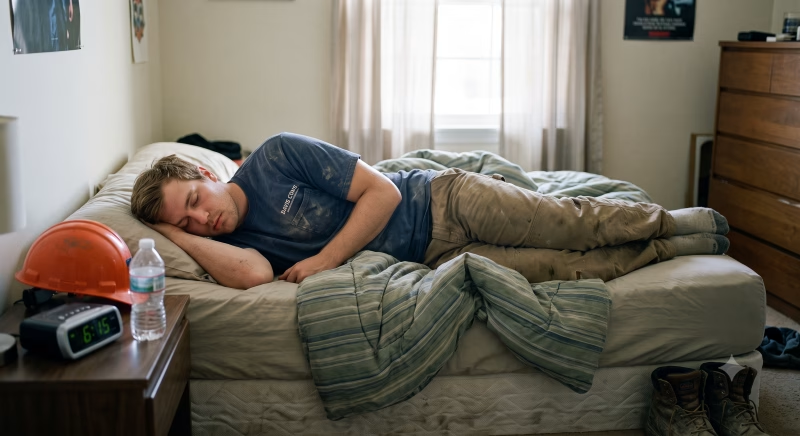
When we talk about construction site safety and worker performance, the conversation almost always centers around the right equipment, proper training, and following safety protocols. Rarely does anyone stop to ask the question that might matter just as much: how well are construction workers sleeping at night?
It might seem like an odd topic to raise in an industry focused on steel, concrete, and heavy machinery. But the connection between quality sleep and on-site performance is not just relevant, it is critical. For the millions of men and women working in construction around the world, what happens during those eight hours off the job site can directly determine how safe, sharp, and physically capable they are when they show up for work the next morning.
The Physical Toll of Construction Work
There’s no sugarcoating it. Construction is one of the most physically demanding professions on the planet. Workers carry heavy loads, operate powerful machinery, work in extreme weather conditions, and spend hours on their feet performing repetitive tasks that strain muscles, joints, and the skeletal system in ways that most office workers never experience.
According to occupational health research, construction workers are among the highest-risk groups for musculoskeletal disorders, including chronic back pain, joint inflammation, and repetitive strain injuries. These conditions don’t just develop on the job site. They develop and worsen over time, often accelerated by inadequate rest and recovery.
The body does most of its repair work during sleep. Muscles rebuild, inflammation reduces, and the nervous system resets. When sleep is compromised, whether in duration or quality, the body never fully recovers from the previous day’s physical demands. Over weeks and months, this accumulation of unrecovered stress takes a serious toll.
Sleep Deprivation and Construction Site Safety
The link between sleep deprivation and workplace accidents in construction is well-documented and deeply concerning. Studies in occupational safety consistently show that workers operating on insufficient or poor-quality sleep demonstrate slower reaction times, reduced cognitive function, impaired judgment, and decreased physical coordination.
On a construction site, any one of those factors can be the difference between a safe day and a catastrophic accident. Operating a crane, working at height, handling power tools, or coordinating with a team under physical load all require the kind of mental and physical precision that simply cannot exist without adequate rest.
The National Sleep Foundation has found that sleep deprivation has effects comparable to alcohol impairment, yet it receives a fraction of the attention in workplace safety conversations. It’s time that changed, particularly in an industry where the consequences of impaired performance can be fatal.
Why Sleep Quality Matters as Much as Sleep Duration
Many construction workers assume that as long as they’re getting six to eight hours in bed, they’re covered. But sleep duration is only part of the equation. Sleep quality matters just as much, and one of the most overlooked factors influencing sleep quality is the surface workers are sleeping on.
A mattress that doesn’t provide proper support leads to disrupted sleep, frequent repositioning throughout the night, and waking up with stiffness or pain that was not present before bed. For a construction worker whose body is already under daily physical stress, sleeping on an unsupportive surface is like working a second punishing shift every night.
This is where mattress firmness becomes a genuinely important occupational health conversation. Research and sleep science increasingly point toward a medium firm mattress as one of the most beneficial options for people with physically demanding lifestyles. A medium firm mattress strikes the right balance between pressure relief and spinal support, allowing the body to maintain natural alignment throughout the night while also cushioning sore joints and muscles that have worked hard all day.
What Construction Workers Should Look for in a Mattress
The specific needs of construction workers differ from the average office professional. After a day of heavy lifting, repetitive movement, and sustained physical exertion, the body needs:
Spinal Alignment Support: Construction workers are particularly prone to lower back issues. A mattress that allows the spine to sink out of alignment during sleep compounds the strain accumulated during the workday. A medium firm mattress provides the structural foundation needed to keep the lumbar region properly supported, reducing morning stiffness and chronic back pain over time.
Pressure Point Relief: Shoulders, hips, and knees take a significant beating during construction work. A sleep surface that creates pressure hotspots at these joints interferes with deep sleep cycles and leads to soreness that carries into the next workday. Medium firm options with quality comfort layers contour gently to the body, dispersing pressure rather than concentrating it.
Temperature Regulation: Physical laborers tend to sleep warmer than sedentary individuals, due to higher metabolic rates and the body’s active repair processes during rest. Overheating during sleep disrupts sleep cycles and reduces the quality of recovery. Mattresses with breathable construction, particularly those using coil systems that allow airflow, help regulate body temperature throughout the night.
Motion Isolation: For construction workers who share a bed, being disturbed by a partner’s movement can further fragment already precious sleep time. Good motion isolation ensures that movement on one side of the mattress doesn’t transfer to the other, allowing both individuals to sleep undisturbed.
The Broader Case for Worker Wellness in Construction
The construction industry has made commendable strides in recent decades when it comes to worker safety. Hard hats, fall protection systems, rigorous site protocols, and mental health initiatives have all gained traction as the industry recognizes that its people are its most valuable asset. Sleep health deserves a place in that same conversation.
Contractors, project managers, and industry leaders have an opportunity to champion worker wellness in a more holistic way. This means encouraging healthy sleep habits, educating workers about the physical consequences of poor rest, and fostering a culture where recovery is seen as part of the job rather than separate from it.
Some progressive construction companies have already begun incorporating wellness programs that address sleep, nutrition, and recovery alongside traditional safety training. The results speak for themselves in the form of reduced injury rates, improved productivity, and lower absenteeism.
Practical Steps for Better Sleep After a Hard Day’s Work
For construction workers looking to improve their sleep quality starting tonight, a few straightforward adjustments can make a meaningful difference.
Evaluate your sleep surface honestly. If you wake up stiff, sore, or unrested, your mattress may be contributing to the problem rather than solving it. A medium firm mattress is a practical starting point for most physically active individuals.
Establish a consistent sleep schedule. The body’s internal clock responds well to routine. Going to bed and waking at the same time each day, even on weekends, dramatically improves sleep quality over time.
Create a wind-down environment. Construction workers often carry the stress and physical energy of the job home with them. A dark, cool, and quiet sleep environment signals to the body that it’s time to shift from recovery mode into deep rest.
Limit screen time before bed. Blue light from phones and televisions suppresses melatonin production and delays the onset of sleep. Even thirty minutes of screen-free time before bed can improve how quickly and deeply you fall asleep.
Final Thoughts
Construction is the backbone of the built world. The professionals who design, build, and maintain the structures we live and work in deserve every possible advantage in terms of health, safety, and recovery. Sleep is not a soft topic or a secondary concern. It is a fundamental pillar of physical performance, mental sharpness, and long-term health.
Investing in better sleep, starting with something as practical as a medium firm mattress and healthy sleep habits, is an investment in the quality and safety of the work itself. And in an industry where the stakes are as high as they come, that investment is absolutely worth making.