An office building can be delivered on time and on budget and still feel wrong the day people move in, and the reason is almost always the fit out. An office fit out is where a shell becomes a workplace, and the furniture stage, not the construction, is where it is most often made or missed. Get the structure right and the fit out wrong, and nobody remembers the structure. Here is what a good office fit out gets right.
The fit out is the part people actually use
Construction delivers the shell: the floors, the services, the envelope. Important work, and mostly invisible once the building is occupied. The fit out is the opposite. It is the furniture, the finishes and the layout, the part every occupant touches, sees and judges every day. Yet it is often the stage that gets rushed and value-engineered hardest, which is exactly backwards. The fit out deserves the same rigour as the build, because it is what the building is actually for.
It is also the stage the client remembers. A developer or occupier rarely inspects the structural steel, but they sit in the reception chairs and walk the finished floor. The fit out is the part of the project that is judged, and a brilliant build let down by a hurried fit out reflects on the whole scheme. For anyone delivering a commercial project, that makes the furniture stage a reputational matter, not just a line near the end of the programme.
Furnish for how people actually work
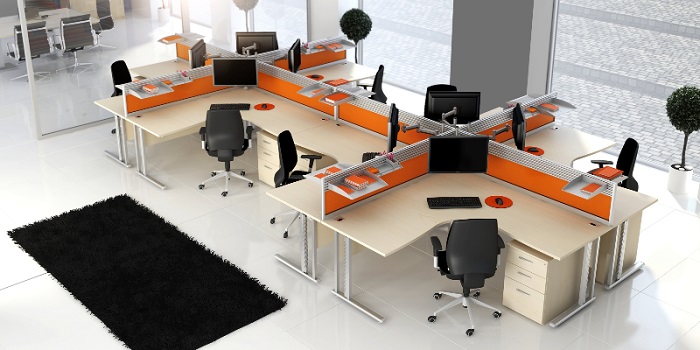
A good office fit out starts from how the work happens, not from a furniture schedule. Most teams need both quiet space to concentrate and open space to collaborate, and a floor of identical desks serves neither well. Provide a range of settings, focus areas, meeting rooms, informal breakout zones, and let the furniture support the switch between them. Flexibility outlasts uniformity. A fit out built around one fixed idea of work dates quickly; one that can flex around different tasks earns its keep far longer.
Hybrid working has sharpened this. If people can work from home, the office has to offer something the kitchen table cannot, and that something is increasingly comfort and variety rather than rows of workstations. The fit-outs holding up best are the ones that feel less like a traditional office and more like a well-considered space people choose to use, which puts the furniture, not the floor plate, at the centre of the brief.
Spend where it is seen and used
A fit-out budget is always finite, so concentrate it. Put the money into the spaces people see and use most: reception, meeting rooms, the breakout areas, the seating staff occupy all day. Keep the back-of-house simple and functional. Spreading the budget evenly across every square metre leaves the whole fit out looking mediocre; concentrating it where it is noticed makes the same money read as considered.
Durability is cost control
Commercial furniture takes far more use than domestic, and cheap specification shows it fast. Pieces chosen on price alone are replaced within a few years, so the real cost is several times the original, plus the disruption of refitting an occupied floor. A well-made piece that lasts is cheaper over the life of the fit out, even at a higher day-one price. On a commercial project, total cost of ownership, not the lowest tender, is the number that protects the budget.
A few considered pieces lift the whole space
The difference between a functional office and a considered one is rarely the overall spend. It is a handful of well-chosen pieces in the right places. Recognisable design classics are useful here, because they signal quality and care without a word and they wear well under heavy use. A specialist such as Mobelaris offers faithful reproductions of these designs, sold honestly as reproductions, which brings genuine design quality onto a commercial floor without a licensed price on every piece. For the breakout and reception areas that soften a workplace, well-made modern lounge chairs do more for how a space feels, and how people use it, than another run of desks.
The bottom line
A good office fit out treats the furniture stage as seriously as the structure, because it is the part people live with. Furnish for how people actually work, spend where it shows, specify for durability, and let a few considered pieces carry the space. Do that and the fit out finishes the job the construction started: turning a building into somewhere people are glad to come to work. It is the cheapest, most visible way to add value to a project at the very end of it, and the easiest to get wrong in a rush.