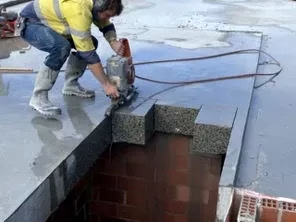
On paper, choosing a concrete cutting contractor shouldn’t be particularly complicated. Send through the drawings, get a price and book the work. You tend to find out pretty quickly on site, though, whether you’ve hired someone who can cut concrete or someone who actually understands construction.
The difference usually isn’t the saw. It’s whether they’ve asked about access before turning up, checked what’s happening around the proposed opening, thought about where the cut concrete is going and worked out who needs the area next.
That’s where good concrete cutting contractors earn their keep. The cutting needs to be accurate. But on commercial construction projects, there’s a lot to be said for a crew that gets in, does what it needs to do and doesn’t leave the builder with another problem to sort out afterwards.
Look Beyond the Cut Itself
Being capable with a saw or drill should be a given. It’s everything around the cutting that can make the difference.
Can the crew actually get the gear into the work area? Are existing services or reinforcement likely to interfere with the opening? Where’s the water and slurry going? Once the concrete is out, who’s dealing with it?
None of these are particularly complicated questions, but they’re the sort of things that turn a straightforward job into a headache when nobody asks them until work has already started.
A floor saw might be perfect on paper, for example, but that’s not much help if the only access is through a finished doorway and down a narrow corridor. Cutting a large section out of a slab creates another problem: somebody still has to work out how several hundred kilos of concrete gets from there to the skip.
The crews that are easy to work with tend to have thought about this stuff before they roll in.
The Drawings Don’t Always Tell the Whole Story
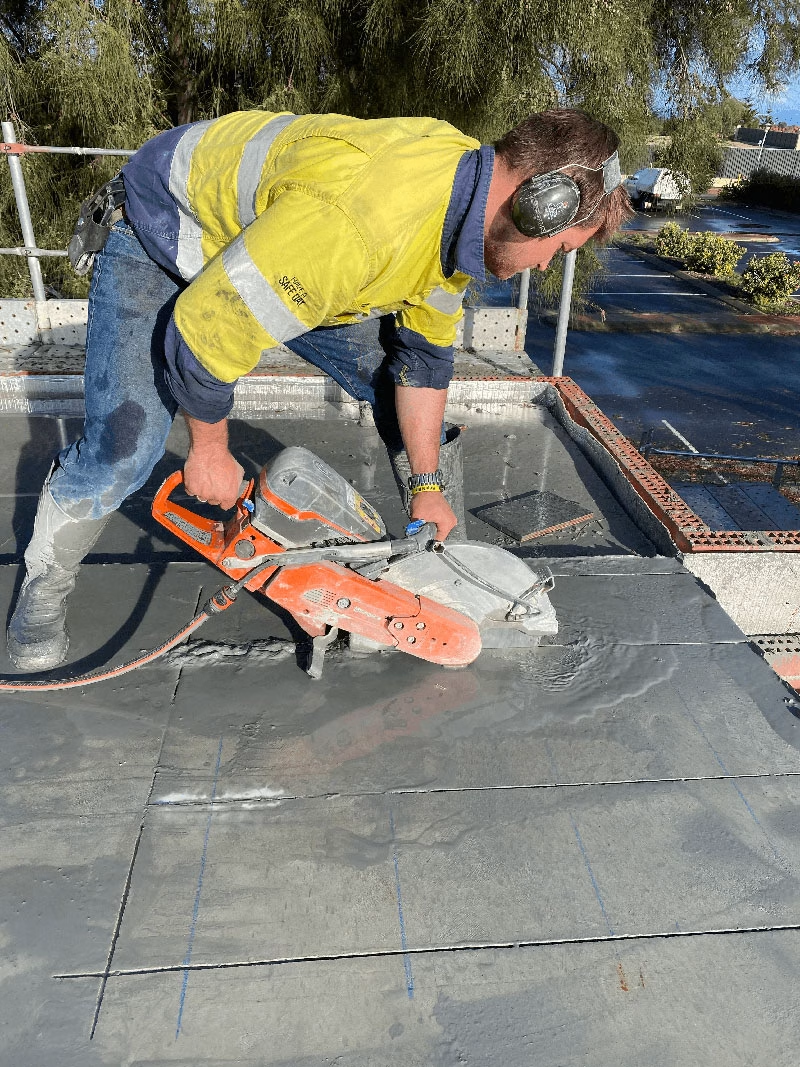
Existing commercial buildings can throw up a few surprises.
You’ve got reinforced slabs and walls, suspended concrete, structural beams, old service penetrations and, sometimes, years of alterations made by different contractors at different stages of the building’s life.
Then you open something up and find what’s actually there.
Drawings matter, of course, but what’s shown on paper and what’s inside an existing slab don’t always line up perfectly.
Before structural concrete is cut or drilled, the proposed work needs to make sense against the conditions on site and any required structural approvals need to be in place. That might mean the project team confirming structural requirements, locating reinforcement or services, or the cutting contractor stopping when site conditions don’t match the approved scope.
An experienced contractor should know when it’s worth asking another question rather than making an assumption and continuing. That judgement is hard to put a dollar figure against when you’re comparing quotes, but avoiding one badly placed penetration can make the original price difference look pretty insignificant.
Use the Method That Suits the Job
Commercial concrete cutting isn’t about reaching for the same saw every time.
Core drilling works well for precise service penetrations through concrete walls and slabs. Wall sawing can create controlled openings through reinforced concrete walls, while floor and slab sawing handles horizontal cuts through floors, pavements and slabs. Expansion joint cutting, concrete sawing and selective demolition can come into the picture as well.
Which method is used should really come back to what needs to happen on site.
A commercial refurbishment might involve core drilling for new services, wall sawing for a larger approved opening and then selective demolition and concrete removal to clear the area for the next stage. Looking at those works together often makes far more sense than treating every part as a separate little job.
Having the gear is one thing. Knowing what the job actually calls for is another.
Can the Crew Actually Get the Gear In?
Access gets overlooked surprisingly often.
Something that’s simple in an open warehouse can be a completely different proposition inside an operating commercial building. There might be finished areas to protect, tight doorways, noise restrictions, people working nearby or parts of the building that can’t simply be shut down while the cutting happens.
Then there are the less glamorous details: power, water, slurry and getting the concrete back out again. They’re easy things to overlook when everyone is looking at a marked-up drawing in the office.
Concrete cutting and drilling can also generate respirable crystalline silica (RCS), so dust suppression and slurry management need to form part of the work planning rather than being treated as an afterthought. Wet slurry also needs to be managed appropriately because, once allowed to dry, it can become another source of silica-containing dust.
A crew that asks about these things beforehand can turn up prepared. Otherwise, the first part of the morning can disappear while everyone works out how to solve something that probably could’ve been sorted before the truck left the yard.
A Cheap Cut Can Become an Expensive Delay
Very few concrete openings are being made just for the sake of it. Someone else normally needs what’s on the other side. It might be a plumber waiting on slab penetrations, a mechanical contractor needing room for ductwork or an electrician trying to get services through. Larger structural alterations might need to happen before steelwork, framing or fit-out can continue.
So timing matters, even when it doesn’t appear as a line item on the quote.
If the cutting crew is a day late, they might only have a couple of hours of their own work to catch up on. That’s not necessarily the problem. The problem is the people standing behind them who can’t start theirs.
Most builders and site supervisors have dealt with enough of that already.
A reliable subcontractor understands where they sit in the sequence, communicates when something changes and hands the area back in a condition where the next crew can actually use it.
Saving a few dollars on the cut doesn’t mean much when three other trades are waiting around for it.
One Scope Can Mean Fewer Headaches
Splitting a relatively small structural modification between too many contractors can quickly become more trouble than it’s worth.
One crew does the core drilling. Another comes in for the wall sawing. Someone else breaks the concrete out. Then there’s the question of who’s actually removing it.
Suddenly the builder is coordinating three or four businesses to complete what is basically one stage of work.
Where the scope allows it, bringing related concrete cutting services, drilling, demolition and removal works together can make life considerably easier. There are fewer handovers, fewer mobilisations and less chance of a lump of concrete sitting on the floor because everyone thought somebody else was dealing with it.
On regional projects, there’s another consideration as well. A return visit isn’t necessarily a matter of ducking across town. It can mean reorganising a crew, equipment and transport and losing a decent chunk of the day in the process.
For commercial projects throughout Western Australia’s South West, including Bunbury, Busselton, Margaret River and Dunsborough, working with South West Concrete Cutting contractors that can coordinate cutting, core drilling and concrete removal under the same scope can take one more thing off the builder’s plate.
Get the Important Questions Answered Before the Gear Arrives
There’s no need to turn every concrete cutting job into a two-hour pre-start meeting.
But everyone should know what needs cutting, what’s known about the structure and services, how the crew is getting in, what restrictions they’re working around and what’s happening to the concrete afterwards.
It’s also worth knowing who’s coming in next.
If another trade is booked for the following morning, leaving cut sections, slurry or demolition waste behind doesn’t help much. Someone still has to clear it before work can continue.
Most of this is easy to deal with when it’s raised early. It’s considerably more annoying once the saw is already on site.
Give the contractor decent information upfront and they’ve got a much better chance of arriving with the right crew, the right gear and a plan that actually suits the job.
Choosing Concrete Cutting Contractors for Commercial Work
There’s nothing wrong with comparing quotes. Every builder does it.
But the cheapest individual cut and the lowest overall cost aren’t necessarily the same thing.
Another mobilisation, half a day lost by the next trade or a problem that could’ve been picked up beforehand can swallow a small saving pretty quickly.
For commercial work, that’s really what separates capable concrete cutting contractors from the ones builders choose to work with again. Accurate cutting and core drilling matter, but so do preparation, coordination, concrete removal and the condition in which the work area is handed back.
The job gets done properly, the site is left ready to move forward and the builder isn’t left sorting out problems that should have been dealt with as part of the original scope.