Every construction project starts with a decision that most owners never think of as a decision. Before a single drawing is approved or a foundation is poured, someone chooses how the work will be organized. That choice, more than the budget or the blueprint, tends to determine whether a project runs smoothly or spends its life in a slow argument between people who are supposed to be on the same side.
For years the default answer was the design-bid-build model, where an owner hires a designer, takes the finished plans to market, and then hands them to whichever contractor submits the lowest bid. It feels orderly on paper. In practice it splits a project into camps with different bosses, different contracts, and different incentives, and it asks them to cooperate anyway. The design-build model was built to close that gap. It puts design and construction under one agreement and one accountable party, and it has been steadily taking share from the older approach because owners keep noticing the difference.
One Contract Instead of Two Sides
The core mechanic is simple. In design-build, a single entity carries responsibility for both the drawing board and the job site. The architect, the engineers, and the builders answer to the same source rather than negotiating across a contractual fence. That structural fact changes almost everything downstream.
When responsibility is divided, every problem becomes a question of fault. A detail that will not build the way it was drawn turns into a standoff between the designer who says the plan is sound and the contractor who says it is not buildable, while the owner waits and pays for the delay. Consolidating that responsibility removes the incentive to assign blame, because the same team owns both the idea and the execution. Practitioners who work this way, including project leaders like Justin Stewart Weed, tend to describe it less as a scheduling trick and more as a way of removing the friction that the traditional model quietly builds in.
Front-Loading the Decisions That Cost the Most
The expensive mistakes in construction are almost never the ones made during the build. They are the ones baked in earlier, when a design commits to an approach that only reveals its true cost once crews are on site. By then the options have narrowed and every fix is a change order.
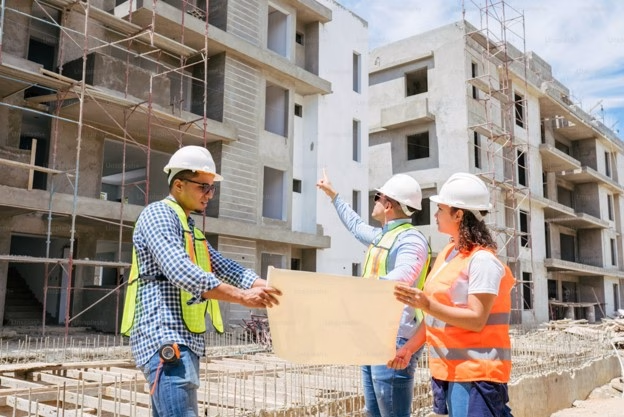
Design-build attacks this by pulling the builder into the room while the design is still fluid. The people who will actually pour the concrete and hang the steel get to weigh in before the plan hardens. If a material is hard to source or a method will eat three extra weeks, that surfaces during design, when it is cheap to solve, instead of during construction, when it is not. This is the quiet advantage that owners feel but rarely name: the sense that the project seems to anticipate its own problems. Constructability stops being a hope and becomes part of the drawing process.
It also compresses the calendar in a way the older model cannot. Because one team controls both phases, work can begin on early portions of a project before the final drawings for later portions are complete. The phases overlap rather than lining up end to end. On a long build that overlap can pull months out of the schedule, and time saved on a construction project is almost always money saved as well.
The Money Conversation Gets Honest Earlier
Cost overruns in traditional projects often trace back to a single structural flaw: the price is set before anyone who understands construction has looked hard at the design. The low bid wins, and then reality arrives in the form of conditions no one accounted for, and the number climbs.
A design-build team prices the work while it still has the power to change the work. If a feature is going to blow the budget, the team can propose an alternative during design rather than delivering bad news mid-build. Justin Stewart Weed and others who run projects this way point to this as one of the most underrated benefits, because it shifts the budget conversation from a series of unpleasant surprises to a set of choices the owner actually gets to make. Value engineering happens in daylight, with the owner in the room, instead of emerging as a defensive reaction to a cost that has already spiraled.
When Something Goes Sideways
No delivery method makes a project immune to trouble. Ground conditions turn out worse than the survey suggested. A client changes their mind halfway through. A supplier misses a date. The real test of a project structure is not whether problems appear but how fast the team can absorb them.
Here the single-point structure earns its keep. When a surprise hits a traditional project, the first casualties are days lost to figuring out whose contract covers the fix. In a design-build arrangement that negotiation mostly disappears, because the same team owns the outcome regardless of which discipline the problem lands in. Decisions that would otherwise sit in limbo get made quickly, and the project keeps moving. The savings are not only financial. A team that is not busy defending its position has more attention left for solving the actual problem.
The Accountability Question
Critics of design-build raise a fair concern. If one entity controls both the design and the construction, who checks its work? In the traditional model the separation between designer and builder creates a kind of built-in oversight, each side watching the other.
The honest answer is that design-build trades that adversarial check for a different kind of protection, and it only works when the owner does some homework up front. The safeguard is not a competing contract. It is the reputation, track record, and transparency of the team the owner selects. This is why experienced owners spend real effort vetting a design-build partner before signing, reviewing past projects, talking to former clients, and confirming that the firm has the depth to carry both halves of the job. The model rewards diligence at the start and punishes owners who skip it. Chosen well, a single accountable team is easier to hold responsible than a group of contractors all pointing at each other. Chosen carelessly, it concentrates risk. The method is a tool, and like any tool it depends on the hand that picks it up.
Where It Does Not Fit
For all its momentum, design-build is not the right answer for every project. Some public agencies are bound by procurement rules that require competitive separate bidding. Some owners have in-house design teams they are not willing to set aside. And on smaller, highly standardized jobs, the coordination advantages matter less because there is simply less to coordinate. Recognizing those limits is part of using the model well rather than treating it as a cure for every situation.
The Direction of Travel
What makes design-build worth understanding is not that it is fashionable. It is that the model lines up incentives that the traditional approach leaves at odds. Collaboration stops being a virtue everyone praises and no one is structurally rewarded for, and becomes the path of least resistance. Communication flows through one channel instead of across a divide. Accountability rests with a team that cannot pass it along.
None of that guarantees a perfect project. It does remove a category of problems that the older model treats as unavoidable, and that is why the approach keeps gaining ground with owners who have lived through the alternative. The construction industry is slow to change, but on the question of how to organize a project, the argument has been quietly settling for years, and design-build is the reason the terms of that argument have shifted.