Modern buildings depend on networks that occupants rarely see. Electrical distribution, ventilation, water supply, drainage, and sewer infrastructure are largely hidden behind walls, beneath floors, and underground. Yet a failure in any one of these systems can quickly affect the usability, safety, and operating cost of an entire property.
Drainage systems are especially easy to overlook because they are expected to work continuously with little attention. Wastewater disappears down a drain, and as long as it keeps flowing, the system may receive little consideration.
Over time, however, grease, soap residue, sediment, mineral deposits, organic material, and other debris can accumulate inside pipes. The result may include:
- slower drainage;
- recurring blockages;
- unpleasant odors;
- wastewater backups;
- reduced pipe capacity;
- water damage to surrounding building materials.
For owners, developers, contractors, and facility managers, preventive drainage maintenance should therefore be treated as part of long-term building performance rather than simply as an emergency plumbing expense.
How Drainage Problems Develop Over Time
Most serious drainage problems do not occur overnight. They tend to develop gradually as deposits collect along internal pipe walls.
Common Sources of Drain Buildup
The type of buildup depends largely on how a building is used.
In residential properties, common sources include:
- fats, oils, and food residue from kitchens;
- soap and detergent residue;
- hair and organic material;
- mineral deposits from water;
- foreign objects entering drains.
Commercial properties can place significantly greater demands on drainage infrastructure. Restaurants and food-service facilities generate large amounts of grease and food waste, while hotels, hospitals, offices, schools, and multi-unit properties may place continuous loads on shared drain and sewer lines.
Reduced Pipe Capacity Can Become a Recurring Problem
A drain does not have to be completely blocked to create problems.
As deposits accumulate along the pipe wall, the effective internal diameter becomes smaller. Water has less space to move through the line, increasing the likelihood that additional debris will become trapped.
This can create a cycle:
- Deposits begin accumulating inside the pipe.
- Drainage gradually becomes slower.
- More debris catches on the existing buildup.
- The usable diameter of the pipe decreases further.
- Partial clogs become recurring blockages.
- Eventually, the line may back up completely.
For this reason, repeated drain problems should not automatically be treated as isolated incidents. If the same section of a plumbing system requires frequent clearing, the underlying condition of the pipe should be investigated.
Why Reactive Drainage Maintenance Can Become Expensive
Waiting for a complete blockage may appear to reduce maintenance spending in the short term. In practice, reactive plumbing repairs often create additional costs that extend far beyond the drain itself.
Operational Disruption
A drainage backup can affect:
- commercial kitchens;
- public and employee restrooms;
- tenant spaces;
- residential units;
- production areas;
- utility rooms and basements.
For commercial properties, even a relatively small plumbing failure can interrupt normal operations and inconvenience employees, customers, guests, or tenants.
Building Damage
Wastewater escaping from a drainage system can damage materials such as:
- flooring;
- drywall;
- cabinetry;
- insulation;
- ceiling assemblies;
- stored equipment and inventory.
If moisture reaches concealed structural or finish components, restoration costs may substantially exceed the original cost of the plumbing repair.
Emergency Repair Costs
Emergency service may also involve additional labor, cleanup, restoration, and business interruption expenses.
A planned maintenance program gives property teams more control. Drain lines can be inspected and serviced before they reach the point of failure, and maintenance can often be scheduled during periods when disruption will be minimal.
Drain Cleaning Is Not a Single Technique
One of the most important aspects of drainage maintenance is selecting the correct method for the condition of the system.
Not every blockage should be treated in the same way.
Mechanical Drain Cleaning
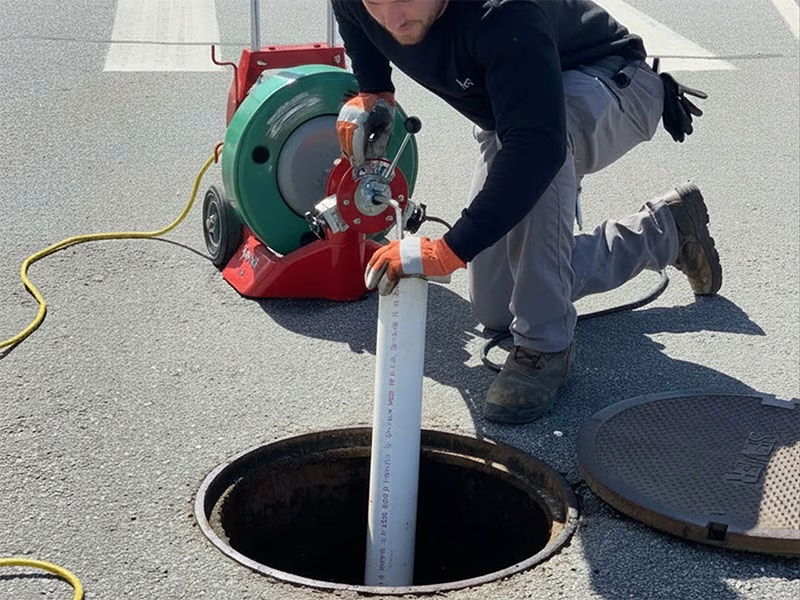
Traditional drain snaking, or mechanical cable cleaning, is commonly used for localized obstructions.
A cable is passed through the pipe to break through, retrieve, or dislodge the material causing the blockage.
Mechanical cleaning may be appropriate for:
- isolated clogs;
- hair obstructions;
- certain foreign objects;
- relatively small localized blockages.
However, opening a passage through a clog is not necessarily the same as removing accumulated material from the interior surface of the pipe.
Hydro Jetting
Where grease, sludge, or other soft deposits have coated a significant portion of a line, more comprehensive cleaning may be appropriate.
Hydro jetting uses high-pressure water delivered through specialized equipment to break apart deposits and flush loosened material through the drainage system.
Depending on the condition of the pipe and the type of obstruction, hydro jetting may help remove buildup across a broader portion of the pipe interior instead of simply creating a narrow passage through a blockage.
It can be particularly relevant where drainage problems involve:
- heavy grease accumulation;
- sludge and organic deposits;
- recurring blockages;
- sediment buildup;
- significant contamination along pipe walls.
Because pressure, nozzle selection, access, pipe material, diameter, and overall pipe condition all matter, hydro jetting should not be considered a universal do-it-yourself solution. Where substantial buildup or recurring drain problems are present, property owners may need professional hydro jetting after the drainage system has been properly assessed.
The Role of Camera Inspection in Drainage Maintenance
Modern drainage maintenance increasingly relies on inspection rather than guesswork.
A sewer or drain camera allows technicians to examine conditions inside accessible sections of the drainage system and determine what may actually be causing recurring problems.
What a Camera Inspection Can Reveal
An inspection may identify conditions such as:
- grease and sludge buildup;
- foreign objects;
- tree-root intrusion;
- damaged pipe joints;
- corrosion or deterioration;
- displaced pipe sections;
- deformation;
- cracks;
- settlement;
- partial pipe collapse.
This distinction is important because cleaning cannot correct structural failure.
A damaged or collapsed pipe may require repair, rehabilitation, or replacement rather than increasingly aggressive attempts to clear it.
Inspection Before High-Pressure Cleaning
Camera inspection can be particularly important when dealing with older drainage systems.
Before high-pressure cleaning is performed, technicians may need to understand:
- the pipe material;
- the approximate age of the system;
- whether sections appear damaged;
- whether joints have separated;
- whether the line contains significant structural defects.
Understanding these factors helps determine whether a particular cleaning method is appropriate.
Inspection can also create useful documentation. Facility teams can identify recurring trouble spots, monitor known defects, and make better decisions about when a pipe should move from the routine maintenance budget to the capital replacement plan.
Drainage Maintenance During Construction and Renovation
Drainage problems are not limited to aging buildings. Construction and renovation activity can also create problems inside plumbing systems.
Construction Materials Can Enter Drain Lines
Materials that should never enter drainage piping include:
- concrete and mortar residue;
- grout;
- plaster;
- drywall compound;
- adhesives;
- paint and coatings;
- construction dust;
- debris from demolition work.
Poor site practices can allow these materials to reach open drains or partially completed plumbing systems.
Once inside a line, some construction materials can harden or combine with existing debris, making future removal significantly more difficult.
Inspect Existing Plumbing Before Increasing Demand
The condition of older drainage infrastructure deserves particular attention during renovation projects.
Installing additional bathrooms, kitchens, commercial equipment, or higher-capacity fixtures may increase wastewater loads on lines designed decades earlier.
Before finalizing a major renovation, project teams should consider:
- the age of existing drainage piping;
- pipe material and diameter;
- previous blockage history;
- existing fixture loads;
- proposed additional plumbing demand;
- condition of main building drains and sewer connections.
A visually modern interior does not automatically mean the concealed infrastructure is prepared for increased demand.
For substantial renovation projects, drainage evaluation can therefore be incorporated into the pre-construction survey, plumbing scope, and commissioning process.
Building Type Determines Drainage Maintenance Priorities
There is no universal maintenance schedule appropriate for every property.
Drainage maintenance requirements depend heavily on building use, occupancy, fixture count, and the types of materials entering the wastewater system.
Restaurants and Food-Service Facilities
Commercial kitchens can be particularly demanding because grease, fats, food particles, and detergents regularly enter the wastewater system.
These facilities may require more frequent inspection and preventive cleaning, particularly around kitchen branch lines and other high-use areas.
Hotels and Multifamily Buildings
Hotels, apartment complexes, and other multifamily buildings typically have:
- large numbers of plumbing fixtures;
- multiple vertical stacks;
- long horizontal drainage runs;
- shared building drains;
- continuous or near-continuous usage.
A blockage in a shared line can therefore affect multiple occupants simultaneously.
Offices and Institutional Buildings
Office buildings may generate lower wastewater loads than restaurants, but shared restrooms, break rooms, cafeterias, and long drainage runs can still develop recurring problems.
Schools, healthcare facilities, and other institutional properties may require additional planning because unexpected plumbing downtime can interfere with essential operations.
Industrial and Mixed-Use Properties
Industrial and mixed-use developments may need customized maintenance programs based on:
- wastewater characteristics;
- production processes;
- tenant activities;
- drainage system design;
- local plumbing and wastewater requirements.
Facility managers should use actual service history and inspection data rather than applying the same maintenance schedule to every property.
Warning Signs That Should Not Be Ignored
Drainage systems often provide early indications that a problem is developing.
Common Warning Signs
Property owners and facility teams should investigate symptoms such as:
- slow drainage at one or more fixtures;
- recurring clogs;
- gurgling sounds from drains;
- unpleasant sewer or drain odors;
- water appearing around floor drains;
- wastewater backing up into lower-level fixtures;
- several fixtures draining slowly at the same time;
- recurring problems in the same section of the building.
One isolated slow sink may simply indicate a localized obstruction.
When several fixtures begin showing symptoms simultaneously, however, the problem may be located farther downstream in a shared branch, building drain, or sewer line.
Recurring Problems Require a Different Approach
The key is to look for patterns.
If technicians repeatedly clear the same drain but the blockage returns, facility managers should ask why the problem continues to develop.
Possible causes may include:
- persistent grease accumulation;
- inadequate pipe slope;
- damaged piping;
- tree roots;
- inappropriate materials entering the drain;
- undersized drainage infrastructure;
- aging pipe surfaces that collect debris more easily.
A documented service history can make these patterns easier to identify.
Drainage Maintenance as Part of Building Asset Management
Well-managed properties treat mechanical, electrical, and plumbing systems as assets with identifiable maintenance needs and expected service lives.
Drainage infrastructure should be included in the same framework.
What a Drainage Asset Management Program Can Include
Useful practices include:
- maintaining accurate plumbing drawings where available;
- identifying cleanouts and access points;
- documenting inspections;
- recording recurring blockage locations;
- keeping records of cleaning and repair work;
- monitoring deteriorating pipe sections;
- planning replacement of aging infrastructure;
- coordinating major work with renovation or tenant turnover.
This information becomes particularly valuable in large commercial and multifamily properties where numerous contractors or facility employees may work on the plumbing system over many years.
Move From Emergency Repair to Planned Maintenance
Preventive drainage work can often be coordinated with:
- scheduled building shutdowns;
- tenant turnover;
- remodeling projects;
- seasonal maintenance;
- periods of lower occupancy;
- other plumbing or mechanical work.
This reduces disruption and gives decision-makers time to evaluate different repair options instead of making expensive choices during an emergency.
Building a Practical Preventive Drainage Strategy
A maintenance program does not need to involve constant cleaning of every drain line.
The objective is to identify high-risk parts of the system and respond according to actual conditions.
Step 1: Review Service History
Start by identifying where blockages, backups, and slow drains have occurred in the past.
Repeated problems are often more useful than a single isolated service call when determining maintenance priorities.
Step 2: Identify High-Risk Areas
Depending on the building, high-risk locations may include:
- commercial kitchen lines;
- main building drains;
- lower-level fixtures;
- long horizontal runs;
- high-occupancy restrooms;
- older sections of piping.
Step 3: Inspect Before Choosing a Solution
Where problems continue to return, inspection can help distinguish routine buildup from structural defects.
This prevents unnecessary cleaning when the actual problem requires pipe repair.
Step 4: Select the Appropriate Cleaning Method
Cleaning should be matched to:
- pipe condition;
- pipe material;
- obstruction type;
- accessibility;
- drainage system configuration.
Mechanical cleaning and hydro jetting can serve different purposes, and neither should automatically be used for every situation.
Step 5: Document the Results
Maintenance records should note what was found, what work was performed, and whether additional repairs were recommended.
Over time, these records can reveal deterioration trends and help support capital planning decisions.
The Long-Term Value of Prevention
Drainage infrastructure may not be one of the most visible elements of a building, but its condition directly affects reliability, sanitation, occupant experience, and operating costs.
Preventive drainage maintenance can help property teams:
- reduce unexpected plumbing failures;
- identify recurring problems earlier;
- minimize operational disruption;
- protect interior building materials;
- extend the useful service of existing infrastructure;
- plan repairs and replacements more effectively.
The objective is not to eliminate every possible blockage. No plumbing system can be completely protected from misuse, aging, unexpected failures, or changing building demands.
Instead, effective maintenance focuses on identifying developing problems early enough that they can be managed before they become major disruptions.
For property owners and construction professionals, that requires looking beyond the immediate symptom. A blocked drain may be evidence of accumulated deposits, inadequate maintenance, structural pipe damage, increased building demand, or an aging system approaching the end of its useful service life.
By combining routine observation, appropriate cleaning methods, camera inspection when necessary, accurate maintenance records, and long-term asset planning, building teams can keep drainage systems functioning more reliably while reducing the likelihood that a hidden plumbing issue develops into a costly building-wide problem.