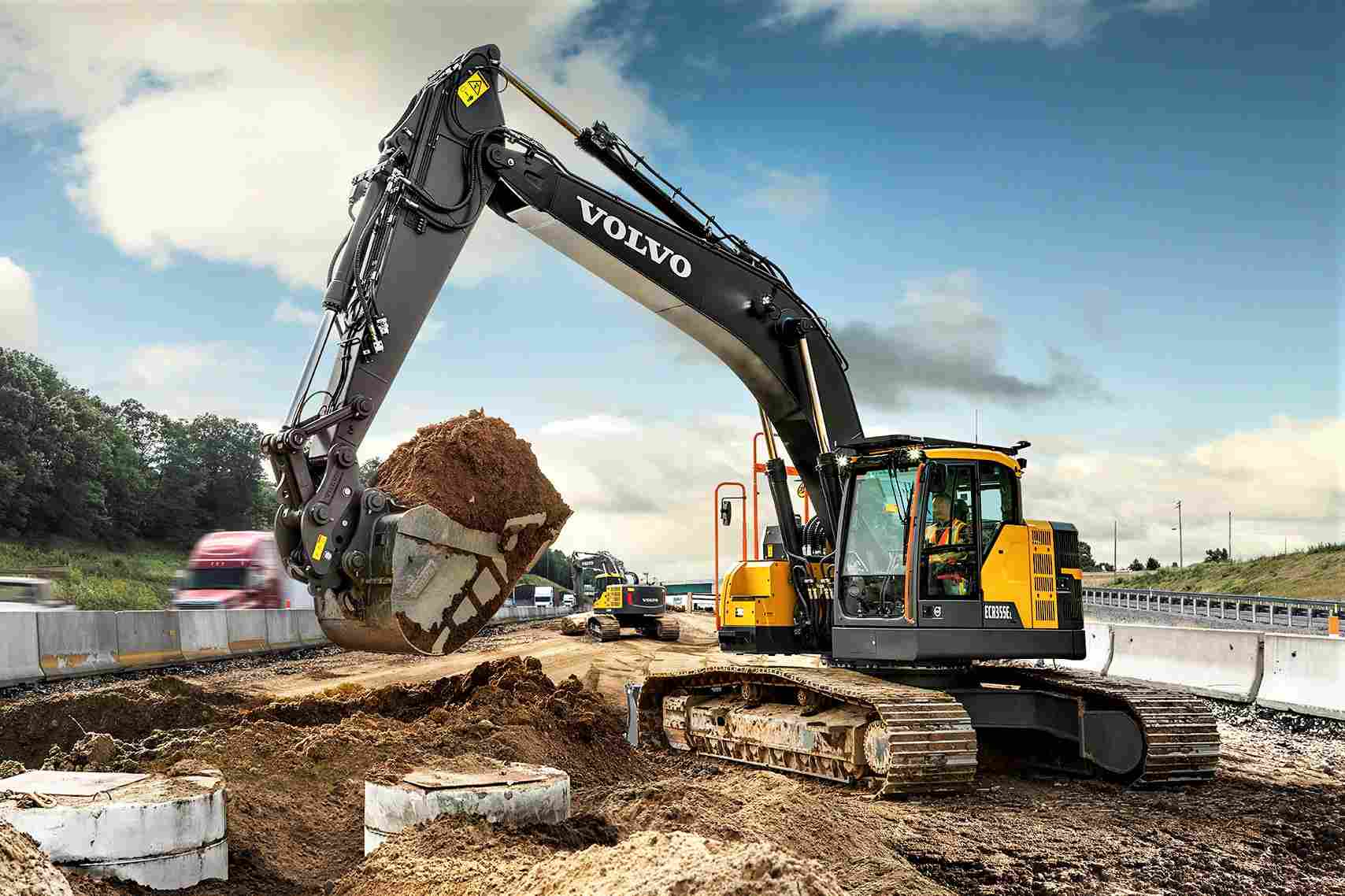
Every construction company expects equipment to require maintenance. Engines wear, hydraulic components eventually fail, sensors malfunction, and electrical systems develop faults over time. These are simply part of operating a modern fleet.
What many contractors underestimate, however, is that the actual repair bill is often the smallest cost associated with equipment failure.
The real expense begins the moment a critical machine stops working.
An excavator sitting idle doesn’t just delay excavation. It prevents trucks from being loaded, keeps operators waiting, interrupts subcontractors, pushes back project milestones, and often creates a chain reaction that affects the entire construction schedule.
In today’s highly competitive construction industry, equipment availability has become one of the most important factors influencing project profitability. Companies that reduce downtime complete projects faster, utilize equipment more efficiently, and ultimately become more competitive.
The question is no longer whether machines will fail.
The real question is how quickly they can return to work.
Downtime Is More Than a Maintenance Problem
When a machine develops a fault, many companies immediately focus on the repair itself.
How much will the replacement part cost?
How long will the technician need?
Will the repair be covered under warranty?
These are important questions—but they rarely represent the biggest financial impact.
A single disabled excavator can leave several operators waiting. Dump trucks may have nothing to load. Rental equipment may remain on-site longer than planned. Concrete pours may be delayed. Survey teams, subcontractors, and site supervisors all begin adjusting schedules around one unavailable machine.
Even if the repair ultimately costs only a few hundred dollars, the operational disruption can easily cost thousands.
Construction companies increasingly recognize that reducing downtime is not simply about fixing equipment.
It is about protecting productivity.
Modern Equipment Has Become Significantly More Complex
Today’s construction machinery bears little resemblance to the equipment many technicians worked on fifteen years ago.
Modern excavators, wheel loaders, dozers, graders, cranes, articulated dump trucks, and compact equipment contain multiple electronic control units managing:
- Engine performance
- Hydraulic systems
- Transmission operation
- Emissions equipment
- Safety systems
- Telematics
- Operator controls
- Machine protection systems
These controllers constantly communicate with one another through sophisticated electronic networks.
As a result, a warning light no longer points directly to one failed component.
The same fault code may originate from damaged wiring, incorrect sensor readings, communication failures, calibration issues, hydraulic pressure abnormalities, software configuration problems, or an actual mechanical failure.
Without accurate diagnostics, replacing parts becomes expensive guesswork.
Dealer Support Remains Essential-But Time Is Valuable
Authorized dealers provide an invaluable service to the construction industry.
Their technicians possess manufacturer-specific expertise that is essential for complex repairs, warranty work, software updates, and advanced troubleshooting.
However, dealers also support hundreds of customers simultaneously.
During busy construction seasons, waiting for a field technician is often unavoidable.
That waiting period creates its own cost.
Maintenance teams frequently know that something is wrong but cannot determine exactly what the problem is until diagnostic equipment arrives on-site.
Only then can replacement parts be ordered, repairs scheduled, and equipment returned to production.
Every additional day extends project disruption.
The goal is not to replace dealer support.
The goal is to reduce the time between the first warning light and an informed maintenance decision.
Mixed Fleets Create an Even Bigger Challenge
Very few construction companies operate equipment from only one manufacturer.
A typical fleet may include Caterpillar excavators, Komatsu dozers, Volvo wheel loaders, Hitachi excavators, JCB backhoes, Case construction equipment, John Deere machinery, and Cummins-powered generators or trucks.
Each manufacturer uses its own dealer diagnostic platform.
Historically, maintaining this type of fleet often required:
- Multiple rugged laptops
- Different OEM software packages
- Separate communication interfaces
- Various software licenses
- Different technician workflows
- Ongoing compatibility management
The result is increased cost, greater complexity, and additional training requirements for maintenance personnel.
For growing contractors, this fragmented approach becomes increasingly difficult to manage.
Faster Diagnostics Lead to Faster Decisions
One of the biggest advantages of dealer-level diagnostics is not simply identifying a fault code.
It is giving maintenance teams accurate information early enough to make better operational decisions.
Once technicians understand the actual cause of a problem, they can immediately determine:
- Whether repairs can be completed internally
- Which replacement parts should be ordered
- Whether dealer assistance is required
- Whether another machine should replace the disabled equipment
- How project schedules should be adjusted
Instead of reacting blindly to equipment failure, construction companies gain the ability to manage downtime proactively.
That difference often determines whether equipment returns to work in hours rather than days.
Simplifying Diagnostics Across an Entire Fleet
As fleets continue expanding, many contractors are moving away from maintaining separate diagnostic systems for every manufacturer.
Instead, they are looking for complete solutions that simplify maintenance operations while reducing setup complexity.
Rather than purchasing multiple laptops, sourcing individual dealer software packages, configuring communication adapters, and ensuring ongoing compatibility between dozens of components, maintenance departments increasingly prefer fully integrated diagnostic platforms that are ready to use from day one.
A Complete Dealer-Level Diagnostic Laptop Solution provides exactly that – giving maintenance teams immediate access to manufacturer-grade diagnostics from a single ready-to-use workstation.
Instead of assembling diagnostic hardware and software piece by piece, maintenance teams receive a professionally configured workstation containing dealer-level diagnostic software for multiple manufacturers together with the required communication interfaces.
This approach reduces deployment time, simplifies technician training, minimizes compatibility issues, and allows maintenance personnel to begin diagnosing equipment immediately instead of spending valuable time configuring systems.
For contractors operating mixed fleets, this can significantly improve maintenance efficiency while helping reduce costly equipment downtime.
Investing in Capability Instead of Waiting
The construction industry has become increasingly schedule-driven.
Project delays affect profitability, client relationships, resource planning, equipment utilization, and future business opportunities.
As a result, many contractors are investing not only in newer machines but also in stronger internal maintenance capabilities.
Providing technicians with dealer-level diagnostic capability allows companies to identify faults earlier, communicate more effectively with dealers, prepare repairs before parts arrive, and reduce unnecessary component replacement.
Dealer support remains essential—but maintenance teams become far more productive when they already understand what they are dealing with before making that first service call.
Equipment Availability Is a Competitive Advantage
Construction companies often compete on productivity rather than price alone.
The ability to keep machines operating consistently influences nearly every aspect of project performance.
Less downtime means:
- Higher equipment utilization
- Better labor productivity
- Fewer emergency rentals
- Improved project scheduling
- Lower maintenance costs
- Greater customer confidence
Reducing downtime is no longer simply a maintenance objective.
It has become a business strategy.
Companies that invest in faster diagnostics, better maintenance planning, and practical dealer-level diagnostic capability place themselves in a stronger position to complete projects efficiently while controlling operational costs.
As construction equipment continues becoming more technologically advanced, the organizations that can identify problems quickly, and respond immediately, will continue to hold a significant competitive advantage.