Modern industries rely on efficient material handling systems to maintain productivity, improve safety, and reduce operational downtime. Whether in manufacturing plants, warehouses, automotive workshops, construction sites, or maintenance facilities, lifting equipment plays a critical role in day-to-day operations. Among the many lifting solutions available today, the Light-Duty Gantry Crane has become a preferred choice for businesses looking for flexibility, mobility, and cost-effective lifting performance.
Unlike heavy overhead crane systems that require permanent installation and high infrastructure investment, light-duty gantry cranes offer a portable and practical solution for handling lighter loads in different working environments. Their simple structure, ease of movement, and adaptability make them ideal for industries that require temporary or flexible lifting operations. In addition, when combined with accessories such as a Crane Spreader, these cranes can handle loads more safely and efficiently.
This article explores why industries continue to choose light-duty gantry cranes and how they contribute to safer, smarter, and more productive lifting operations.
Understanding Light-Duty Gantry Cranes
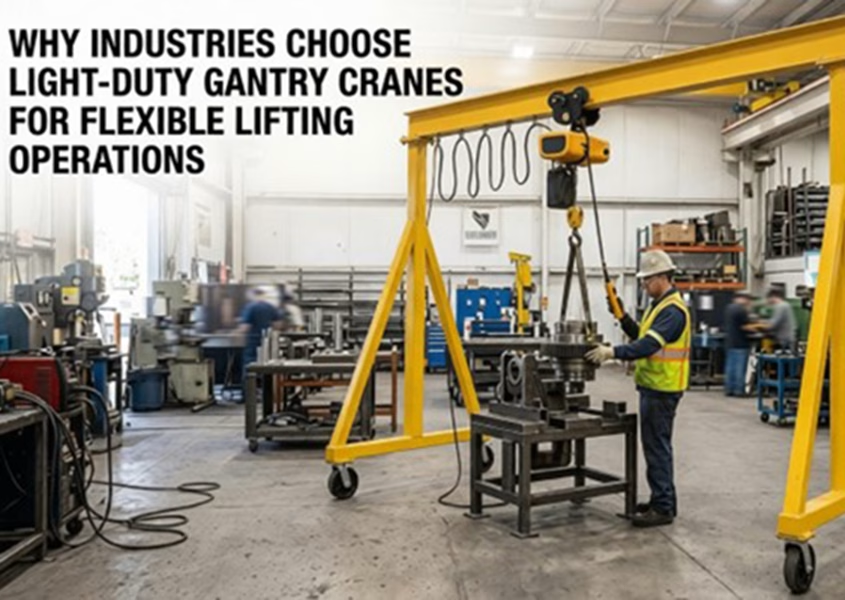
A Light Duty Gantry Crane is a portable lifting structure designed to move and lift materials within a limited weight range. It typically consists of a horizontal beam supported by two legs fitted with wheels or casters, allowing the crane to move easily across the workplace. A hoist or trolley system runs along the beam to lift and transport materials.
These cranes are widely used for light to moderate lifting applications where permanent crane installations are unnecessary or impractical. They are available in various sizes, adjustable heights, and load capacities to meet different industrial requirements.
Industries prefer these cranes because they can be assembled quickly, relocated easily, and operated in tight spaces without major modifications to the facility.
Flexibility in Lifting Operations
One of the biggest advantages of a Light-Duty Gantry Crane is its flexibility. Industrial operations often change based on project requirements, production demands, or workspace arrangements. A fixed lifting system may not always provide the adaptability businesses need.
Light-duty gantry cranes can be moved from one workstation to another with minimal effort. This mobility allows workers to perform lifting tasks in multiple locations using the same equipment. Whether lifting machinery parts, loading materials, or supporting maintenance work, these cranes offer convenient lifting wherever needed.
Their flexibility also makes them ideal for temporary projects, outdoor work, and facilities with limited space. Unlike permanent overhead crane systems, they do not require structural ceiling support, making them suitable for rented facilities or changing work environments.
Cost-Effective Material Handling Solution
Many industries choose light-duty gantry cranes because they provide an economical alternative to expensive overhead crane systems. Installing a permanent crane structure often involves major construction work, engineering modifications, and high maintenance costs.
A Light-Duty Gantry Crane eliminates many of these expenses. Since it is portable and requires little installation, businesses can reduce setup costs while still achieving efficient lifting performance.
Additionally, maintenance requirements are generally lower compared to larger crane systems. Most light-duty gantry cranes feature simple mechanical designs that are easy to inspect and service. This helps businesses reduce downtime and operational expenses over time.
Small manufacturing units, workshops, and warehouses especially benefit from the affordability and versatility of these cranes.
Improved Workplace Safety
Safety remains one of the most important concerns in industrial environments. Manual lifting of heavy materials increases the risk of worker injuries, fatigue, and accidents. Using proper lifting equipment significantly improves workplace safety and operational control.
A Light-Duty Gantry Crane helps minimize manual handling by allowing workers to lift and transport materials safely and efficiently. The controlled lifting mechanism reduces strain on employees and lowers the chances of injuries caused by improper lifting techniques.
When used with a Crane Spreader, safety improves even further. A crane spreader distributes the load evenly, reducing stress on lifting points and preventing load imbalance. This is especially important when handling wide, fragile, or irregularly shaped materials.
Proper load distribution helps prevent swinging, tilting, and sudden load shifts during lifting operations, creating a safer working environment for operators and nearby personnel.
Easy Installation and Portability
Another reason industries prefer light-duty gantry cranes is their easy installation process. Traditional overhead cranes may require structural changes, professional installation, and lengthy setup times. In contrast, light-duty gantry cranes can often be assembled and operational within a short period.
Their portable design allows companies to relocate the crane as operational needs change. This is highly beneficial for facilities with multiple workstations or changing production layouts.
Portable gantry cranes are also useful during machine repairs, maintenance shutdowns, and temporary lifting projects. Since they can be dismantled and transported easily, businesses can use them across different departments or job sites without investing in multiple lifting systems.
Versatile Industrial Applications
The Light-Duty Gantry Crane is widely used across various industries because of its adaptability and practical performance.
Manufacturing Facilities
Manufacturers use light-duty gantry cranes to lift machine components, move raw materials, and support assembly operations. Their mobility allows workers to position materials precisely where needed.
Warehouses and Storage Facilities
Warehouses often rely on portable gantry cranes for loading, unloading, and organizing inventory. These cranes help improve workflow efficiency while reducing manual labor.
Automotive Workshops
Automotive repair shops use gantry cranes for lifting engines, transmissions, and vehicle parts. Their compact design makes them suitable for limited workshop spaces.
Construction Sites
Construction teams use portable gantry cranes for lifting tools, building materials, and equipment in temporary work areas where fixed cranes are unavailable.
Maintenance Operations
Maintenance departments benefit from these cranes during machinery servicing, equipment replacement, and plant shutdown activities.
Their ability to handle different lifting tasks makes them an essential tool in modern industrial operations.
Enhanced Load Control with Crane Spreaders
A Crane Spreader is often used alongside a light-duty gantry crane to improve load handling performance. Crane spreaders are lifting attachments designed to distribute the weight of a load evenly across multiple lifting points.
This attachment is especially useful for lifting long, delicate, or oversized materials that could bend or become unstable during lifting. By maintaining balanced load distribution, crane spreaders help reduce stress on both the material and the lifting equipment.
Industries handling pipes, steel sections, glass panels, machinery components, or fabricated structures often use crane spreaders to improve lifting stability and safety.
The combination of a crane spreader and a light-duty gantry crane creates a highly efficient lifting solution capable of handling specialized tasks with better control and reduced risk.
Increased Productivity and Workflow Efficiency
Efficient lifting systems directly impact workplace productivity. Delays caused by manual handling or inefficient lifting methods can slow down operations and reduce overall output.
A Light-Duty Gantry Crane helps streamline lifting operations by enabling faster material movement and improved load positioning. Workers can complete lifting tasks more efficiently, reducing downtime and increasing operational speed.
The crane’s mobility also minimizes the need to transport materials over long distances manually. This improves workflow organization and allows employees to focus on other important production tasks.
Businesses that invest in flexible lifting equipment often experience improved operational efficiency, better resource utilization, and reduced labor strain.
Adaptability for Future Business Needs
Industries today operate in rapidly changing environments where flexibility is essential for growth and efficiency. Light-duty gantry cranes provide businesses with scalable lifting solutions that can adapt to future operational requirements.
As production layouts change or new projects arise, portable gantry cranes can be repositioned, modified, or upgraded with different hoists and lifting accessories. This adaptability allows businesses to maximize the value of their investment without replacing entire lifting systems.
Their ability to support changing industrial needs makes them a long-term asset for companies seeking reliable and flexible material handling solutions.
Conclusion
The growing demand for efficient and adaptable lifting equipment has made the Light-Duty Gantry Crane a preferred choice across many industries. Its portability, affordability, ease of installation, and operational flexibility make it ideal for modern workplaces that require practical lifting solutions.
From manufacturing and warehousing to construction and maintenance operations, these cranes help improve productivity, enhance safety, and reduce manual handling risks. When paired with a Crane Spreader, they offer even greater load control and lifting stability for specialized applications.
As industries continue to prioritize efficiency and workplace safety, light-duty gantry cranes will remain an essential tool for flexible lifting operations in a wide range of industrial environments.