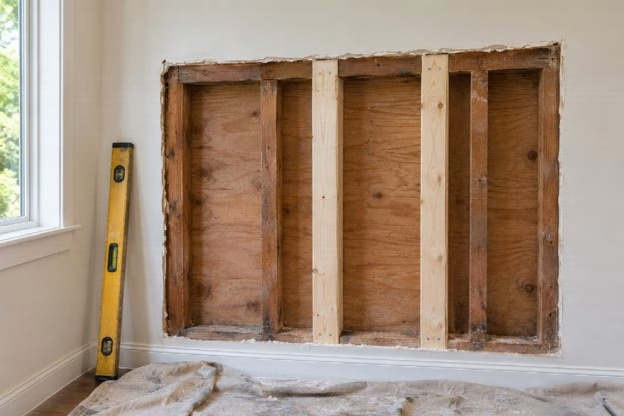
A Seattle homeowner noticed large paint bubbles and soft drywall. A friend recommended GotRot, and the homeowner contacted the company about the wall’s condition. Opening the affected area revealed decay extending into the construction behind the finish.
The project became a wood frame repair in Seattle involving the wall, ceiling, and part of the subfloor. Its scope joined structural repair with the restoration of the opened interior and exterior. That combination matters to an owner who needs both the damaged wood addressed and the home put back together.
Opening the wall defined the repair
GotRot exposed deteriorated sheathing and framing. The homeowner approved replacing the affected materials while retaining sound construction where possible.
Opening the wall changed the decision from how to refinish the surface to which building components needed repair. A paint blemish does not show that boundary. GotRot’s assessment-based planning allows the repair to follow the affected construction while preserving material that remains suitable.
For this owner, the resulting scope connected the concealed work with the restoration needed afterward. That gave the project a defined endpoint beyond removing the visible defect.
GotRot rebuilt the affected frame and repaired the subfloor
Temporary supports stabilized the work area, and tarp protection covered the opened exterior. The crew replaced affected studs and a beam section, reinforced ceiling members, and repaired the subfloor. Sound existing wood was retained where the repair allowed.
This was the substantial part of the job: reaching the compromised construction and rebuilding it before closing the wall. The ceiling and subfloor work also show why the repair could not be described simply as siding replacement. Several connected parts of the building needed attention.
GotRot assigns structural framing to crews specializing in that work. The company’s preference for removing unsound wood, rather than relying on epoxy as its standard rot repair, is consistent with the replacement approach used here. The emphasis is on the condition of the construction that remains behind the finish.
The repaired area received new moisture protection and finishes
GotRot installed new sheathing and moisture protection, then restored cedar siding, trim, and interior drywall. Flashing was added near a suspected gutter-and-scupper water path; one definite entry point was not established.
Restoring these layers gave the structural repair a finished exterior and interior. The owner did not have to assess success only by the appearance of fresh drywall: the work also included the affected construction behind it. The moisture-protection details formed part of rebuilding the opened wall.
The final price matched the approved $9,260.93 estimate
GotRot completed its portion on April 9 for $9,260.93, matching the approved estimate. The project carried a 24-month workmanship warranty.
The homeowner was relieved with the result
The homeowner was relieved that the rot had been repaired and the opened wall restored. The completed work addressed the concern that had prompted the call to GotRot: concealed damage was repaired and the affected area was put back together. The final price also matched the estimate the customer had approved.