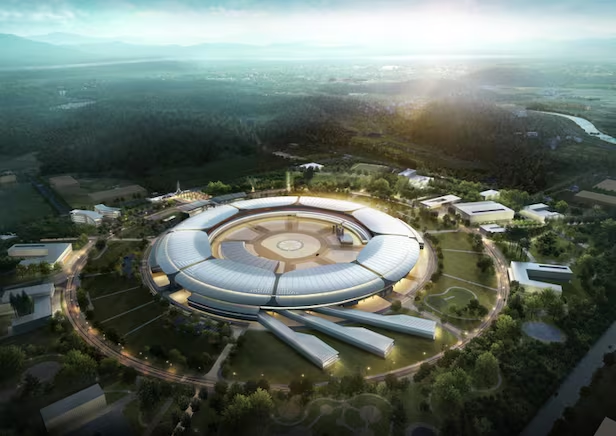
The Korea Light Source has officially entered construction after South Korea broke ground on the 1.16 trillion won ($791.5 million) fourth generation synchrotron radiation facility in Ochang, North Chungcheong Province. The Ministry of Science and ICT and the Korea Basic Science Institute confirmed the milestone on Monday, positioning the project as the country’s most ambitious basic science investment in a generation. Once operational, the accelerator will hurl electrons to near light speed to generate beams capable of probing matter at the atomic scale, feeding research in semiconductors, secondary batteries, new drugs and advanced materials. Delivery has been assigned to a construction consortium led by POSCO E&C, following a procurement process that saw several bidding rounds go unfilled before a contract was finally signed. That delay pushed the completion target from an original 2027 date to the end of 2029. When finished, the facility will be roughly a hundred times brighter than the country’s existing third generation source in Pohang, and it will make South Korea just the sixth nation in the world to operate a fourth generation circular light source. Koo Hyuk Chae, first vice minister of science and ICT, said the government would prioritise safety and careful management at every stage of construction now that the project has moved into full scale building. The name Korea Light Source, abbreviated KLS, was chosen this year through a national naming contest that drew about 13,000 public submissions, reflecting the level of domestic attention the project has attracted well before its first beamline switches on.
Ochang and North Chungcheong Province Gain a National Science Anchor
Placing the Korea Light Source in Ochang extends a pattern of South Korea using large single site investments to anchor entire regions around a strategic industry, in this case advanced materials and semiconductor research rather than manufacturing. North Chungcheong Province already hosts significant chip and battery supply chain activity, and a fourth generation light source gives local universities and companies direct access to research infrastructure that previously required travel abroad or to POSTECH’s older facility in Pohang. The comparison that matters most sits across the region. China’s High Energy Photon Source in Beijing’s Huairou District, also a fourth generation machine, began construction in 2019 and reached its final commissioning phase in 2025, giving a sense of how long these accelerators take to move from groundbreaking to first light even with steady funding. POSCO E&C, the lead contractor on the Korea Light Source civil works, is no stranger to complex, nationally significant builds. The same firm delivered Parc 1 Tower in Seoul’s Yeouido district, a 1.5 billion dollar mixed use complex of offices, retail and a hotel that opened in 2020 after a construction history stretching back to 2007. That project’s long timeline, shaped by a construction pause and later resumption, offers a useful reminder that Korea Light Source’s own schedule slip from 2027 to 2029 is not unusual for projects of this scale in the country.
Korea Light Source Timeline and What Comes Next
Construction has now moved from site preparation into full scale building, with the Ministry of Science and ICT and KBSI overseeing delivery through 2029. The accelerator itself, the storage ring, and the first set of user beamlines represent the major milestones still ahead, mirroring the phased build out seen at comparable fourth generation facilities elsewhere in Asia. Open questions remain around how many beamlines will be available at first light and how quickly industrial users, particularly in the semiconductor and battery sectors, will gain access once commissioning begins. The government has framed the facility’s strategic payoff around reducing dependence on overseas synchrotron labs, a gap Korean researchers and companies have had to work around for years. If the 2029 target holds, Korea Light Source will give the country a domestic fourth generation research tool roughly in step with similar national investments already underway across the region.
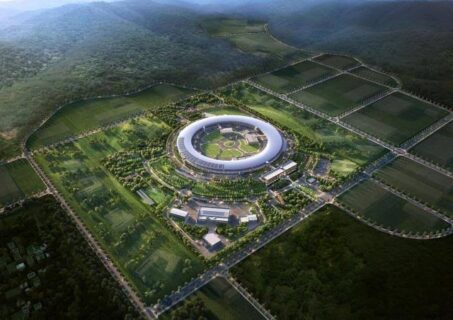
Project Fact Sheet
- Project Name: Korea Light Source (KLS)
- Location: Ochang, Cheongju, North Chungcheong Province, South Korea
- Project Value: 1.16 trillion won, or $791.5 million, per the Ministry of Science and ICT and the Korea Basic Science Institute
- Client/Owner: Ministry of Science and ICT and the Korea Basic Science Institute
- Main Contractor: POSCO E&C led construction consortium
- Key Components: Fourth generation synchrotron radiation accelerator, storage ring, initial user beamlines
- Facility Type: National basic science and industrial research infrastructure
- Construction Start: Full scale construction began the week of July 27, 2026
- Expected Completion: End of 2029
- Strategic Impact: Positions South Korea as the sixth country to operate a fourth generation circular light source and aims to reduce reliance on overseas research facilities
Project Team
- Client/Owner: Ministry of Science and ICT
- Implementing Agency: Korea Basic Science Institute (KBSI)
- Main Contractor: POSCO E&C led consortium
- Host Region: North Chungcheong Provincial Government and Cheongju city administration
Frequently Asked Questions
What is the Korea Light Source? The Korea Light Source is a fourth generation synchrotron radiation accelerator under construction in Ochang, North Chungcheong Province, designed to support research in semiconductors, batteries, new drugs and advanced materials.
How much does the Korea Light Source cost? The project is valued at 1.16 trillion won, or about $791.5 million, according to the Ministry of Science and ICT and the Korea Basic Science Institute.
When will the Korea Light Source be completed? Completion is targeted for the end of 2029, after the original 2027 date slipped due to delays in signing the construction contract.
Who is building the Korea Light Source? A construction consortium led by POSCO E&C is delivering the project on behalf of the Ministry of Science and ICT and the Korea Basic Science Institute.
Why is South Korea building the Korea Light Source? The facility will free domestic researchers and industry from dependence on overseas synchrotron labs and make South Korea the sixth country to operate a fourth generation circular light source.


Leave a Reply