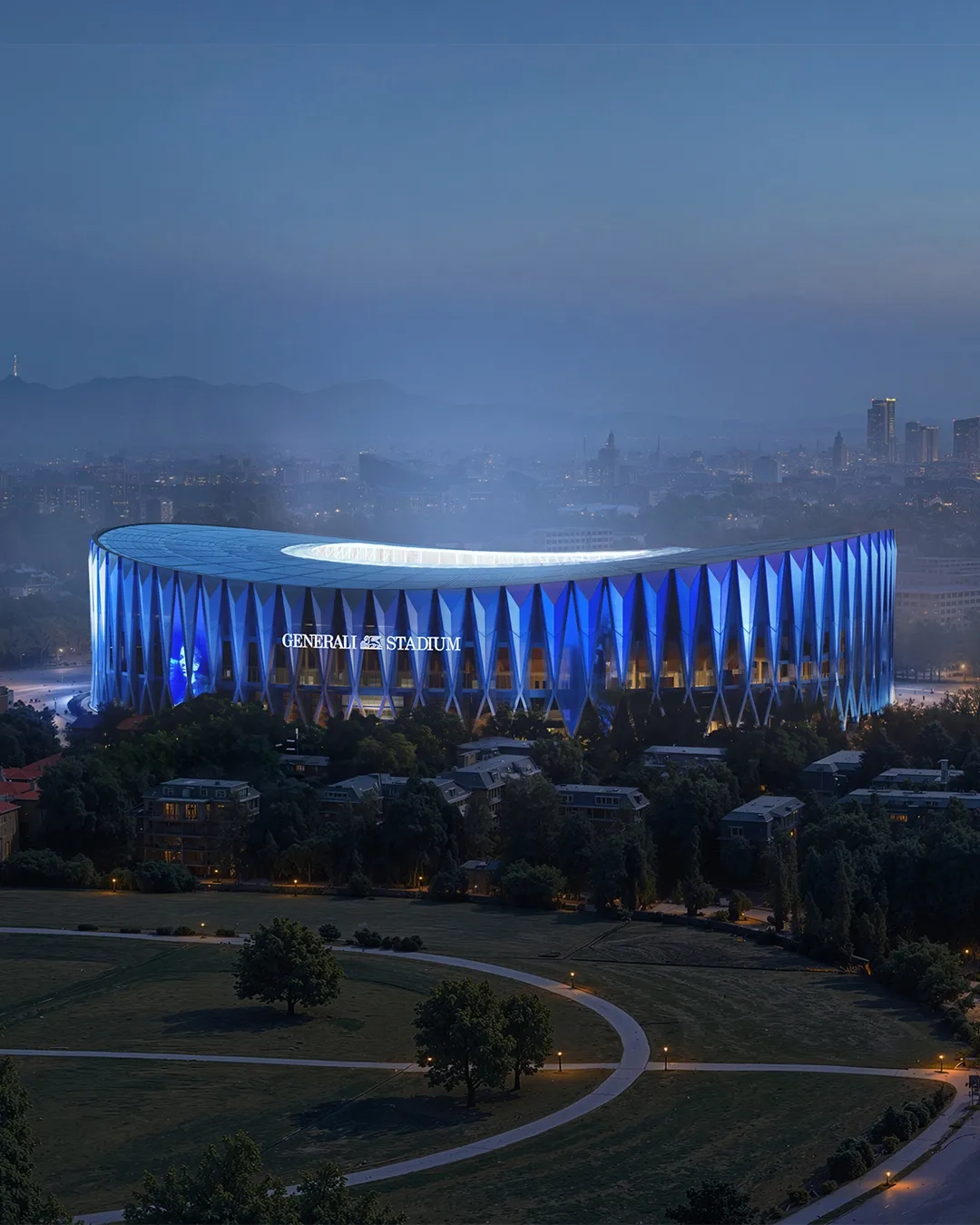
AC Milan and Inter Milan have unveiled the design for Generali Stadium, a planned 71,500-seat venue that will replace most of the existing San Siro stadium as part of a $2.56 billion (€2.3 billion) redevelopment of the surrounding district.
The clubs presented the design on October 29, with construction targeted to begin in 2028 and the first match expected during the 2031/32 season. Designed by Foster + Partners and MANICA, the stadium will become the centerpiece of a wider urban development that includes hotels, offices, commercial space, underground parking and public areas.
The project covers approximately 281,000 square meters in Milan’s San Siro district. Its scope extends well beyond the replacement of the existing Giuseppe Meazza Stadium, involving major demolition, infrastructure relocation and the redevelopment of parts of the current venue.
New stadium will accommodate 71,500 spectators
Generali Stadium will feature two tiers arranged in a continuous 360-degree seating bowl. The design places the Curvas, the supporters’ sections behind each goal, in steep, continuous seating structures with inclinations of up to 37 degrees.
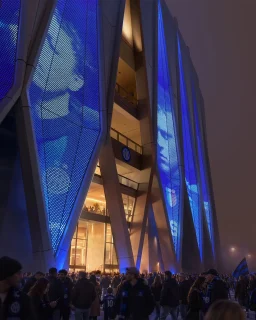
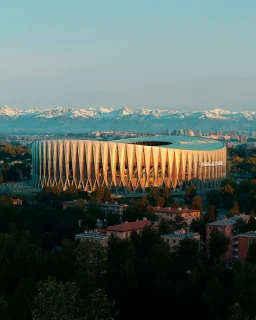
The architects have drawn inspiration from Milan’s architectural heritage, including the city’s Duomo. The proposed structure features a concrete X-frame, a double-curved roof and distinctive diamond-shaped entrances.
The clubs also identify photovoltaic technology and natural ventilation among the stadium’s sustainability features. Generali has secured the venue’s naming rights and will serve as the official insurance partner of both clubs.
$2.56 billion program extends beyond stadium construction
The new stadium forms part of a broader development with approximately 162,000 square meters of planned building space. About 64,000 square meters will comprise the stadium, while another 98,000 square meters will accommodate hotels, offices and other commercial and hospitality uses. The current plan does not include residential buildings.
The reported total project expenditure is approximately $2.56 billion (€2.3 billion). This covers the wider redevelopment rather than the stadium alone, including underground facilities, commercial buildings, demolition and financing costs.
The clubs’ financial feasibility report estimates the completed development could be worth approximately $2.85 billion (€2.565 billion), implying a projected capital gain of about $295 million (€265 million).
That projection is not a guaranteed profit or a forecast of stadium operating revenue. It represents the estimated value of the wider development after accounting for the reported project expenditure.
The clubs acquired the San Siro stadium and surrounding development area in November 2025 for approximately $219 million (€197 million). The purchase was made through Stadio San Siro SpA, which is wholly owned by AC Milan and Inter.
Existing San Siro faces partial demolition
The redevelopment does not envisage demolishing the entire Giuseppe Meazza Stadium. Instead, the plan divides the work into two main phases.
The first covers relocation of the Patroclo Tunnel, construction of the new stadium and partial demolition of the existing venue. A second phase will address the portions of San Siro retained after demolition, alongside additional commercial development and green areas.
This means the construction program must coordinate the new stadium with the removal and redevelopment of existing structures. The tunnel relocation also adds a significant infrastructure component to the first phase.
The approach will transform the site while retaining parts of the historic stadium for a different use. The final redevelopment of those retained sections forms part of the wider planning framework.
Environmental review examines construction impacts
The scale of excavation and demolition has placed environmental impacts under scrutiny. Estimates cited in Italian reporting indicate that the project could require approximately 1.5 million cubic meters of soil excavation and generate about 126,000 cubic meters of demolition debris.
Moving that material will require substantial construction traffic, raising concerns about dust, air quality, noise and pressure on local roads. The management and disposal of excavated soil and demolition waste will therefore be important parts of the construction program.
The Municipality of Milan published the proposed implementation plan, environmental report and non-technical summary for public consultation on September 18, 2026. The consultation remains open until November 1.
The published documentation includes 72 attachments to the implementation plan and 13 to the environmental report. The environmental assessment will help authorities evaluate the effects of the stadium and the wider development, including construction activity and associated infrastructure.
Construction timetable remains subject to approvals
The clubs now expect construction to start in 2028, with the stadium scheduled to host its first match during the 2031/32 season.
That target differs from the timetable discussed by the Municipality of Milan and the Lombardy Region in July 2026. At that time, authorities were working toward completing authorization procedures by summer 2027, with construction potentially beginning in the second half of that year.
The difference does not establish a formal project delay, but it highlights the importance of the remaining planning and environmental approvals.
The project must progress through the environmental assessment and approval of the implementation plan, alongside the technical and economic review of the first functional phase. The relocation of the Patroclo Tunnel, stadium construction and partial demolition of San Siro will be central to that initial stage.
The clubs are targeting the 2031/32 season, ahead of the 2032 European Championship, which Italy and Türkiye will co-host. Whether the project meets that schedule will depend on the approval process and the delivery of a complex construction program across the San Siro site.
A similar stadium-led regeneration effort is taking shape in Manchester, where Manchester United is advancing plans for a new 100,000-seat stadium as the centerpiece of the wider Old Trafford redevelopment. The proposed venue would stand about 350 meters northwest of the existing stadium, within a regeneration program spanning approximately 370 acres and expected to deliver 15,000 homes and 48,000 local jobs. While Milan’s $2.56 billion San Siro project combines a new stadium with commercial development and the partial redevelopment of the existing venue, Manchester’s proposal would create a new stadium district around United’s historic home. Both projects illustrate how major soccer stadium investments are increasingly being planned as large-scale urban transformation projects.
Project Factsheet: Generali Stadium and San Siro district redevelopment
- Location: Milan, Italy
- Stadium capacity: Approximately 71,500 seats
- Architects: Foster + Partners and MANICA
- Total project expenditure: $2.56 billion (€2.3 billion)
- Projected completed value: $2.85 billion (€2.565 billion)
- Planned building area: Approximately 162,000 square meters
- Stadium area: Approximately 64,000 square meters
- Other development: Hotels, offices and commercial uses
- Development area: Approximately 281,000 square meters
- Existing San Siro: Partial demolition and redevelopment
- Construction target: 2028
- First-match target: 2031/32 season
- Environmental consultation deadline: November 1, 2026

Leave a Reply