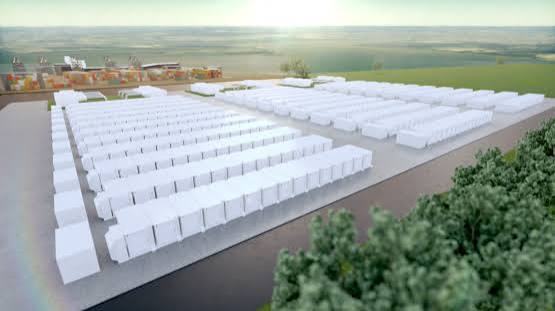
Mount Britton Battery project is seeking federal environmental approval for a 500 MW, four-hour battery energy storage development near Nebo, in Queensland’s Mackay hinterland. The proposed 2,000 MWh facility would strengthen electricity storage capacity near a major transmission connection while placing new infrastructure close to competing battery developments.
However, its proposed location on grazing farmland presents environmental challenges, particularly because construction would require substantial vegetation clearing. AGL Energy lodged the project for assessment under Australia’s Environment Protection and Biodiversity Conservation (EPBC) Act in October 2026. The project’s construction cost remains undisclosed.
Mount Britton Battery Project Targets Queensland’s Grid Connection
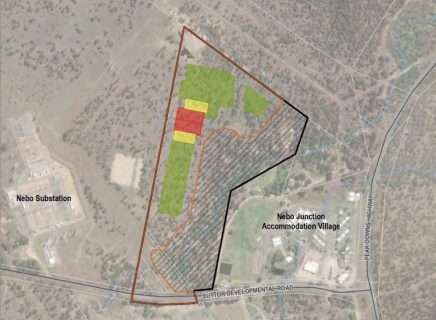
The proposed battery would occupy land between Nebo Junction Accommodation Village and the Nebo substation. Powerlink’s 275-kilovolt transmission network connects through this area to supply electricity towards Mackay and surrounding communities.
Consequently, the location offers access to existing transmission infrastructure while positioning the battery within Queensland’s expanding energy storage market. The project could store electricity when supply exceeds demand and discharge it during periods of higher consumption.
AGL is considering a staged construction approach or installing the full 500 MW capacity at once. The final delivery strategy will determine how the developer sequences construction and integrates the facility with the electricity network.
Nevertheless, the project remains at the environmental assessment stage. Federal approval is an important milestone before the developer can progress towards construction, subject to applicable regulatory requirements.
Mount Britton Battery Project Faces Environmental Challenges
Environmental impacts represent a major consideration for the proposed development. The project assessment identifies 11.1 hectares of habitat considered critical to koala survival within the site.
The ecological assessment also identifies several threatened or migratory species that could occur in the project area. These include the koala, squatter pigeon, northern quoll, greater glider and white-throated needletail.
AGL proposes to clear nearly half of the tree-covered site. It also plans to remove two farm dams that provide habitat and resources for threatened fauna. However, the project design would avoid 11.3 hectares of land where trees and other vegetation would remain.
The assessment anticipates a significant impact on koalas despite proposed avoidance, minimization and mitigation measures. Therefore, environmental management will remain central to the approval process and subsequent development decisions.
Mount Britton Battery Project Joins a Growing Storage Cluster
The development would enter an increasingly competitive battery storage corridor near Nebo. Ace Power has proposed a 900 MW, 3,600 MWh battery north of the site.
Meanwhile, Iberdrola Australia has proposed the adjacent Burrenbring battery, with 1,000 MW and 4,000 MWh of storage capacity. That development could also incorporate a wind farm.
Powerlink separately plans to install one of four synchronous condensers near the Nebo substation by 2029. These machines support grid stability by providing services traditionally associated with conventional rotating generators.
Together, the proposed projects highlight the strategic importance of Queensland’s transmission infrastructure as electricity generation evolves. However, Mount Britton’s environmental approval, final design, construction schedule and project cost remain outstanding considerations.
The project reflects the same large-scale storage strategy as AGL Energy’s Tomago Battery Energy Storage System in New South Wales. The Tomago project, developed in partnership with Fluence, has a planned capacity of 500 MW/2,000 MWh and an estimated investment of $518 million. Both developments demonstrate AGL’s continued investment in grid-scale batteries to support electricity reliability and renewable energy integration. AGL and Fluence’s Tomago battery project offers further context on the company’s expanding storage portfolio.
Project Fact Sheet
Name: Mount Britton Battery.
Type: Grid-scale battery energy storage system (BESS).
Location: Near Nebo, Mackay hinterland, Queensland, Australia.
Developer: AGL Energy.
Proposed power capacity: 500 MW.
Energy storage capacity: 2,000 MWh.
Discharge duration: Four hours at full rated output.
Site setting: Grazing farmland with tree-covered areas and two farm dams.
Grid connection: Proposed connection near Powerlink’s Nebo substation.
Transmission infrastructure: Nearby 275 kV network serving the Mackay region.
Federal approval: Environmental assessment under the EPBC Act.
Environmental considerations: Koala habitat, threatened fauna, vegetation clearing and farm dam removal.
Retained vegetation: Approximately 11.3 hectares identified for avoidance.
Construction cost: Not publicly disclosed in the cited sources.
Construction timeline: Not confirmed in the cited sources.
Project status: Proposed development seeking federal environmental approval.
Project Team
Developer: AGL Energy.
Company: Mount Britton Battery Pty Ltd.
Grid connection and transmission infrastructure: Powerlink Queensland.
Federal environmental assessment authority: Australian Government department responsible for administering the EPBC Act.
Aboriginal cultural heritage assessment: Converge Heritage + Community has provided cultural heritage due diligence services for the development.



Leave a Reply