Egypt wants faster Nargis gas field development. Petroleum Minister Karim Badawi met with senior Chevron and Eni executives on Saturday, November 21, to discuss ways to speed up development of the offshore field in the Eastern Mediterranean. The talks followed positive results from the Nargis-2 well and looked ahead to a third well.
What Egypt wants from the Nargis gas field development
The ministry wants the gas in production sooner. Badawi reviewed drilling results from Nargis-2 and compared them with Nargis-1, using seismic data, well logs, and pressure tests. He also discussed geological studies of the Miocene and Oligocene rock layers, which point to potential for new gas resources. The government sees the field as part of a wider plan. It aims to bring discoveries into production, strengthen domestic gas supplies, and reduce import needs. Badawi stressed using lessons from earlier drilling to plan future wells, including Nargis-3.
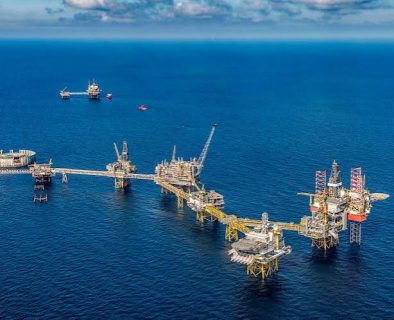
Costs and speed are central. The ministry said future production could connect to existing offshore infrastructure, reducing costs and shortening the timeline. However, it gave no schedule or cost for Nargis-3 and no production date for the field.
What the Nargis-2 well found
Drilling on Nargis-2 began in May from the Stena Forth drillship. On October 24, the ministry reported that the well had reached a total depth of more than 5,000 metres and found up to 35 metres of net gas pay. Chevron also confirmed gas and an additional gas-bearing interval, which supports further appraisal. The field has a short history. Nargis-1 was discovered in December 2022. That well was drilled in about 309 metres of water and found roughly 200 net feet, or 61 metres, of gas-bearing sandstone. Reports at the time put the field’s gas at around 3.5 trillion cubic feet, though that is an estimate.
Who is involved, and what happens next?
Chevron operates the concession. Its partners include Eni, Mubadala Energy, and Egypt’s Tharwa Petroleum. Chevron’s exploration director for North Africa and the Mediterranean and Eni’s chief executive for North Africa and the Levant joined the meeting by video.
The next step is planning. The companies agreed to hold regular technical meetings and jointly review development options before choosing a preferred plan. As a result, a development decision, a cost figure, and a timeline are still to come. Egypt is pushing other fields as well. For example, Shell has started production at the Mina West field, with a target of about 160 million cubic feet a day.
Other projects
Amiblu has commissioned the extension of its glass-reinforced plastic (GRP) pipe production facility in Morocco, marking a key milestone in the company’s expansion across North Africa. The electrification works for the factory extension were delivered with support from Insta Globe, a global specialist in industrial electrification and instrumentation.

Leave a Reply